The top places to visit in Portugal: 10 memorable stops
The top places to visit in Portugal range from Lisbon’s riverside monuments to Sintra’s wooded hills, the Douro’s vineyard terraces and the Algarve’s limestone coast. This mainland guide explains what deserves your time, when to go and how to connect the stops without turning your holiday into a checklist.
10 top places to visit in Portugal, with practical tips
01Lisbon: Alfama and São Jorge Castle
Alfama’s steep lanes and São Jorge Castle make a rewarding introduction to Lisbon, with tiled façades, small squares and views across the Tagus; the castle’s history includes its capture by Afonso Henriques in 1147. Start at the castle near opening time, then walk downhill through Alfama rather than repeatedly climbing its slopes. Pause at Miradouro de Santa Luzia for river views, and wear shoes with grip because polished paving can be slippery.
02Belém: Jerónimos Monastery and the Tagus waterfront
Around 7 km west of central Lisbon, Belém holds two monuments inscribed together on UNESCO’s World Heritage List in 1983: Jerónimos Monastery and Belém Tower. Give the monastery’s intricate Manueline cloisters priority, then allow time for the waterfront and a pastel de Belém at Pastéis de Belém, which began trading in 1837. Check current monument access before visiting, and look for the pastry shop’s seated-service entrance rather than assuming the takeaway queue is your only option.
03Sintra: Pena Palace and Quinta da Regaleira
About 30 km from Lisbon, Sintra’s UNESCO-listed cultural landscape brings together wooded hills, aristocratic estates and Pena Palace, transformed under Ferdinand II during the 19th century. Choose two major sights at most: Pena Palace for its colourful architecture and elevated setting, and Quinta da Regaleira for its gardens and Initiation Well. Reserve a timed palace ticket ahead and leave a generous buffer between arrival at the park entrance and your palace slot, since they are not the same place.
04Óbidos
Roughly 85 km north of Lisbon, Óbidos is a compact walled town with whitewashed houses, a hilltop castle and a long association with Portugal’s queens, traditionally traced to King Dinis’s gift to Queen Isabel in 1282. Walk beyond Rua Direita into the quieter side lanes, then try ginjinha, the local sour-cherry liqueur, if you drink alcohol. Sections of the walls are high and unguarded, so enjoy the town at street level if you have children, limited mobility or discomfort with heights.
05Nazaré
Nazaré combines a working fishing-town identity with the Atlantic surf that has made Praia do Norte internationally famous, especially during the winter swell season. Head to Sítio for views over the town’s broad beach, then consider the area around Forte de São Miguel Arcanjo for a different perspective on the coast. Giant waves are weather-dependent rather than a daily spectacle: check conditions, respect closures and never approach exposed rocks or the waterline during heavy surf.
06Coimbra: University and the historic upper town
Coimbra’s university was founded in 1290 and settled permanently in the city in 1537; its historic buildings, including the Joanina Library, form part of a UNESCO World Heritage site. Plan time for the university precinct and the Romanesque Sé Velha rather than treating Coimbra only as a lunch stop between Lisbon and Porto. Book the correct ticket if the library is your priority, follow its timed-entry rules and expect steep streets between the upper and lower town.
07Porto: Ribeira and the Dom Luís I Bridge
Porto’s historic centre rises above the Douro in layers of granite churches, tiled façades and riverside streets, with the Dom Luís I Bridge linking the city to Vila Nova de Gaia since 1886. Explore Ribeira, then cross to the Gaia waterfront for views back towards Porto’s stacked riverfront buildings. The upper deck is exposed and shared with moving trams, so use the designated pedestrian space; choose the lower crossing if you prefer to stay closer to river level.
08Douro Valley: Peso da Régua and Pinhão
The UNESCO-listed Alto Douro Wine Region is shaped by centuries of viticulture, with terraced slopes and small settlements following the river east of Porto. Allow roughly two hours from Porto to Pinhão, depending on the route and traffic, and stop at Pinhão railway station to see its azulejo panels depicting vineyard work. For a day visit, keep to one small area rather than chasing several distant viewpoints; if you want to visit a wine estate, check its opening hours and reserve directly in advance.
09Évora
Around 130 km east of Lisbon, Évora’s UNESCO-listed historic centre brings Roman remains, medieval streets and whitewashed Alentejo architecture within a compact area. See the Roman Temple, the cathedral and the Chapel of Bones at the Church of São Francisco, allowing time for an unhurried lunch. Visit the exposed monuments early in hot weather, then seek shade around Praça do Giraldo; açorda à alentejana, a bread-based preparation with garlic and coriander, is a regional dish worth looking for.
10Lagos and Ponta da Piedade
Lagos in the western Algarve pairs a historic centre with the weathered limestone cliffs and sea arches of Ponta da Piedade, about 3 km south of town. Explore the upper cliffside paths and boardwalk sections for coastal views, then return to Lagos for its old-town streets and waterfront. Go early or towards late afternoon for softer light, stay behind barriers and remember that the steep staircase towards the water is optional, not necessary for enjoying the headland.

Plan with confidence
Plans change. Your options are clear.
Change dates without an extra change charge when available, and cancel early for a refund or travel credit. Our team confirms every detail before you pay.

Travel with Portugal Magik
Explore Portugal in a Mercedes-Benz V-Class
For smaller groups, a private V-Class offers a comfortable way to travel between places, with an English-speaking driver, door-to-door pickup and a flexible itinerary planned with our team. Vehicle choice depends on your group and availability.
Plan a personalized journey →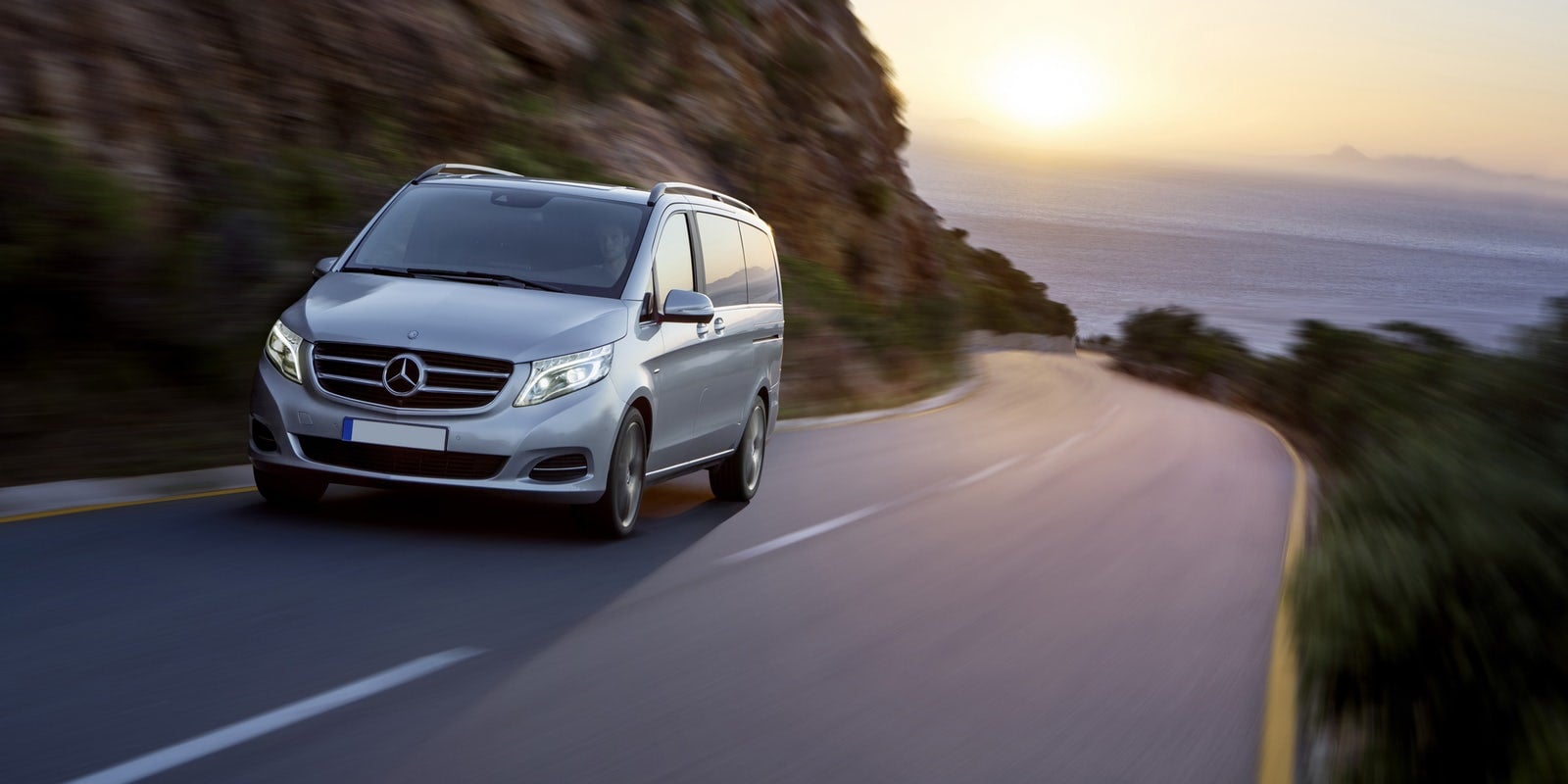
How to build a relaxed private day or multi-day route
For Portugal sightseeing that feels like a holiday, group nearby places and protect time for meals, wandering and pauses. Portugal Magik offers private Mercedes-Benz transfers and private day or multi-day tours with an English-speaking driver, door-to-door pickup and flexible itineraries. For smaller groups, a private Mercedes-Benz V-Class can be a comfortable option on longer journeys, subject to availability and your passenger and luggage requirements.
From Lisbon, give Sintra its own day. Two estates, lunch and a little time in the historic centre make a full programme; adding Belém usually means rushing somewhere. Your driver can handle the road journey and suitable pickup points, but Sintra’s access restrictions and uphill estate paths mean some walking remains unavoidable. Request a personalized Sintra itinerary that reflects your pace before purchasing timed tickets.
Belém works well as a separate half-day or as part of a Lisbon day with Alfama. Óbidos and Nazaré make a compatible full-day pairing north of Lisbon: start with the walled town, continue for lunch by the coast and finish with the Sítio viewpoint. Évora is best treated as another dedicated day, especially if you want to enter several monuments rather than simply photograph their exteriors.
For a northbound multi-day journey, consider four nights in Lisbon, one in Coimbra, three in Porto and two in the Douro Valley. On the Lisbon–Coimbra transfer, choose Óbidos or Nazaré as your main sightseeing stop rather than trying to explore both deeply. Porto to Pinhão is approximately 125 km by road; staying in the valley avoids a same-day return and leaves room for quieter mornings. Ask Portugal Magik for a personalized route with realistic sightseeing stops and hotel-to-hotel transfers.
Lagos deserves a separate Algarve stay of at least three nights rather than a day trip from Lisbon. Lisbon to Lagos is roughly 300 km by road, while the journey from northern Portugal is considerably longer. If you want all ten places in one holiday, allow around two weeks or more and discuss the long north-to-south transfer carefully; two regional trips may feel more relaxed than one country-length itinerary.
Best time to visit Portugal and insider planning tips
May, June, September and early October often provide a useful balance of daylight, warmth and sightseeing conditions. They are not quiet everywhere: Sintra and Lisbon’s major monuments still need advance planning, and September can be busy in the Douro during the grape harvest, whose timing varies by estate and year.
July and August suit a coastal holiday, but inland sightseeing needs a gentler rhythm. Évora and the Douro can become very hot, so schedule exposed walks early, take a substantial lunch break and avoid packing the afternoon with uphill visits. Even in summer, Sintra can feel cooler and damper than Lisbon; carry a light layer.
November to March can work well for city visits if you accept rain and shorter days. Porto and the Douro generally receive more winter rain than the Algarve, while Atlantic beaches can be windy and rough. Nazaré’s big-wave season is a reason to monitor forecasts, not a promise that a particular date will deliver giant surf.
Book the sights that anchor your day first, especially Pena Palace and Coimbra’s Joanina Library, then shape the driving schedule around their entry rules. Confirm opening days, temporary closures and ticket inclusions through official monument websites. A flexible private itinerary does not override timed admission or guarantee access when a site is closed.
Pack grippy shoes for Lisbon, Porto and Coimbra, and mention mobility needs before requesting your quote. Door-to-door pickup reduces travel logistics, but pedestrian zones, stairs and historic paving remain part of many visits. For your own must see Portugal list, choose a few priorities and leave breathing space between them; Portugal Magik can suggest a personalized driving itinerary around those choices.