The best things to do in Fátima: A thoughtful travel guide
The best things to do in Fátima connect its great pilgrimage sanctuary with the modest village homes of the three shepherd children. Allow time for both: the monumental churches explain Fátima’s international significance, while Aljustrel and Valinhos bring the story back to a quieter, human scale.
10 best things to do in Fátima, from the sanctuary to Aljustrel
Most of the top places to visit in Fátima fall into two clusters: the Sanctuary of Fátima and the rural surroundings of Aljustrel, roughly 2 kilometres away. These are places of active worship as well as visitor attractions, so a satisfying visit leaves room for silence rather than treating every stop as a photograph.
01Sanctuary of Our Lady of the Rosary of Fátima
The sanctuary occupies Cova da Iria, where the three shepherd children reported apparitions of the Virgin Mary in 1917, and its vast prayer square connects the principal religious buildings. Begin with a slow orientation walk across the precinct to understand the layout before entering individual churches. The open square offers limited shade, so carry water and avoid crossing it repeatedly during summer’s hottest hours.
02Chapel of the Apparitions
Built in 1919, this small chapel marks the central site of the reported apparitions, with the statue of Our Lady positioned where the holm oak associated with them stood. Despite its modest size, it is the devotional heart of the sanctuary and a place where many pilgrims pause longest. Check the daily worship schedule before approaching, and stay outside the seated congregation if you only want a brief look during a service.
03Basilica of Our Lady of the Rosary
The sanctuary’s older basilica, begun in 1928 and consecrated in 1953, contains the tombs of Francisco and Jacinta Marto and their cousin Lúcia dos Santos. Its tall bell tower provides the familiar landmark at one end of the prayer square. Visit outside scheduled services if you want time to see the tombs without interrupting worship, and keep conversations quiet inside.
04Basilica of the Most Holy Trinity
Inaugurated in 2007, this large contemporary basilica stands opposite the older church and accommodates more than 8,000 worshippers. Its restrained architecture and broad interior offer a striking contrast to the towered basilica across the square. Step inside rather than judging it from the exterior, and allow time to take in the mosaic behind the altar.
05Sanctuary Museum: Fátima Light and Peace Exhibition
This permanent exhibition presents offerings made to Our Lady of Fátima, helping explain how a local pilgrimage site developed an international following. Its best-known objects include the precious crown incorporating the bullet associated with the 1981 assassination attempt on Pope John Paul II. Check current opening hours and admission arrangements before building the museum into your day, since exhibition access follows a separate timetable from the outdoor sanctuary.
06House of Lúcia in Aljustrel
Lúcia dos Santos’s birthplace preserves the modest domestic setting in which the eldest of the three shepherd children grew up. The low rooms and simple village surroundings give useful context after the scale of the sanctuary. Pair it with the nearby Marto family house, and expect narrow interiors rather than the circulation space of a modern museum.
07House of Francisco and Jacinta Marto
This Aljustrel house was the family home of the brother and sister who, with Lúcia, became central to the events of 1917; Francisco and Jacinta were canonized in 2017. Visiting both childhood homes makes the relationships between the children and their village easier to understand. The houses are close enough to combine on foot, but check their current visiting hours before leaving the sanctuary area.
08Valinhos Apparition Site
A monument at Valinhos commemorates the reported apparition of 19 August 1917, which took place here rather than at Cova da Iria after the children had been detained earlier that month. Its quieter rural setting offers a different perspective from the sanctuary’s broad stone square. Wear supportive shoes and allow a gentle walk rather than expecting every devotional site in this area to be directly beside a vehicle stop.
09Way of the Cross and Hungarian Calvary
Beginning near the southern roundabout in Fátima, this devotional route follows paths associated with the shepherd children and leads towards the Hungarian Calvary and Chapel of Saint Stephen. It is one of the most rewarding Fátima attractions for visitors who want to understand the landscape as well as the churches. Allow around an hour or more for an unhurried walk with stops, and discuss the walking distance, gradients and pickup point with your driver beforehand.
10Parish Church of Fátima
Dedicated to Our Lady of the Purification, the parish church is separate from the sanctuary and is where the three shepherd children were baptized. It connects the pilgrimage story with the ordinary parish life that existed before 1917. Look for it in the older settlement of Fátima rather than around the sanctuary square, and time your visit around parish services.

Trusted across Portugal and Spain
Journeys backed by 1,300+ verified reviews
Consistently five-star rated since 2012, Portugal Magik is a TripAdvisor Hall of Fame recipient. Our Portugal Ambassadors bring local knowledge, thoughtful service and dependable private travel to every journey.

Travel with Portugal Magik
Explore Portugal in a Mercedes-Benz V-Class
For smaller groups, a private V-Class offers a comfortable way to travel between places, with an English-speaking driver, door-to-door pickup and a flexible itinerary planned with our team. Vehicle choice depends on your group and availability.
Plan a personalized journey →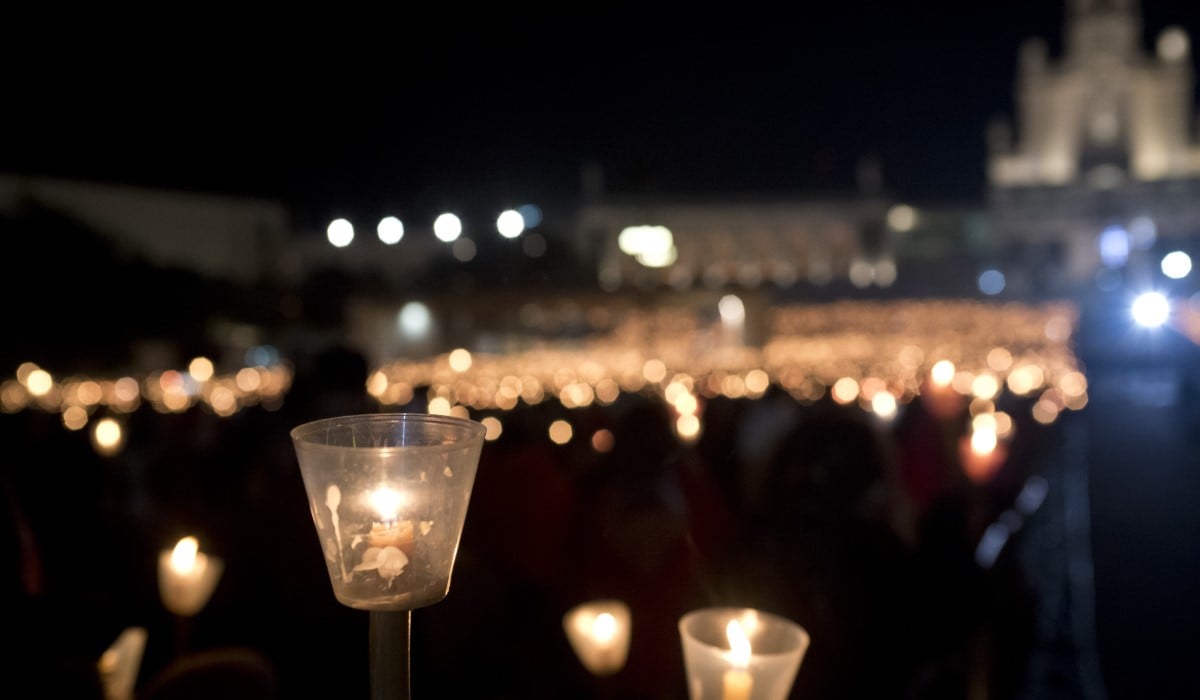
A relaxed private day or two-day route with Portugal Magik
For a private day from Lisbon, allow approximately 1½–2 hours each way for the roughly 130-kilometre drive, depending on your pickup address and traffic. Start with the sanctuary while your attention is fresh: the Chapel of the Apparitions, the Basilica of Our Lady of the Rosary and the Basilica of the Most Holy Trinity form a natural sequence, with time between them for prayer or quiet observation.
After lunch in Fátima, continue to Aljustrel for the two shepherd-family homes. Choose either a shorter visit to Valinhos and the parish church or a longer walk along the Way of the Cross. Trying to include every museum room, church and walking stop in one Lisbon day can turn a reflective visit into a checklist; select the places that matter most to you.
Portugal Magik offers private Mercedes-Benz day tours and transfers with an English-speaking driver, door-to-door pickup and flexible itineraries. Your Portugal Ambassador is a knowledgeable local English-speaking driver-guide from Portugal who can explain the area’s context and coordinate practical drop-off and meeting points. For smaller groups, a private Mercedes-Benz V-Class is a comfortable option for this journey, subject to availability.
Ask Portugal Magik for a personalized Fátima itinerary built around your preferred balance of religious visits, walking and rest. If attending Mass is important, share that priority so the day can be planned around the sanctuary’s published schedule rather than squeezing worship between sightseeing stops.
For two days, travel from Lisbon to Batalha Monastery, then continue approximately 25 kilometres to Fátima for an overnight stay. That leaves time for a first sanctuary visit and, when scheduled, evening worship; the following morning can focus on Aljustrel and Valinhos before continuing roughly 40 kilometres to Tomar to visit the Convent of Christ and then returning to Lisbon. Give Tomar a proper afternoon rather than adding it as a rushed final stop.
Established in 2012, Portugal Magik has 1,300+ verified reviews and is consistently five-star rated. Request a personalized day or multi-day route if you would like the driving and connections arranged while keeping the pace of the visit your own.
Best time to visit Fátima and practical insider tips
April–June and September–October often provide a good balance of daylight and comfortable walking weather, although rain is possible. July and August can make the exposed sanctuary square feel hot, while winter brings cooler conditions, shorter days and generally quieter visits outside religious celebrations.
The major pilgrimage dates are 12–13 May and 12–13 October, commemorating the first and last of the reported 1917 apparitions. The 12th and 13th of other months from May to October can also be busy. Choose these dates for the collective pilgrimage experience, not for an expectation of quiet access or easy movement around the precinct.
On ordinary days, arrive earlier in the morning for a calmer first walk, but consult the sanctuary calendar: services and organized pilgrim groups can change the atmosphere quickly. Evening candlelight processions are part of the sanctuary’s programme, but schedules vary by season and occasion; check the official programme rather than assuming one takes place every evening.
Dress respectfully for churches, with shoulders covered and clothing appropriate for worship. Comfortable shoes matter even if you skip the countryside paths, because the distances across the sanctuary are greater than they initially appear. Bring sun protection, a light layer and, outside settled summer weather, a compact umbrella.
For limited mobility, prioritize the main sanctuary and discuss individual access needs before adding the village houses or the Way of the Cross. Historic interiors can be tight, rural paths may be uneven, and a private vehicle cannot remove every walking section. During major pilgrimages, traffic restrictions can also affect the nearest possible drop-off point.
Photography should never interrupt prayer, and posted restrictions take precedence inside each building. If you wish to light a candle, use the sanctuary’s designated candle-burning area and follow the instructions there. For a smoother visit, ask Portugal Magik to shape your personalized transfer or tour around current opening hours, your walking comfort and any service you hope to attend.
Your route
Direct or with stops
Tell us where you would like to pause along the way and we shape the day around it.
Request a proposal →Your pace
One day or several
Spread the journey over a few days with overnight suggestions from our team.
Request a proposal →Your Ambassador
A local by your side
An English-speaking driver-guide from Portugal in a private Mercedes-Benz.
Request a proposal →★★★★★ 1,300+ verified reviews · TripAdvisor Hall of Fame · Since 2012
Keep exploring
Related journeys and routes
10 things you can't miss in Évora
These 10 things you can't miss in Évora reveal a city of Roman stonework, medieval lanes and remarkably rich Alentejo history. Explore its UNESCO-listed historic centre at walking pace, leaving time for a shaded square and a proper regional lunch.
Read more →The best things to do in Castelo de Vide
The best things to do in Castelo de Vide combine a hilltop castle, an important Jewish heritage quarter and quiet walks through the northern Alentejo. Allow time for its granite doorways, Renaissance fountain and mountain views rather than treating the town as a quick stop on the way to Marvão.
Read more →The top places to visit in Aveiro: Canals, Culture and Coast
The top places to visit in Aveiro reveal a city shaped by its lagoon: working salt pans, Art Nouveau façades, convent treasures and Atlantic beaches nearby. Give yourself time for the quieter streets as well as the waterfront, with a private driver making the journey between city and coast straightforward.
Read more →Frequently Asked Questions
Personalized and without obligation
Speak with a travel designer
1,300+ five-star reviews · TripAdvisor Hall of Fame · Trusted since 2012 · Mercedes-Benz fleet