The top places to visit in Lisbon, at your own pace
The top places to visit in Lisbon reveal a city of castle walls, tiled lanes and waterfront monuments shaped by centuries of trade and exploration. This guide helps you choose worthwhile stops, understand the walking involved and leave room for a proper lunch.
10 top places to visit in Lisbon
01Castelo de São Jorge
Occupying a hill above the historic center, this fortified site preserves layers of Lisbon’s past, including its period under Muslim rule before the conquest of 1147. Its terraces give you a useful introduction to the city’s geography, from the Tagus to the downtown grid. Visit early, wear shoes with grip and expect uneven paving and steps, particularly around the ramparts.
02Alfama
Below the castle, Alfama’s stairways, small squares and tightly packed houses preserve a street pattern very different from the planned streets of Baixa. Around Largo de São Miguel, the neighborhood feels more intimate than the city’s monumental waterfront. Walk downhill where possible, keep voices low near residential doorways and agree on a vehicle meeting point outside the narrowest lanes.
03Sé de Lisboa
Lisbon’s cathedral was founded after the Christian conquest of 1147, and its fortress-like façade reflects the defensive character of medieval religious architecture. Inside, later alterations sit alongside Romanesque elements, making it a rewarding stop between Alfama and Baixa. Check visitor arrangements before entering: sightseeing access and worship access are not necessarily the same, and services take priority.
04Praça do Comércio
Facing the Tagus, this grand square occupies the site of the royal palace destroyed in the earthquake of 1755. Its arcaded buildings and the Arco da Rua Augusta mark the river-facing entrance to the rebuilt downtown district. Step onto the Cais das Colunas waterfront for the classic river perspective, then visit the square again near sunset if your itinerary allows.
05Elevador de Santa Justa
Opened in 1902, this iron lift connects the lower streets of Baixa with the higher Carmo area and remains one of Lisbon’s most recognizable engineering landmarks. Its decorative metalwork is worth seeing even if you do not ride it. If the queue is long, admire it from Rua de Santa Justa and approach the upper neighborhood separately via Largo do Carmo; the surrounding streets still involve slopes.
06Convento do Carmo
The roofless Gothic nave of this former convent is one of Lisbon’s clearest reminders of the 1755 earthquake, with stone arches standing against the sky. Founded in 1389, the complex now houses an archaeological museum beside Largo do Carmo. Choose a dry spell for the open-air nave and leave time to sit in the square rather than treating this as a quick photograph stop.
07Miradouro de São Pedro de Alcântara
This landscaped viewpoint looks across central Lisbon toward the castle, making it especially useful after you have explored the opposite hill. Its terraces offer a broader city panorama than many of Alfama’s more tightly framed viewpoints. Afternoon light often illuminates the castle-facing view well; pause here before an unhurried walk into nearby Chiado.
08Mosteiro dos Jerónimos
Commissioned under Manuel I, with construction beginning in 1501, this Belém monastery is a major expression of Manueline architecture and Portugal’s maritime wealth. The carved cloisters reward close attention, while the church contains the tombs of Vasco da Gama and Luís de Camões. Check the separate access arrangements for the church and cloisters, and reserve through the official ticket channel where available.
09Torre de Belém
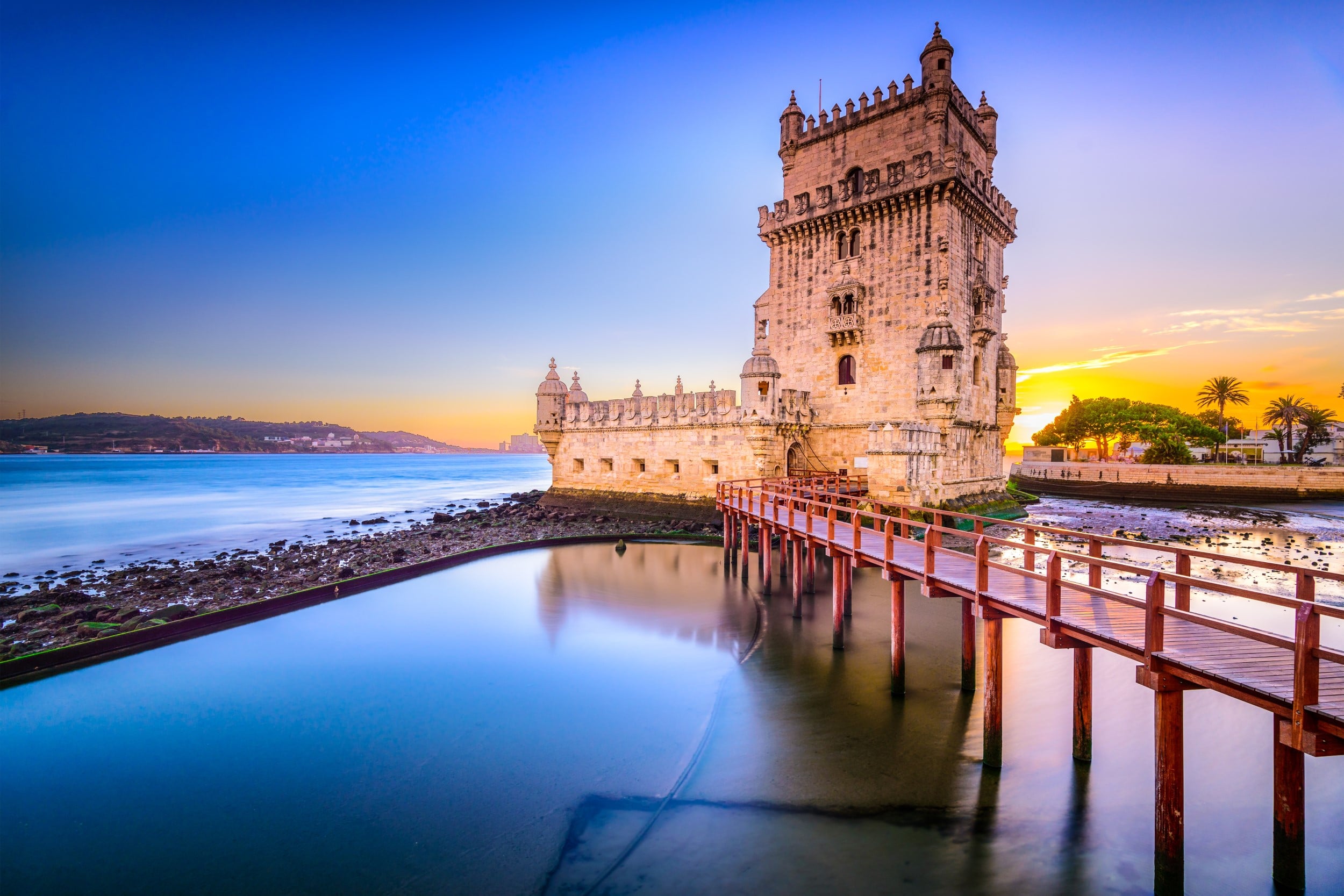
Built between 1514 and 1520, this fortified tower once helped defend Lisbon’s river entrance and is jointly listed with Jerónimos as a UNESCO World Heritage Site. Its position beside the Tagus makes the exterior a worthwhile stop even without entering. Check current restoration and visitor-access notices before planning an interior visit, and bring a light layer for the exposed waterfront.
10Padrão dos Descobrimentos
Inaugurated in its permanent form in 1960, this Belém monument commemorates the Portuguese maritime expansion, with Henry the Navigator at the prow of its stylized stone vessel. The large compass rose and world map in the forecourt add context to the setting. It stands roughly 1 kilometer east of Belém Tower, so discuss a vehicle repositioning with your driver if you would rather avoid the waterfront walk.
Plan with confidence
Plans change. Your options are clear.
Change dates without an extra change charge when available, and cancel early for a refund or travel credit. Our team confirms every detail before you pay.

Travel with Portugal Magik
Explore Portugal in a Mercedes-Benz V-Class
For smaller groups, a private V-Class offers a comfortable way to travel between places, with an English-speaking driver, door-to-door pickup and a flexible itinerary planned with our team. Vehicle choice depends on your group and availability.
Plan a personalized journey →Combine the sights into a relaxed private route
For one comfortable day, choose highlights rather than attempting all ten interiors. Begin at Castelo de São Jorge, continue downhill through part of Alfama and stop at the cathedral if visiting arrangements suit. Meet your driver at an agreed accessible pickup point, then continue to Praça do Comércio before lunch. Finish in Belém with one principal interior visit, such as the Jerónimos cloisters, and time beside the river.
Belém lies roughly 7 kilometers west of Praça do Comércio by road, although the exact journey and travel time depend on traffic and pickup locations. Jerónimos, the Padrão dos Descobrimentos and Belém Tower belong in the same part of your itinerary, but they are not all immediately beside one another. Allow time for security checks, ticket queues and walking within each site.
For two days, keep the castle, Alfama, Sé and Praça do Comércio together on the first day. Add Carmo, a look at Santa Justa and São Pedro de Alcântara only if your energy and sightseeing pace allow. Dedicate the second day to Belém, with a leisurely lunch and a stop at Pastéis de Belém, where the pastry-making tradition dates to 1837. A third day gives you room to separate Baixa, Carmo and Chiado from the hillier eastern neighborhoods.
Portugal Magik offers private day and multi-day tours with an English-speaking driver, door-to-door pickup and flexible itineraries. A private Mercedes-Benz V-Class is a comfortable option for smaller groups, subject to availability; vehicle choice should match your party and luggage. Your driver can connect the districts, but pedestrian lanes and monument interiors still require walking. Ask Portugal Magik for a personalized route based on your must-see stops, mobility and preferred lunch pace.
Best time to visit and practical insider tips
April–May and September–October usually offer a good balance of daylight and comfortable sightseeing temperatures, although rain and hot spells remain possible. These are popular travel periods, not reliably quiet months. July and August can make exposed castle paths and waterfront queues tiring; start early and save the hottest part of the afternoon for lunch or an indoor visit.
Winter offers a different rhythm, with shorter days and a greater chance of rain. Lisbon’s polished limestone paving can become slippery when wet, especially on Alfama’s slopes. Shoes with grip matter more than smart footwear, and a light windproof layer is useful beside the Tagus even when inland streets feel warm.
Book priority monument visits before filling the rest of the day. Opening days, last-entry times, restoration work and religious services can affect access, so check each attraction’s official information shortly before travel. A ticket does not necessarily remove security queues, and a private vehicle does not provide privileged monument entry.
For Lisbon sightseeing that feels relaxed, alternate a substantial interior visit with a square, viewpoint or café stop. Carry water, use sun protection and keep bags closed in busy queues. If stairs are a concern, tell Portugal Magik before requesting a personalized tour or transfer quote so suitable drop-off points and shorter walking sections can shape the itinerary.