The top places to visit in Lagos, Portugal
The top places to visit in Lagos bring together sculpted limestone cliffs, sheltered beaches and an old town shaped by centuries of maritime history. This guide helps you choose worthwhile stops, understand the practicalities and leave enough time to enjoy the western Algarve without rushing.
10 top places to visit in Lagos
01Ponta da Piedade
Around 3 km south of central Lagos, this headland is known for its limestone pillars, arches and small coves carved by the Atlantic. Follow the clifftop paths and boardwalks for different perspectives; the steep staircase toward the water is optional, not essential to appreciating the scenery. Late-afternoon light brings out the rock’s warm colours, but stay behind barriers and expect exposed, windy stretches.
02Praia do Camilo
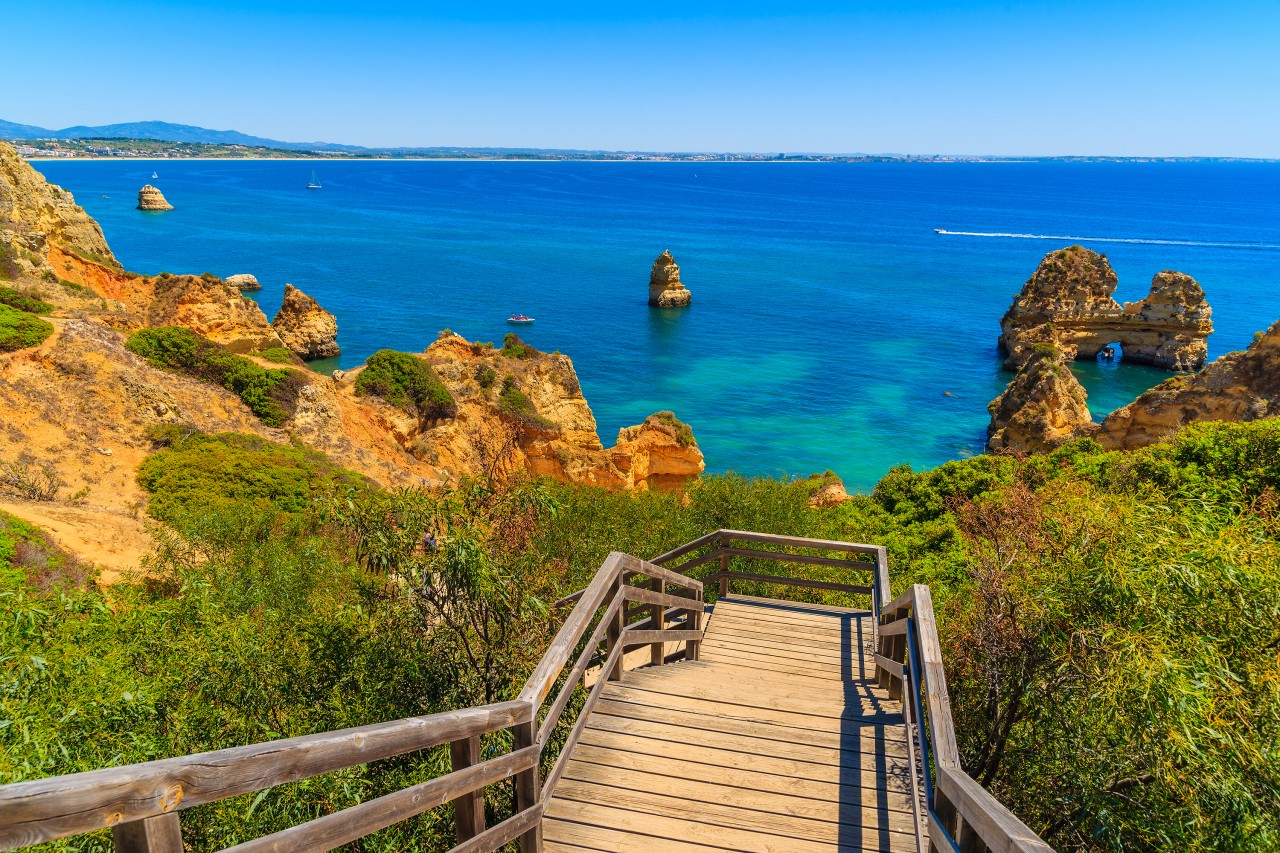
A long wooden staircase leads down to this small beach between golden cliffs, making the descent part of the experience. Its compact size means the sand fills quickly in summer, especially as the tide rises. Go early, travel light and check current access notices before committing to the steps; this is not a suitable beach for anyone who needs step-free access.
03Praia Dona Ana
Framed by layered cliffs and offshore rock formations, Dona Ana is one of Lagos’s best-known beaches and a rewarding stop even without swimming. The elevated approach provides an excellent view, while reaching the sand involves stairs. For a quieter visit, arrive in the morning outside peak summer and choose a spot away from cliff faces, where falling rock is a recognised hazard.
04Meia Praia
Stretching for roughly 4 km east of the Bensafrim estuary, Meia Praia offers a very different landscape: broad sand, dunes and an open horizon rather than enclosed cliff coves. It is a good choice for a longer beach walk or a less cramped afternoon by the sea. Ask your driver to choose an entrance suited to your walking needs, as boardwalk access and facilities vary along the beach.
05Forte da Ponta da Bandeira
Built in the late 17th century, this low waterfront fortress guarded the entrance to Lagos’s harbour beside what is now Praia da Batata. Its compact scale makes it an easy addition to an old-town walk, and the surviving moat and drawbridge give a clear sense of its defensive purpose. Check current opening arrangements if you want to enter; otherwise, combine an exterior visit with the nearby city walls and waterfront.
06Igreja de Santo António and Museu de Lagos Dr. José Formosinho
Behind a relatively restrained façade, the Church of Saint Anthony contains elaborate gilded woodwork and painted decoration, with much of its present appearance dating from rebuilding after the 1755 earthquake. The adjoining museum adds archaeological and historical context to a Lagos sightseeing itinerary. Check the current museum-and-church admission arrangements before visiting, and give the interior more time than a quick photograph stop.
07Mercado de Escravos
Overlooking Praça Infante Dom Henrique, this museum examines Lagos’s role in the trade in enslaved Africans, including the documented arrival and sale of captives in 1444. The surviving building is later than those events, so its value lies in the interpretation rather than being an unchanged medieval market. Visit before exploring the surrounding monuments: it provides essential, sobering context for the city’s maritime history.
08Lagos Old Town and Porta de São Gonçalo
The old town’s whitewashed streets, tiled façades and stretches of defensive wall are best explored slowly, with Porta de São Gonçalo providing a useful landmark near the waterfront. Connect Praça Gil Eanes, Praça Luís de Camões and Praça Infante Dom Henrique for a compact walk that links everyday town life with major historic sites. Wear shoes with grip on the polished paving, and step a street or two away from the busiest restaurant terraces when you want a quieter pause.
09Mercado Municipal de Lagos
On Avenida dos Descobrimentos, the municipal market offers a close-up view of the Algarve’s food culture, especially through its fish stalls and seasonal produce. It is worth visiting for the working-market atmosphere rather than expecting a polished food hall. Go in the morning when trading is livelier, check opening days ahead and ask permission before photographing stallholders.
10Marina de Lagos
Across the pedestrian bridge from the town-side waterfront, the marina provides an easy-going contrast to the steep coastal viewpoints. Walk beside the moored yachts, pause for a drink and enjoy views back toward Lagos without tackling cliff paths or beach staircases. Combine it with the municipal market and Avenida dos Descobrimentos rather than making a separate journey across town.
Plan with confidence
Plans change. Your options are clear.
Change dates without an extra change charge when available, and cancel early for a refund or travel credit. Our team confirms every detail before you pay.

Travel with Portugal Magik
Explore Portugal in a Mercedes-Benz V-Class
For smaller groups, a private V-Class offers a comfortable way to travel between places, with an English-speaking driver, door-to-door pickup and a flexible itinerary planned with our team. Vehicle choice depends on your group and availability.
Plan a personalized journey →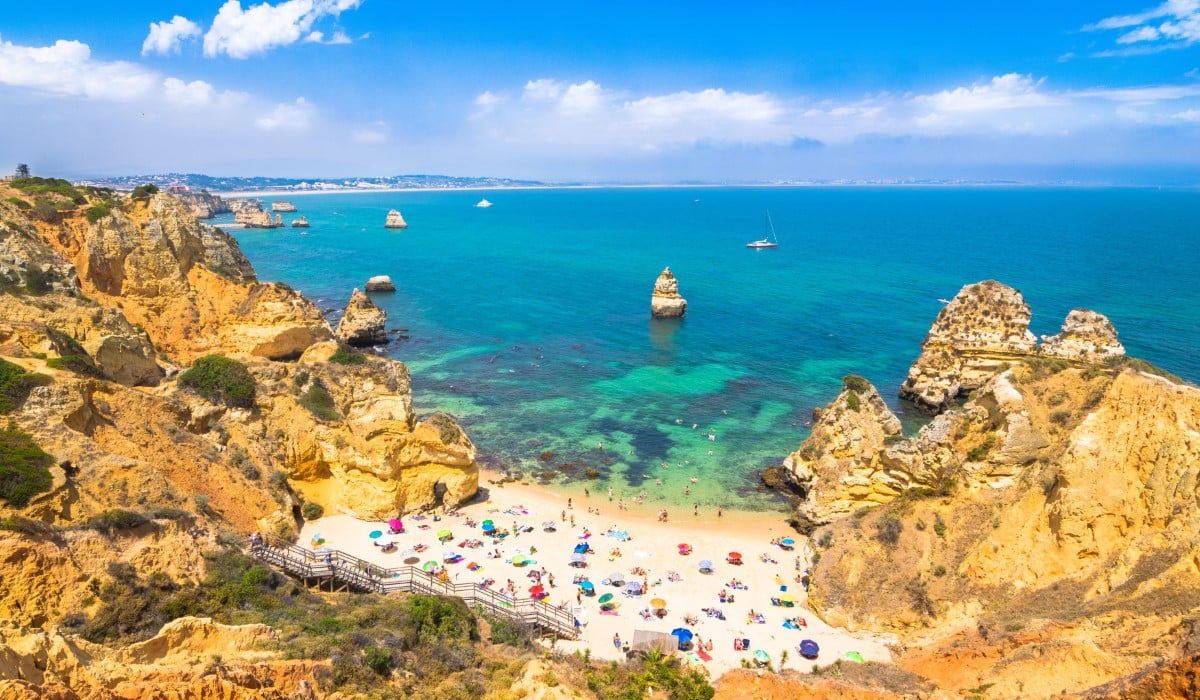
How to combine Lagos into a relaxed private route
For one day starting in Lagos or elsewhere in the Algarve, keep the route to four or five main stops. Begin at Ponta da Piedade before the strongest heat, then choose either Praia do Camilo or Praia Dona Ana rather than climbing down to both. Continue into the old town for lunch, followed by the Church of Saint Anthony and museum or the Mercado de Escravos, depending on your interests. Finish with a gentle waterfront walk past the fortress.
If the municipal market is a priority, start there in the morning and save Ponta da Piedade for late afternoon. Meia Praia works better as an alternative beach stop than as another item squeezed into an already full day. A flexible itinerary should allow time for lunch, shade and an unplanned café stop—not simply more drop-offs.
Portugal Magik offers private day and multi-day tours with an English-speaking driver, door-to-door pickup and flexible itineraries. Your driver can connect the coastal stops and agree on a practical meeting point after your independent old-town walk, allowing for pedestrian streets and vehicle-access restrictions. Request a personalized Lagos route with the amount of walking and beach time that suits you.
From Lisbon, Lagos is roughly 300 km away by road, with a direct drive typically taking around three hours or more, depending on traffic and your pickup address. A return day trip is possible but means substantial driving; at least one overnight stay makes this a much more relaxed visit. On arrival day, explore the old town, market area and waterfront; the following day, visit Ponta da Piedade and one beach before continuing your journey.
For a three-day plan, keep a full day in Lagos and add a separate western Algarve outing to Sagres Fortress and Cabo de São Vicente, roughly 35–40 km west of town. Portugal Magik can arrange a private multi-day tour or a private transfer between Lisbon and Lagos. A private Mercedes-Benz V-Class is a comfortable option for smaller groups on these longer journeys, subject to availability; ask for a personalized quote based on your group size, luggage and preferred stops.
Best time to visit Lagos and practical insider tips
May, June, September and early October usually offer the best balance of pleasant sightseeing weather and manageable crowds. September often combines warm days with sea temperatures that are more comfortable than in spring, although Atlantic conditions are never guaranteed. July and August bring the busiest beaches and strongest demand for accommodation, so plan coastal stops early and book your private transport ahead.
Winter can be rewarding for old-town wandering and dramatic coastal views, but rain, wind and shorter daylight hours call for a flexible plan. Some restaurants and visitor facilities operate reduced seasonal schedules. Check museum opening days before fixing your route rather than assuming every indoor attraction will be available every day.
For anyone building a must see Lagos shortlist, distinguish between seeing the coastline and spending time on the sand. Ponta da Piedade delivers memorable views without a beach descent, whereas Camilo and Dona Ana require stairs. The waterfront and selected approaches to Meia Praia are generally better starting points for travellers seeking gentler walking, although exact access needs should always be discussed in advance.
Bring sun protection, water and supportive footwear, even for a short visit. Clifftop paths can be exposed, and the sea is often cooler than visitors expect; follow lifeguard flags, respect closures and keep clear of cliff bases and edges. A calm-looking cove is not a guarantee of safe swimming.
For lunch, look for straightforward Algarve cooking such as grilled sardines when in season, grilled fish or cataplana de marisco, a seafood dish cooked in the region’s distinctive lidded copper vessel. Cataplana is often priced for two and cooked to order, so confirm the portion and allow an unhurried lunch break. Tell Portugal Magik whether your priority is history, viewpoints or beach time so your personalized itinerary leaves room for what you will actually enjoy.