Your guide to sightseeing in Portugal
The most rewarding sightseeing in Portugal pairs its great monuments with time to enjoy the streets, riverfronts and landscapes around them. Start with these 11 places, then build a route that leaves room for a long lunch rather than another hurried stop.
11 essential places for sightseeing in Portugal
01Jerónimos Monastery, Lisbon
Construction began in 1501 on this Belém monastery, whose maritime motifs and intricately carved cloisters make it one of the defining Portugal landmarks of the Manueline period. Give the cloisters unhurried attention, and check current ticket arrangements for the church and monastery rather than assuming one admission covers everything. Afterwards, walk to nearby Pastéis de Belém, which has sold its custard tarts since 1837; the takeaway queue and table-service entrance are separate.
02Alfama and São Jorge Castle, Lisbon
Alfama's steep lanes spread below São Jorge Castle, linking tiled façades, small squares and viewpoints over the Tagus. The castle hill has layers of settlement predating the Portuguese conquest of Lisbon in 1147, so this is a place to appreciate both the city's history and its geography. Where access permits, arrange a higher drop-off and explore downhill towards Largo das Portas do Sol, wearing shoes that grip polished cobblestones.
03Pena Palace and Park, Sintra
Created in the 19th century under King Ferdinand II, Pena Palace combines brightly coloured façades, Romantic architecture and wooded grounds above Sintra. Reserve the appropriate timed admission and allow extra time between reaching the estate entrance and entering the palace itself; a driving arrival time is not the same as a palace entry time. On misty mornings, bring a light layer and enjoy the atmospheric park rather than expecting clear coastal views.
04Cabo da Roca, Sintra-Cascais coast
Mainland Europe's westernmost point sits above Atlantic cliffs, with a lighthouse and a stone monument marking its geographical significance. It pairs naturally with Sintra, but the exposed setting can feel much colder and windier than Lisbon. Keep to designated areas behind barriers, and treat this as a short coastal stop rather than a guaranteed sunset spectacle when fog rolls in.
05Óbidos
This walled town, roughly 90 kilometres north of Lisbon by road, preserves a compact network of whitewashed houses, stone gateways and lanes below its medieval castle. Walk beyond busy Rua Direita to appreciate the quieter residential streets and views towards the walls. The ramparts include narrow, uneven sections without continuous protective railings, so ground-level exploring is the more comfortable choice for anyone uneasy with heights.
06Batalha Monastery
Built to commemorate Portugal's victory at the Battle of Aljubarrota in 1385, Batalha Monastery rewards close attention to its Gothic architecture and royal tombs. The roofless Unfinished Chapels are especially memorable, with richly worked stone portals opening to the sky. Check which areas your chosen ticket covers and leave time for the chapels rather than spending the entire visit in the church.
07University of Coimbra
Founded in 1290 and permanently established in Coimbra in 1537, the university crowns the old city above the Mondego River. Its historic precinct includes the 18th-century Joanina Library, an extraordinary setting of gilded woodwork and bookshelves. Book a ticket that includes the library if it is a priority, follow the assigned entry time, and plan for slopes and steps around the upper town.
08Ribeira and the Dom Luís I Bridge, Porto
Porto's riverside quarter brings together narrow streets, colourful façades and the iron bridge opened in 1886 between Porto and Vila Nova de Gaia. Walk along the waterfront for views of the bridge, then consider a separate stop at the higher Jardim do Morro viewpoint across the river. For a gentler visit, ask your driver to connect the upper and lower areas rather than tackling every steep street on foot.
09Pinhão and the Douro Valley
Around Pinhão, terraced vineyards climb above bends in the Douro, within the Alto Douro Wine Region recognised by UNESCO in 2001. The railway station's tile panels depict vineyard work and local landscapes, making its exterior a worthwhile short stop even without any additional visit booked. Choose one stretch of scenic road and a viewpoint such as Casal de Loivos rather than trying to cover the whole valley; winding roads make map distances deceptive.
10Évora's historic centre
Around 130 kilometres east of Lisbon by road, Évora brings together a Roman temple, a medieval cathedral and streets of whitewashed buildings edged in ochre. Its historic centre became a UNESCO World Heritage Site in 1986, and the temple square is a useful starting point for exploring on foot. In hot weather, visit exposed squares early and save shaded lanes or indoor monuments for the afternoon; cathedral rooftop access involves stairs.
11Ponta da Piedade and Lagos, Algarve
Near Lagos, Ponta da Piedade's limestone headlands frame sea arches, stacks and sheltered coves along one of the Algarve's most recognisable coastlines. Combine the coastal viewpoints with time in Lagos's old town, keeping this southern region for a separate stay rather than a rushed Lisbon excursion. Use the designated boardwalks and viewing areas, and check wind and heat conditions before committing to a longer walk.

Plan with confidence
Plans change. Your options are clear.
Change dates without an extra change charge when available, and cancel early for a refund or travel credit. Our team confirms every detail before you pay.

Travel with Portugal Magik
Explore Portugal in a Mercedes-Benz V-Class
For smaller groups, a private V-Class offers a comfortable way to travel between places, with an English-speaking driver, door-to-door pickup and a flexible itinerary planned with our team. Vehicle choice depends on your group and availability.
Plan a personalized journey →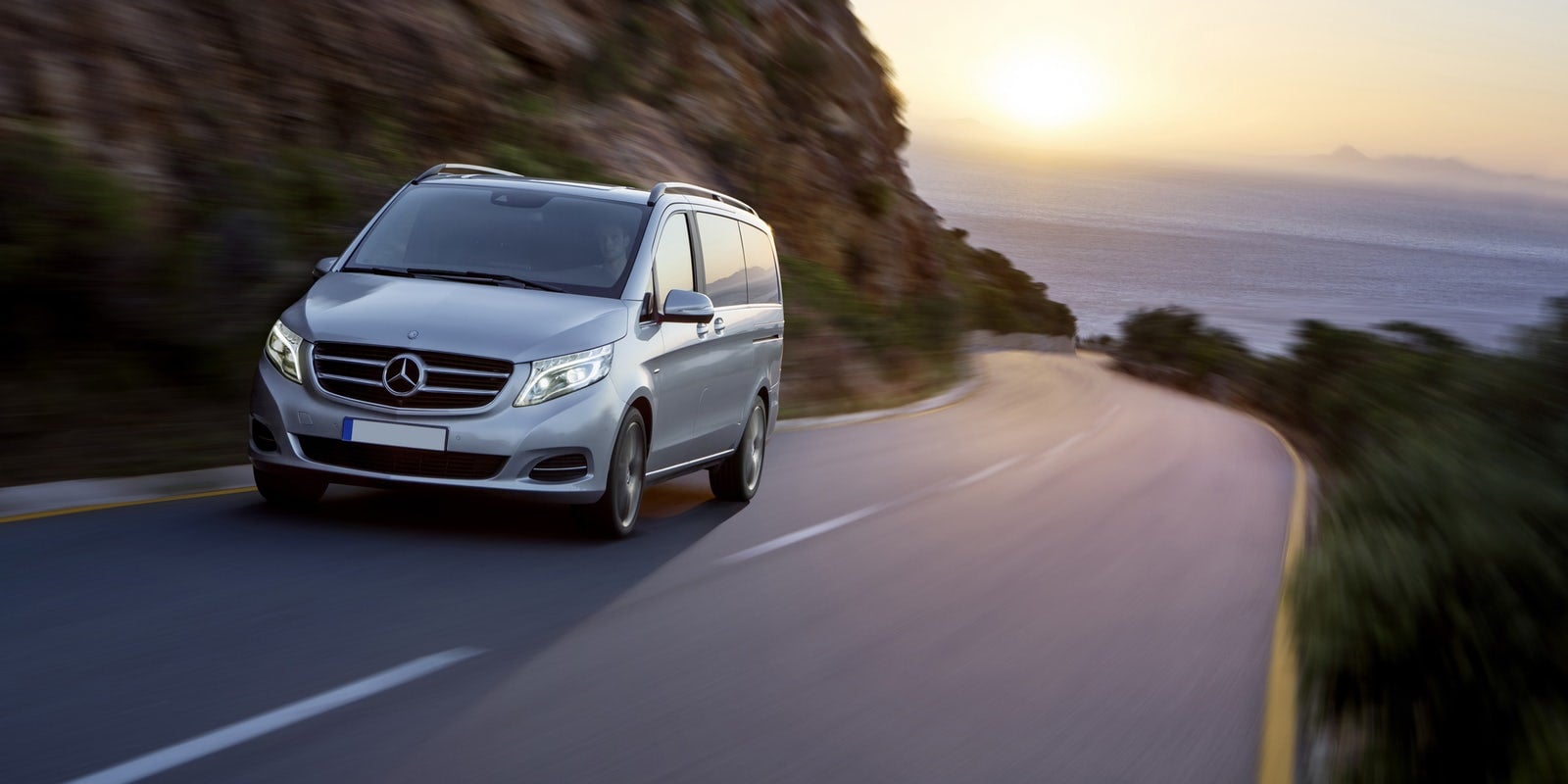
Turn the landmarks into a relaxed private route
A good Portugal private tour starts with geography, not a checklist. Portugal Magik offers private day and multi-day tours and transfers with an English-speaking driver, door-to-door pickup and flexible itineraries. For smaller groups, a private Mercedes-Benz V-Class is a comfortable option on journeys such as Lisbon–Sintra or a multi-day route north, subject to availability and passenger and luggage requirements.
A Lisbon day: Pair Jerónimos Monastery and the Belém waterfront in the morning with Alfama and a castle visit or viewpoint in the afternoon. These neighbourhoods are on different sides of central Lisbon, so a private transfer between them saves energy for walking. Allow a proper lunch break and resist adding Sintra to the same day.
A Sintra and coast day: From Lisbon, make Pena Palace your main visit, then allow time for lunch and a short look around Sintra's historic centre. Continue to Cabo da Roca if the weather and your pace suit it. Ask Portugal Magik for a personalized itinerary around your palace entry time, with fewer stops if you prefer longer visits.
A six-day route towards the north: Spend day one in Lisbon and day two in Sintra. On day three, travel via Óbidos and Batalha to an overnight stay in Coimbra; visit the university on day four before continuing to Porto. Give Porto day five, then head into the Douro on day six, ideally staying overnight rather than immediately retracing the journey. If you need to finish in Lisbon, add a separate return travel day instead of squeezing that distance into your Douro visit.
A southern alternative: Travel from Lisbon to Évora for an overnight stay, then continue to Lagos for at least two nights. This gives the Alentejo and Algarve distinct chapters, with time for Évora's monuments and the coast around Ponta da Piedade. Trying to add both regions to the northern route in one week would mean considerably more driving and less time in each place.
Share your arrival point, departure point and must-see places with Portugal Magik to request a personalized route. Your driver handles the road journeys, while monument opening hours, timed tickets, luggage needs and walking preferences shape each day's practical rhythm.
Best time to visit and practical insider tips
May, June, September and early October often offer a useful balance of daylight and comfortable sightseeing conditions, although heat, rain and crowds vary by region. Spring brings greener landscapes; early autumn can be particularly appealing in the Douro during the grape-harvest period, whose exact timing changes each year. Popular Sintra and Lisbon monuments can still be busy outside midsummer.
July and August require a different pace. Évora and the inland Douro can become very hot, while Algarve coastal stops are busiest during the main holiday season. Start outdoor visits early, allow a longer lunch break and avoid building an itinerary around prolonged midday walking.
November to March can work well for a monument-focused trip, provided you accept shorter days and a greater chance of rain, especially in northern Portugal. Sintra's hilltops may be misty even when Lisbon is bright, and Cabo da Roca can be windy in any season. Carry a light waterproof layer alongside sunglasses and water.
Book the visits that control your schedule first. Pena Palace and Coimbra's Joanina Library need particular attention to ticket types and entry times; check official websites for current opening days, conservation works and access restrictions elsewhere. Do not assume a private driver removes the need for advance admission reservations.
Keep walking distances honest. Alfama, Sintra, Coimbra and Porto all have steep or uneven sections, and historic centres may restrict vehicle access. Tell Portugal Magik about mobility needs before requesting your personalized quote so pickup points, stops and walking expectations can be discussed realistically.
Finally, leave a little space between major sights. A coffee in Óbidos, time beside the Mondego in Coimbra or an extra viewpoint stop in the Douro often adds more to the day than another ticketed attraction.