Your guide to sightseeing in Lisbon
Sightseeing in Lisbon is most rewarding when you leave time between its riverside monuments, tiled squares and steep old streets. This guide helps you choose what matters, avoid unnecessary backtracking and build a comfortable day around your interests.
Sightseeing in Lisbon: 10 places worth your time
01Praça do Comércio
Built on the site of the royal palace destroyed in the 1755 earthquake, this broad riverside square is framed by yellow façades and the Arco da Rua Augusta. Walk to Cais das Colunas at its southern edge for a view across the Tagus, then explore the arcaded sides when you need shade.
02Alfama
Lisbon’s old hillside quarter is a tangle of narrow lanes, small squares and buildings that survived the 1755 earthquake. Begin around Largo das Portas do Sol and explore downhill toward the cathedral rather than tackling the whole district uphill; wear shoes with grip, as polished paving becomes slippery when wet.
03Lisbon Cathedral, Sé de Lisboa
Founded in the 12th century after the Christian conquest of Lisbon in 1147, the cathedral combines a fortress-like Romanesque exterior with later architectural additions. Its position between Baixa and Alfama makes it a natural short stop, but check visitor arrangements before entering because worship and sightseeing follow different schedules.
04Castelo de São Jorge
Occupying a commanding hill above the historic center, the castle preserves fortifications associated with Lisbon’s medieval Islamic period and later royal occupation. Allow roughly 90 minutes for the grounds, viewpoints and ramparts, and choose an early visit in warm weather because exposed sections offer little shade.
05Carmo Convent
The roofless Gothic nave of this former convent remains one of the clearest reminders of the 1755 earthquake, while its archaeological museum adds context beyond the dramatic arches. Pair your visit with a pause in Largo do Carmo, a square also closely associated with the events of the Carnation Revolution on 25 April 1974.
06Santa Justa Lift
Opened in 1902, this iron lift connects the lower streets of Baixa with the Carmo area and is one of the most recognizable Lisbon landmarks. If the queue is long, admire its structure from Rua de Santa Justa and approach the upper neighborhood separately; riding the lift is not essential to appreciating its engineering.
07Miradouro de São Pedro de Alcântara
This terraced viewpoint beside Bairro Alto looks across the city toward São Jorge Castle, with Baixa spread below. Use the illustrated tile panel to identify the skyline, and come in late afternoon when the light often catches the castle-facing slopes beautifully.
08Jerónimos Monastery
Construction began in 1501 under King Manuel I, and the monastery’s richly carved Manueline architecture reflects Portugal’s maritime wealth and royal ambitions. Give the cloister at least an hour and check the church’s access separately, as visiting arrangements and queues are not necessarily the same.
09Belém Tower
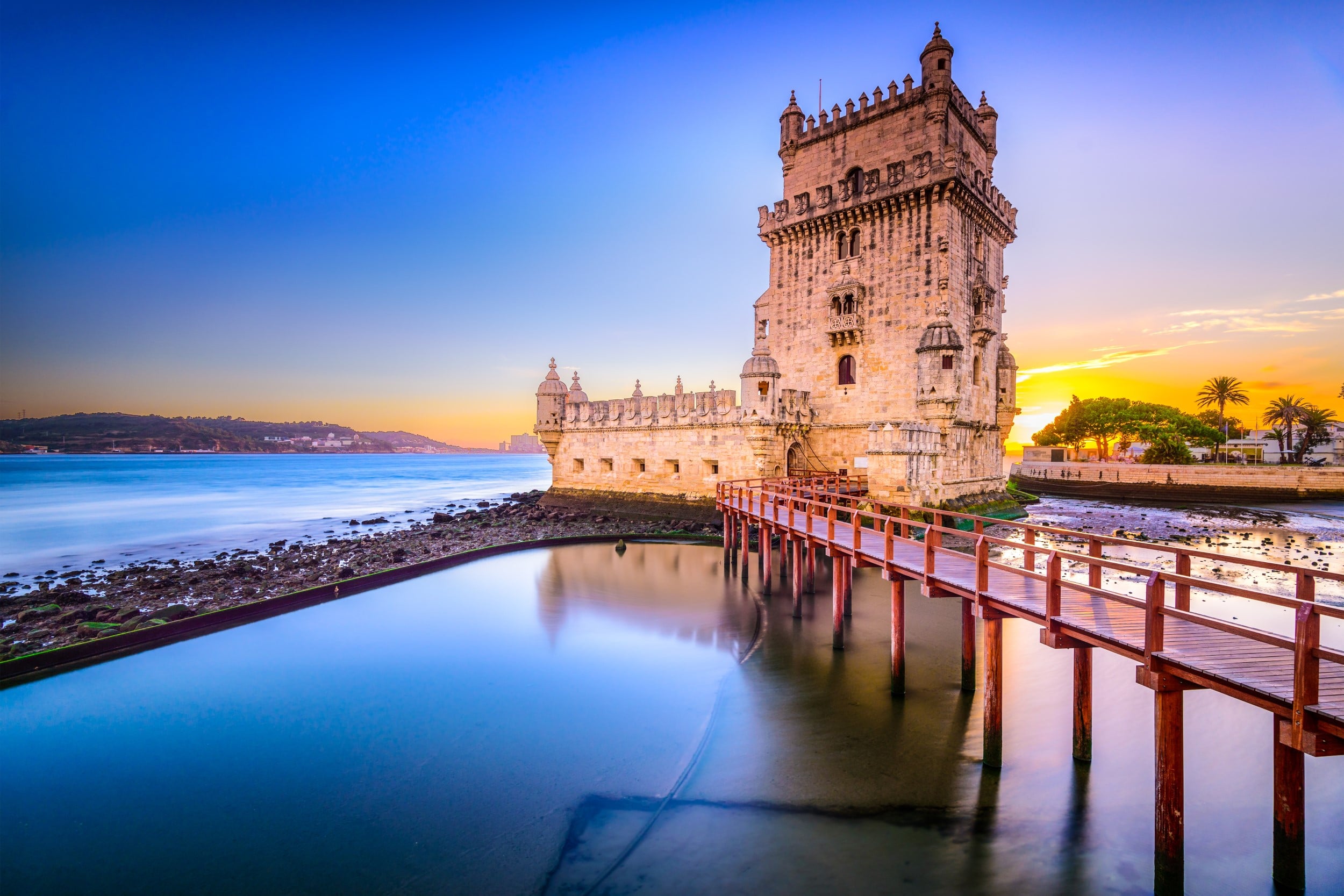
Built between 1514 and 1519, this fortified tower once formed part of Lisbon’s river defenses and is now a UNESCO World Heritage Site alongside Jerónimos Monastery. Check current interior access before planning around a ticket, and leave time to view the tower from the waterfront rather than treating it only as an indoor visit.
10Padrão dos Descobrimentos
Inaugurated in its permanent form in 1960, this ship-shaped monument portrays figures associated with Portuguese maritime expansion, led by Henry the Navigator. Examine the compass rose and world map in the paving before considering the paid viewpoint, and bring a light layer because the open riverfront can be windy.
Plan with confidence
Plans change. Your options are clear.
Change dates without an extra change charge when available, and cancel early for a refund or travel credit. Our team confirms every detail before you pay.

Travel with Portugal Magik
Explore Portugal in a Mercedes-Benz V-Class
For smaller groups, a private V-Class offers a comfortable way to travel between places, with an English-speaking driver, door-to-door pickup and a flexible itinerary planned with our team. Vehicle choice depends on your group and availability.
Plan a personalized journey →Combine the landmarks into a relaxed private route
For one comfortable day, choose four or five main stops rather than trying to enter every monument. A balanced route starts with door-to-door pickup and a drive to Belém, roughly 7 km west of central Baixa, for Jerónimos Monastery. Continue to the waterfront for exterior views of Belém Tower and Padrão dos Descobrimentos, allowing time for a pastel de nata at Pastéis de Belém if the queue suits your pace.
After lunch, return toward the historic center for Praça do Comércio and a short Alfama walk beginning near Portas do Sol. Finish with São Pedro de Alcântara if time and energy allow. If São Jorge Castle is your priority, give it a proper visiting window and remove another substantial stop rather than squeezing it into the end of the day.
Two days make room for more interiors and less clock-watching. On day one, combine São Jorge Castle, Alfama and the cathedral in the morning, followed by Praça do Comércio and Baixa. On day two, spend the morning in Belém, then visit Carmo Convent, view the Santa Justa Lift and pause in Chiado before finishing at São Pedro de Alcântara. Check opening days before fixing the order.
A Lisbon private tour with Portugal Magik provides private Mercedes-Benz transport, an English-speaking driver, door-to-door pickup and a flexible itinerary. A private Mercedes-Benz V-Class is a comfortable option for smaller groups, subject to availability. In pedestrianized lanes and restricted-access areas, expect short walks from suitable stopping points; vehicle access does not extend to every attraction entrance.
Ask Portugal Magik for a personalized day or multi-day route based on your hotel, preferred sights and walking comfort. Your driver can connect the different neighborhoods while you reserve your energy for the places you most want to explore.
Best time to visit and practical insider tips
April to June and September to October usually offer a good balance of daylight and comfortable sightseeing weather, although hot spells and rain remain possible. July and August can be hot and busy, especially around Belém and the castle. Winter often brings shorter queues, but daylight is limited and some days are wet or windy.
Visit the castle early during warmer months and give Belém a morning of its own when possible. Jerónimos is popular throughout the year, so check official ticket arrangements and opening days before choosing your itinerary. Exterior stops remain worthwhile, but do not assume you can enter every monument without advance planning.
Lisbon’s hills matter more than the distances suggest. A short walk through Alfama can include uneven paving, steps and steep gradients, while the Belém waterfront is comparatively level but exposed to sun and wind. Tell Portugal Magik about mobility requirements when requesting your quote so the route can favor suitable viewpoints and shorter walking sections.
Wear supportive shoes, carry water and use sun protection even when a river breeze makes the temperature feel mild. On rainy days, take extra care on the patterned limestone pavements known as calçada portuguesa. Keep bags closed and valuables secure around crowded attractions and queues.
Leave room for an unhurried lunch rather than stacking timed entries too closely. Grilled sardines are especially associated with Lisbon’s June festivities, while bacalhau à Brás—shredded salted cod with thin fried potatoes, onions and eggs—is a familiar year-round choice. For photographs, the Tagus-facing spaces are often particularly attractive in early or late light.