Your guide to sightseeing in Castelo de Vide
The pleasure of sightseeing in Castelo de Vide lies in its contrasts: medieval lanes, Renaissance stonework and wide Alentejo views. Give this hill town time, with room for its Jewish heritage, a shaded lunch and the quieter countryside beyond the walls.
Nine stops for sightseeing in Castelo de Vide
01Castelo de Castelo de Vide
The medieval castle crowns the town, with defensive walls and a keep overlooking whitewashed houses and the surrounding countryside. It is the natural starting point for understanding the settlement’s hilltop position and proximity to the Spanish frontier. Visit before the strongest heat, wear shoes with grip and check which interior areas are accessible that day.
02Judiaria de Castelo de Vide
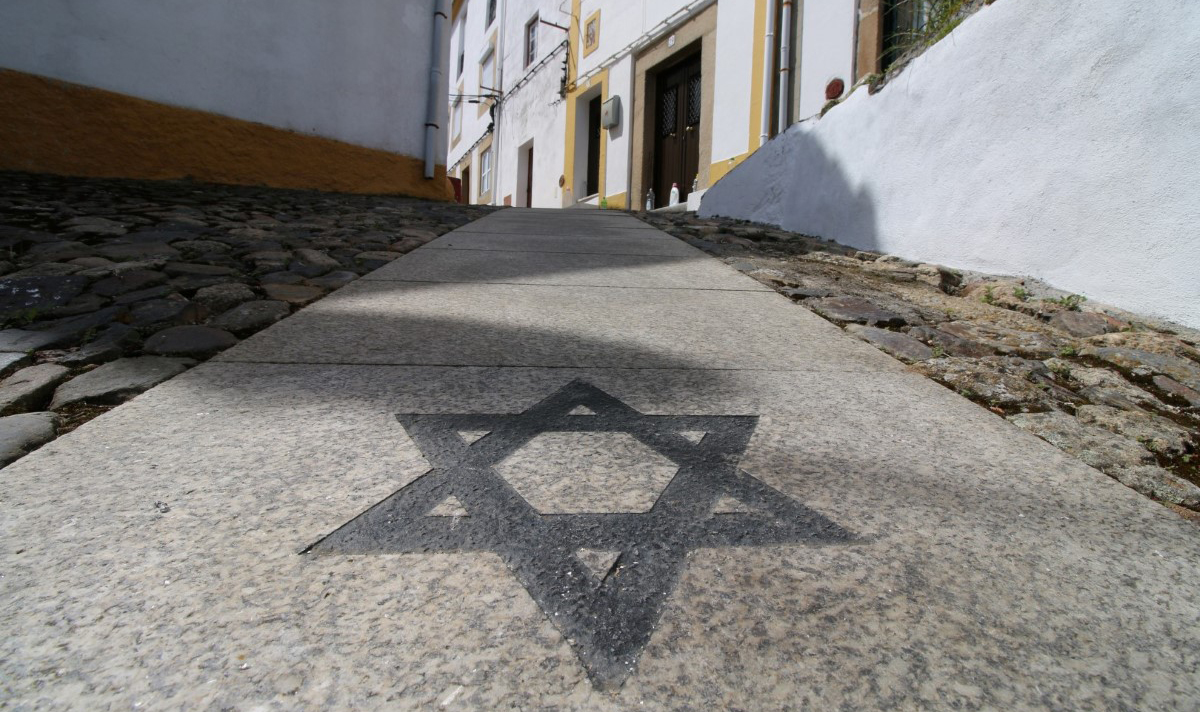
Below the castle, the old Jewish quarter follows steep, narrow streets lined with houses whose stone doorways reward a slow look. Its history is closely connected with the Jewish communities of the Portuguese borderlands, including people who arrived after Spain’s expulsion of Jews in 1492. Rather than trying to follow the shortest route, leave time to examine the carved door surrounds and walk the slopes without rushing.
03Sinagoga de Castelo de Vide
This historic building in the Jewish quarter now houses a museum interpreting the town’s Jewish heritage. Its modest rooms offer an important counterpoint to the castle’s military history, helping visitors understand the community behind the surrounding streets. Confirm current opening hours before setting your route, and make this a planned stop rather than assuming you can enter whenever you pass.
04Fonte da Vila
This sixteenth-century Renaissance fountain, sheltered beneath a stone roof supported by columns, is one of the most distinctive Castelo de Vide landmarks. It stands at a meeting point of old streets and reflects the importance of shared water sources in everyday town life. Step back to appreciate the whole structure before looking closely at its carved details; the uneven paving deserves attention too.
05Igreja de Santa Maria da Devesa
Facing Praça Dom Pedro V, this substantial parish church provides a striking contrast to the small buildings of the medieval quarter. Construction began in 1789, and its broad façade anchors the lower town’s principal civic space. If the church is open, step inside quietly outside service times; otherwise, the square gives you the clearest view of its scale.
06Praça Dom Pedro V
The town’s main square brings together the parish church, civic buildings and a more open streetscape than the lanes above. It is a useful place to pause and see Castelo de Vide as a lived-in Alentejo town, not simply a collection of monuments. Put your café break here between sightseeing stages rather than leaving every rest until the end of the uphill walking.
07Forte de São Roque
This seventeenth-century fortification belongs to the period when Portugal strengthened its border defences following the restoration of independence in 1640. Its earth-and-stone defensive layout tells a different story from the medieval castle. Treat it primarily as an exterior stop unless access has been confirmed, and ask your driver to include it when moving between the town and countryside.
08Ermida de Nossa Senhora da Penha
On a rocky height outside the town, this chapel’s setting offers a rewarding view back towards Castelo de Vide and across the surrounding landscape. The appeal is as much the elevated viewpoint as the religious building itself. Ask about the closest suitable vehicle access, expect some walking on uneven ground and save this stop for clear weather rather than low cloud.
09Menir da Meada
Standing in the countryside north of Castelo de Vide, this prehistoric granite menhir rises approximately seven metres above ground. It brings a much older layer of local history into a visit otherwise dominated by medieval and early modern buildings. Make it a separate countryside excursion, with water, sun protection and suitable footwear, rather than treating it as a walkable extension of the historic centre.
Plan with confidence
Plans change. Your options are clear.
Change dates without an extra change charge when available, and cancel early for a refund or travel credit. Our team confirms every detail before you pay.

Travel with Portugal Magik
Explore Portugal in a Mercedes-Benz V-Class
For smaller groups, a private V-Class offers a comfortable way to travel between places, with an English-speaking driver, door-to-door pickup and a flexible itinerary planned with our team. Vehicle choice depends on your group and availability.
Plan a personalized journey →A relaxed private route with Portugal Magik
For a town-focused day, begin near the castle, subject to vehicle access, then explore the Jewish quarter, synagogue and Fonte da Vila on foot. Continue towards Praça Dom Pedro V for lunch and Santa Maria da Devesa. This gives the historic centre a generous half-day rather than reducing each stop to a photograph. Add Nossa Senhora da Penha afterwards if the weather and your energy suit; the menhir is better treated as an alternative countryside stop than another compulsory addition.
From Lisbon, Castelo de Vide is roughly 220 kilometres away, with approximately 2½–3 hours of driving each way, depending on pickup location, traffic and route. A private day trip is possible, but it is a long day. Ask Portugal Magik for a personalized itinerary that prioritizes the town itself rather than squeezing in several distant destinations.
For a more restful two-day route, travel from Lisbon to Castelo de Vide and stay locally, then visit Marvão the following morning. Marvão is around 12 kilometres away by road, making it a natural companion rather than a major detour; fit Penha or the Menir da Meada around your main visits.
A Castelo de Vide private tour with Portugal Magik includes private Mercedes-Benz transport, an English-speaking driver, door-to-door pickup and a flexible itinerary. For smaller groups, request a Mercedes-Benz V-Class as a comfortable option for the longer journey, subject to availability. Your driver can coordinate practical drop-off and meeting points, while the narrow historic lanes are explored on foot.
Best time to visit and practical local tips
April–June and September–October usually offer the best balance of comfortable walking conditions and daylight. Spring brings greener countryside, while early autumn can still be warm. July and August often bring strong inland heat: tackle the castle and Jewish quarter early, plan a proper lunch break and avoid exposed countryside stops during the hottest hours.
Winter can be peaceful, but rain makes sloping stone streets slippery, and hilltop viewpoints can feel cold and windy. Check the forecast before committing to Penha or an extended outdoor visit.
Castelo de Vide’s Easter celebrations draw on distinctive local religious traditions. If visiting during Holy Week, arrange accommodation and meals ahead and expect church access and town routines to follow the celebrations rather than an ordinary sightseeing schedule.
Carry water, choose supportive shoes and confirm museum and church opening hours close to your visit. For lunch, look for regional dishes such as açorda alentejana or migas, checking the day’s menu. Tell Portugal Magik about walking limitations when requesting your route so that stops and meeting points can be personalized.