Your guide to sightseeing in Alcobaça
The pleasure of sightseeing in Alcobaça lies in its contrasts: monumental Cistercian architecture, intimate ceramics collections and Atlantic beaches within an easy drive. Start with the monastery, leave time for a convent-inspired pastry, and choose your next stop according to your interests rather than a crowded checklist.
Where to go sightseeing in Alcobaça and nearby
The first five places are in Alcobaça itself; the remaining four are nearby extensions. You do not need to visit them all: the monastery and two or three complementary stops make a rewarding day.
01Mosteiro de Alcobaça
Founded in 1153 and inscribed on UNESCO’s World Heritage List in 1989, this Cistercian monastery is the essential starting point among Alcobaça landmarks. Its church contains the intricately carved 14th-century tombs of Pedro I and Inês de Castro, while the cloister, refectory and vast kitchen reveal the scale of monastic life. Allow around two hours, look closely at the narrative carvings on the tombs, and check which areas are included in the current visitor route.
02Praça 25 de Abril and the monastery frontage
The broad square facing the monastery, commonly associated with Alcobaça’s Rossio, gives you room to appreciate the façade before stepping inside. It is also a practical place to pause at a café and try a cornucópia, the crisp, egg-cream-filled pastry associated with Alcobaça. For a less compressed photograph of the monastery, walk across the square rather than standing immediately beneath its towers.
03Castelo de Alcobaça
The surviving walls and ruins on the hill above town offer a different perspective on the monastery and the surrounding urban landscape. This is a short viewpoint visit rather than a furnished castle experience. Ask about current access before making the climb, wear shoes with grip, and avoid treating the exposed paths as an easy stroll in wet weather.
04Museu do Vinho de Alcobaça
Housed in a former winery associated with José Raposo de Magalhães, this museum explores winemaking through historic equipment and the spaces used for production. It adds an agricultural and industrial chapter to a town often viewed only through its monastery. Confirm opening times and visit arrangements before including it, particularly if you want an explanation of the machinery rather than simply a look around.
05Museu Raul da Bernarda
This ceramics museum preserves the legacy of Raul da Bernarda, a factory founded in 1875, and provides a closer look at Alcobaça’s decorative pottery tradition. Painted pieces and changing styles help explain the town’s identity beyond its medieval buildings. Check the current exhibition and opening schedule before travelling specifically for it, as smaller museums require more planning than the monastery.
06Mosteiro de Santa Maria de Cós
Approximately 10 kilometres north of Alcobaça, this former Cistercian convent rewards visitors with a richly decorated church interior, including gilded woodwork and azulejos. Its intimate scale makes an illuminating contrast with the great abbey in town. Arrange your day around confirmed church access rather than assuming you can enter whenever you arrive.
07Aljubarrota
Around 7 kilometres northeast of Alcobaça, this historic village has narrow streets, traditional houses and strong associations with the legend of Brites de Almeida, the baker of Aljubarrota. The Battle of Aljubarrota took place on 14 August 1385, but the battlefield and its interpretation centre are at São Jorge, near Porto de Mós, not in the village centre. Come for a gentle village walk, and keep the baker’s story clearly distinguished from documented military history.
08São Martinho do Porto
Roughly 20 kilometres southwest of Alcobaça, this seaside town curves around a sheltered, shell-shaped bay with a beachfront promenade. It is a good choice for a leisurely lunch or an easy coastal walk after the monastery, especially for travellers who prefer sheltered water to an exposed Atlantic beach. Choose a promenade stop if you want level walking, and remember that shelter does not guarantee warm water or safe swimming conditions every day.
09Nazaré and Sítio
About 15 kilometres west of Alcobaça, Nazaré combines a working seaside identity with the elevated Sítio district, the Sanctuary of Nossa Senhora da Nazaré and the Suberco viewpoint. Praia do Norte, beneath the headland, is associated with giant-wave surfing, although those conditions are seasonal and never guaranteed. Ask your driver to approach Sítio separately from the lower town to reduce steep walking, and stay well back from exposed edges and surf during rough weather.

Plan with confidence
Plans change. Your options are clear.
Change dates without an extra change charge when available, and cancel early for a refund or travel credit. Our team confirms every detail before you pay.

Travel with Portugal Magik
Explore Portugal in a Mercedes-Benz V-Class
For smaller groups, a private V-Class offers a comfortable way to travel between places, with an English-speaking driver, door-to-door pickup and a flexible itinerary planned with our team. Vehicle choice depends on your group and availability.
Plan a personalized journey →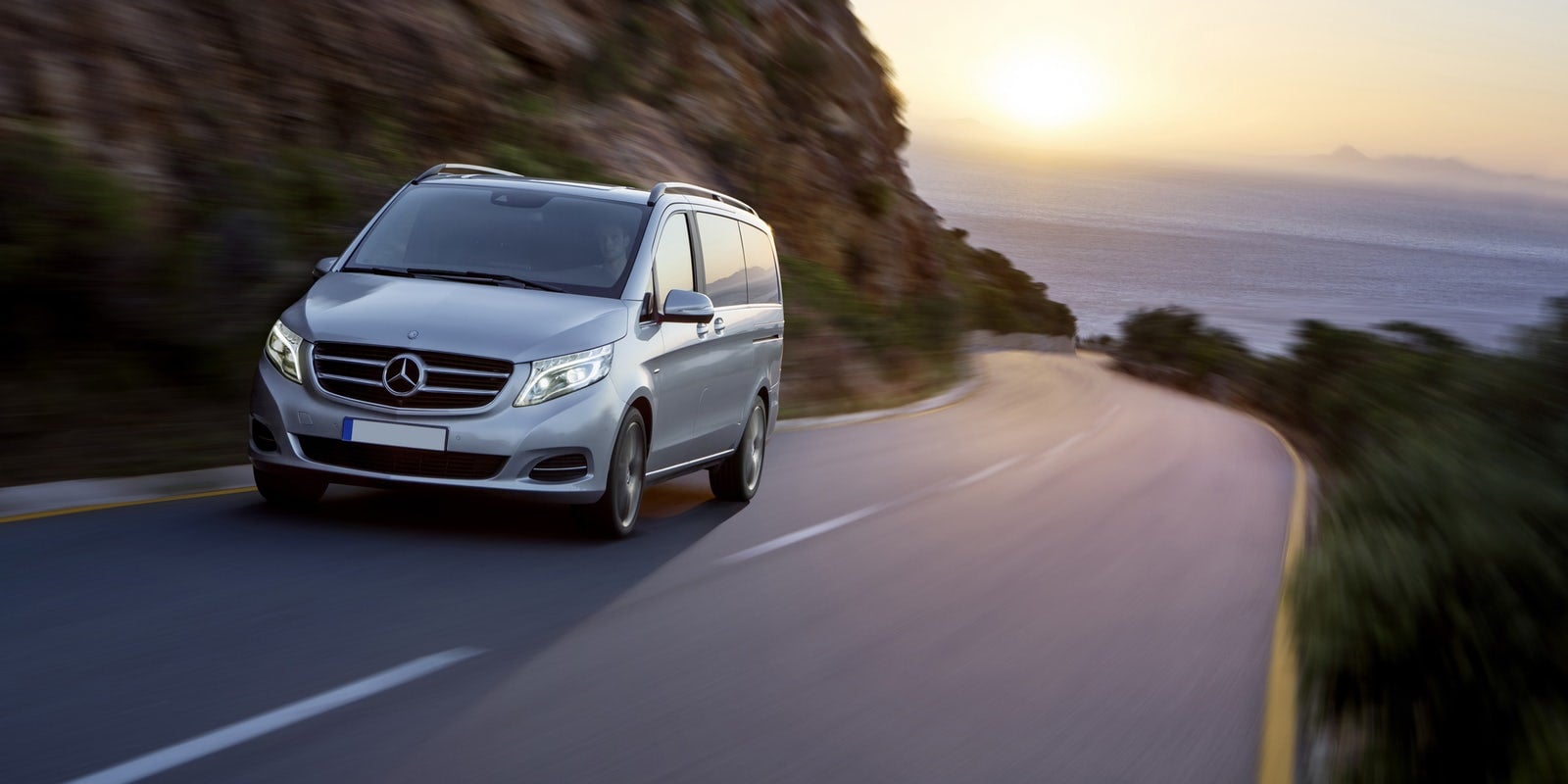
A relaxed private day, or a slower two-day route
From central Lisbon, Alcobaça is roughly 120 kilometres away; allow around 1½–2 hours by road, depending on traffic and your pickup point. A comfortable day begins with the monastery, followed by a pause on Praça 25 de Abril and lunch. In the afternoon, choose one direction: Cós for another layer of Cistercian history, Nazaré for clifftop views, or São Martinho do Porto for a gentler seaside finish.
A museum-focused Alcobaça private tour works differently. Pair the monastery with the Museu do Vinho or Museu Raul da Bernarda, subject to confirmed opening arrangements, and skip the coast rather than squeezing everything into short visits. Tell Portugal Magik which collections interest you when requesting a personalized itinerary.
For two days, spend the first exploring Alcobaça and Cós, with an overnight stay in Alcobaça or on the nearby coast. Use the second for Aljubarrota and Nazaré, or a slower combination of Nazaré and São Martinho do Porto. This leaves space for proper lunches and makes it easier to adapt to coastal weather.
Portugal Magik offers private day and multi-day tours with an English-speaking driver, door-to-door pickup and flexible itineraries. A private Mercedes-Benz V-Class is a comfortable option for smaller groups on these journeys, subject to availability. Ask for a personalized quote based on your accommodation, preferred pace and luggage requirements; monument visits remain subject to each venue’s opening hours and admission arrangements.
Best time to visit and practical insider tips
May, June, September and October often offer a pleasant balance of daylight and temperatures for combining town walks with coastal stops. July and August bring more visitors to Nazaré and São Martinho do Porto, so an earlier monastery visit followed by an unhurried lunch inland can work well. Winter suits architecture-focused visits, but allow for rain, shorter days and windy coastal viewpoints.
Visit the monastery earlier in the day if you value a quieter atmosphere, without assuming it will be empty. Check the official opening calendar before departure: religious services, holidays and conservation work can affect access, while the smaller museums and Cós may need more deliberate scheduling.
Wear comfortable shoes for stone floors and uneven streets. The monastery can feel cool even when the square outside is warm, so bring a light layer; for the coast, add a windproof jacket. Travellers with limited mobility should discuss specific entrances and walking distances in advance rather than assuming every historic space is step-free.
For a local food stop, look for cornucópias and other convent-inspired sweets, and try Maçã de Alcobaça when available. This geographically protected apple is a distinctive local product, not simply a souvenir label. If giant waves are your reason for adding Nazaré, keep the itinerary flexible: ask Portugal Magik to plan a sensible coastal stop, but never build the day around a promised wave spectacle.