A guide to catholic places to visit in Viana do Castelo
The catholic places to visit in Viana do Castelo connect the Sacred Heart sanctuary above the Lima estuary with parish churches, maritime devotion and intimate old-town chapels. This guide explains their history, what deserves a closer look and how to plan a respectful visit around worship.
Eight catholic places to visit in Viana do Castelo
Viana’s religious heritage is not confined to its famous hilltop sanctuary. Down in the historic centre, churches tell the stories of Dominican friars, charitable brotherhoods, fishing families and generations of parish life. Opening arrangements vary, particularly in smaller chapels: confirm access and Mass times directly before building a day around an interior visit.
01Santuário do Sagrado Coração de Jesus, Monte de Santa Luzia
Commonly called the Sanctuary of Santa Luzia, this landmark is dedicated to the Sacred Heart of Jesus, not to Saint Lucy. Construction began in 1904, following a design by Miguel Ventura Terra, and was completed in 1959. Look for the monumental rose windows and the contrast between the granite exterior and the luminous interior. The sanctuary stands roughly 5 km by road from the centre, overlooking the Lima estuary and Atlantic coast. Check its current worship schedule; sightseeing should pause during services. Insider tip: leave time for prayer inside before heading to the viewpoints, and check upper-level access separately because steps and visiting conditions differ from those of the main church.
02Sé de Viana do Castelo
Viana’s cathedral began as the medieval parish church and became a cathedral when the Diocese of Viana do Castelo was created in 1977. Its 15th-century fabric, twin towers and fortified appearance distinguish it from the city’s later Baroque churches. At the main portal, examine the sculpted apostles before entering to see the nave and side chapels. This is an active place of worship, so check parish notices for Mass and enter quietly if prayer is underway. Insider tip: stand back in Largo da Matriz first; the square gives you a much clearer sense of the façade’s defensive silhouette than the doorway does.
03Igreja da Misericórdia
On Praça da República, the Misericórdia complex brings together charitable history and an exceptionally rich church interior. The institution’s distinctive 16th-century building should not be confused with the church’s later Baroque decoration. Inside, blue-and-white tile panels, gilded woodwork and painted ceilings reward slow looking. Visitor access can be managed separately from worship and may involve an admission charge; confirm arrangements rather than assuming the church is continuously open. Insider tip: look up after studying the tiles—the ceiling is an essential part of the decorative scheme, not merely a backdrop.
04Igreja de São Domingos
Facing Largo de São Domingos, this church belonged to the Dominican Convent of Santa Cruz, founded in 1560. Its Renaissance façade offers a useful architectural contrast with the cathedral, while the interior contains richly worked altarpieces. The church remains a place of Catholic worship; check the parish’s current Mass times and avoid walking around the chapels during a service. Insider tip: compare the ordered stonework outside with the more elaborate decoration within. It makes the layering of different artistic periods especially easy to understand.
05Santuário de Nossa Senhora da Agonia
This sanctuary is central to Viana’s maritime identity and its best-known religious celebration. The present church took shape in the 18th century, and devotion to Our Lady of Agony became closely associated with fishing and seafaring families. Visit for the devotional image and the living tradition surrounding it, rather than expecting a large museum-like interior. Around the August festivities, services, processions and crowds affect access. Insider tip: pair your visit with a walk through the nearby Ribeira fishing quarter, where the connection between faith, the river and working life becomes much more tangible.
06Igreja de Nossa Senhora do Carmo
Usually called Igreja do Carmo, this church preserves the history of the Discalced Carmelite community established in Viana in the 17th century. Its conventual origins add another dimension to a route otherwise dominated by parish and confraternity churches. When open, take time with the sanctuary and devotional altarpieces, noticing the Carmelite identity expressed in the church’s dedication. Confirm interior access and any services locally; do not assume former convent spaces are part of a visit. Insider tip: use this as a quieter stop between the busiest landmarks rather than trying to fit every church into the same rushed walking circuit.
07Capela das Malheiras
On Largo de São Sebastião, this 18th-century chapel is attached to Casa dos Malheiro Reimão and is one of Viana’s most distinctive examples of Rococo religious architecture. Its exuberantly carved granite façade is worth seeking out even when the interior is closed. If access is available, the carved altarpiece continues the decorative richness indoors. This is a privately associated chapel, not a dependable stop for daily public Mass; arrange expectations around an exterior visit unless access has been confirmed. Insider tip: cross to the opposite side of the small square to appreciate how the chapel and adjoining residence form a single architectural composition.
08Capela das Almas
Standing on Largo das Almas, this small chapel occupies the site of Viana’s earlier parish church, associated with the invocation of São Salvador before the present cathedral took over that role. Its later rebuilding gives it a more modest appearance than its historical importance might suggest. If open, step inside for a brief, quiet visit; otherwise, the exterior still makes a meaningful stop on a walk through the old town. Public access and services should be checked locally. Insider tip: visit before the cathedral if you want to follow the development of Viana’s parish life in chronological order.
For a route shaped around the churches in Viana do Castelo that interest you most, ask Portugal Magik for a personalized private tour quote. Its English-speaking driver can adapt the driving itinerary and pickup arrangements, while church access remains subject to each religious institution.

Plan with confidence
Plans change. Your options are clear.
Change dates without an extra change charge when available, and cancel early for a refund or travel credit. Our team confirms every detail before you pay.
Travel with Portugal Magik
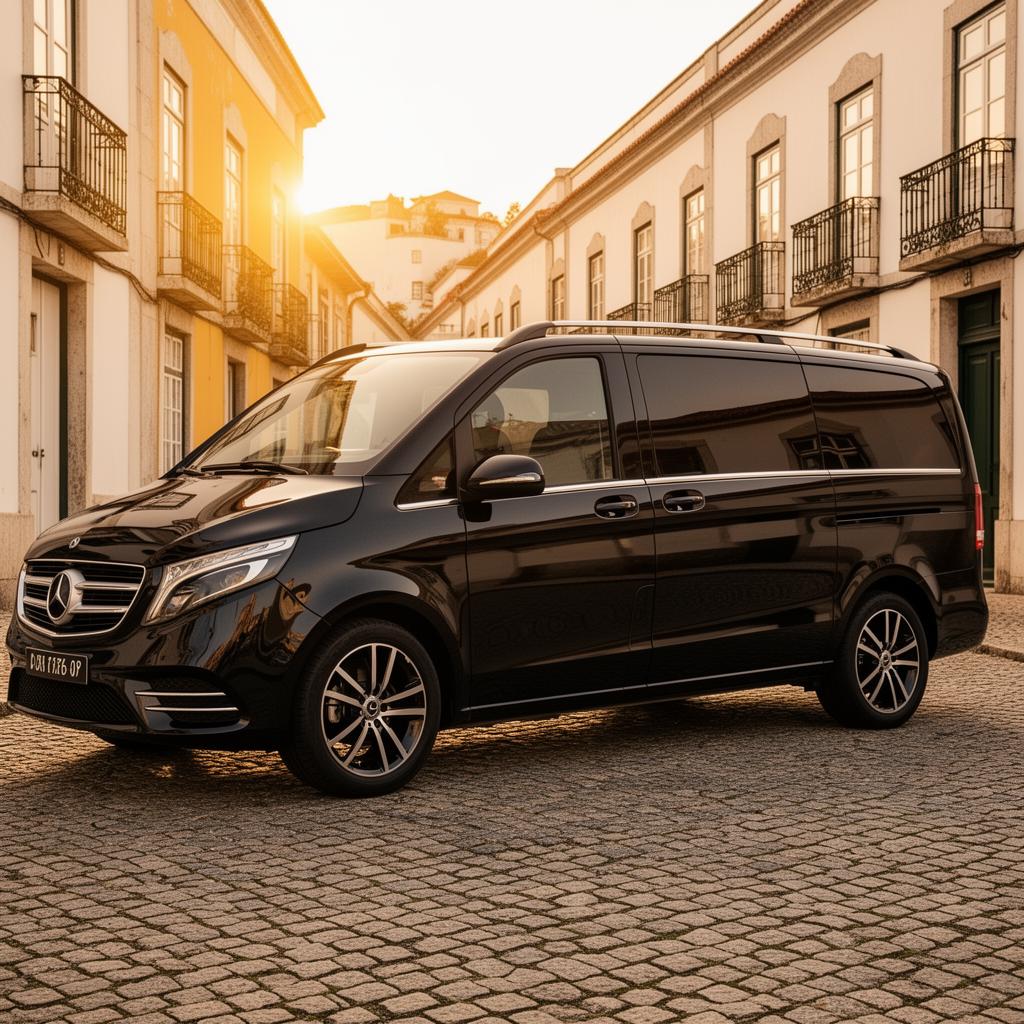
Explore Portugal in a Mercedes-Benz V-Class
For smaller groups, a private V-Class offers a comfortable way to travel between places, with an English-speaking driver, door-to-door pickup and a flexible itinerary planned with our team. Vehicle choice depends on your group and availability.
Plan a personalized journey →A pilgrimage-style private itinerary
A meaningful pilgrimage in Viana do Castelo needs pauses, not just a checklist. Choose four or five interiors, leave room for prayer and treat smaller chapels as optional stops if their doors are open.
Morning: begin at the Sanctuary of the Sacred Heart on Monte de Santa Luzia. Allow around 60–90 minutes for the church, quiet reflection and the surrounding views. If attending Mass is your priority, confirm the current schedule first and build the day around it rather than assuming a particular morning service.
Late morning: continue down to the historic centre for the Sé and Igreja da Misericórdia, a short walk apart. Allow time to study the cathedral portal and the Misericórdia’s tiled interior. Capela das Almas and Capela das Malheiras can be added as short stops, with interior visits only when access permits.
Lunch: pause in the centre for a relaxed meal. Pescada à Vianense, a local hake preparation, is worth looking for on restaurant menus. Keep the afternoon light if you have already attended a service or spent a long time standing.
Afternoon: visit São Domingos, then continue towards Nossa Senhora da Agonia and the Ribeira quarter. This creates a natural progression from monastic heritage to the maritime devotion that still shapes the city. Finish with time for personal prayer rather than squeezing in another monument.
From Porto, Viana do Castelo is approximately 75–80 km away by road, making a private day tour practical. From Lisbon, allow roughly 390 km and around four hours or more of driving each way, depending on traffic and stops; an overnight stay or a multi-day northern Portugal tour is a more restful pilgrimage choice.
Portugal Magik offers private Mercedes-Benz transfers and private day or multi-day tours with an English-speaking driver, door-to-door pickup and flexible itineraries. For smaller groups, a private Mercedes-Benz V-Class is a comfortable option, subject to availability. Request a personalized itinerary with time for worship, manageable walking distances and a return journey suited to your plans. Pedestrian streets may require a short walk from the nearest permitted vehicle access point.
Feast days, dress code and church etiquette
Nossa Senhora da Agonia: 20 August is the central devotional date associated with Our Lady of Agony. The Romaria de Nossa Senhora da Agonia extends across several days, with its exact programme changing each year. Religious observances sit alongside major civic and folkloric events. Check the official annual programme for Masses, processions, the river-related celebrations and the making of floral salt carpets in the Ribeira streets. Expect crowds and road restrictions; allow additional time for private pickups.
Sacred Heart celebrations: the feast of the Sacred Heart of Jesus is movable, falling on the Friday after the second Sunday following Pentecost. For a visit centred on the hilltop sanctuary, consult its own programme rather than assuming the city's principal pilgrimage takes place on Saint Lucy’s December feast day.
Holy Week and Easter: these are especially important periods for worship, but services can limit sightseeing access. Verify local arrangements for the particular year. A church being open for a liturgy does not mean it is open for unrestricted tourism.
Dress: covered shoulders and clothing reaching approximately to the knees are a respectful choice for churches and sanctuaries. Remove hats inside. Bring a light layer for Monte de Santa Luzia, where exposed viewpoints can feel cooler and windier than the old town.
During worship: silence your phone, speak softly and remain clear of aisles used by clergy and the congregation. Avoid sightseeing photography during Mass. Visitors of any faith may attend respectfully, but Holy Communion is reserved for Catholics properly disposed to receive it; other visitors can remain seated during distribution.
Photography and access: obey posted restrictions, avoid flash and never photograph someone at prayer without permission. Do not enter behind altar rails or into sacristies without an invitation. Historic thresholds, uneven paving and tower stairs can present obstacles, so discuss mobility needs before booking and confirm access with individual sites.
A final planning tip: tell Portugal Magik whether your priority is Mass, religious art or the Agonia festivities when requesting your personalized quote. That helps shape a realistic private tour or transfer schedule without treating sacred spaces as timed attractions.
Frequently Asked Questions
Plan a thoughtful visit to Viana’s Catholic heritage
Request a personalized private tour or transfer quote from Portugal Magik, with door-to-door pickup and an English-speaking driver. Share your preferred churches, travel dates and worship priorities so the itinerary leaves time for what matters to you.