Catholic Places to Visit in Coimbra: A Pilgrim’s Guide
The catholic places to visit in Coimbra connect Portugal’s first kings, Saint Elizabeth of Portugal, Saint Anthony and Sister Lúcia of Fátima. Follow this guide through active churches, royal monasteries and places of quiet prayer, with practical advice for arranging a thoughtful visit.
9 Catholic places to visit in Coimbra
Coimbra’s Catholic heritage stretches from the shopping streets of the Baixa to the steep university quarter, across the Mondego and up to Santo António dos Olivais. These places serve different purposes: some are active churches, others are ticketed monuments, and several combine worship with cultural visits. Confirm current opening arrangements and Mass times directly before travelling, particularly if receiving Communion or attending a specific service is central to your visit.
01Monastery and Church of Santa Cruz
Founded in 1131 for the Canons Regular of Saint Augustine, Santa Cruz stands on Praça 8 de Maio, in Coimbra’s lower town. The church contains the tombs of Portugal’s first two kings, Afonso Henriques and Sancho I, in elaborate early-16th-century monuments. Look for the Manueline architectural details, azulejo panels and richly carved choir stalls where accessible. This remains a place of worship; sightseeing access to the choir, cloister and other monumental spaces can follow separate arrangements. Insider tip: start here before climbing towards the university, and allow time to distinguish the two royal tombs rather than treating the church as a quick doorway stop.
02Sé Velha, the Old Cathedral
Coimbra’s fortress-like Romanesque cathedral was built principally in the second half of the 12th century, during the formation of the Portuguese kingdom. Inside, the gilded late-Gothic main altarpiece provides a striking contrast to the heavy stone architecture; the Gothic cloister offers another layer of the building’s history. The church remains active, so visitor access can pause for services, and monument admission arrangements should be checked. Insider tip: walk around to the Renaissance Porta Especiosa on the north side. Its ornate stonework is easy to miss if you approach only through Largo da Sé Velha.
03Sé Nova, the New Cathedral
Begun in 1598 as the church of Coimbra’s Jesuit college, this building became the cathedral in 1772, after the Jesuits’ expulsion from Portugal. Its broad façade and spacious interior make a revealing comparison with the compact, defensive-looking Sé Velha. Inside, look for gilded altarpieces and the contrast between the restrained architectural structure and the decorative chapels. As Coimbra’s working cathedral, it prioritizes liturgy over tourism; confirm Mass and visiting times separately. Insider tip: pair the two cathedrals on the same uphill walking route, allowing roughly 10–15 minutes between them at an unhurried pace.
04Chapel of São Miguel, University of Coimbra
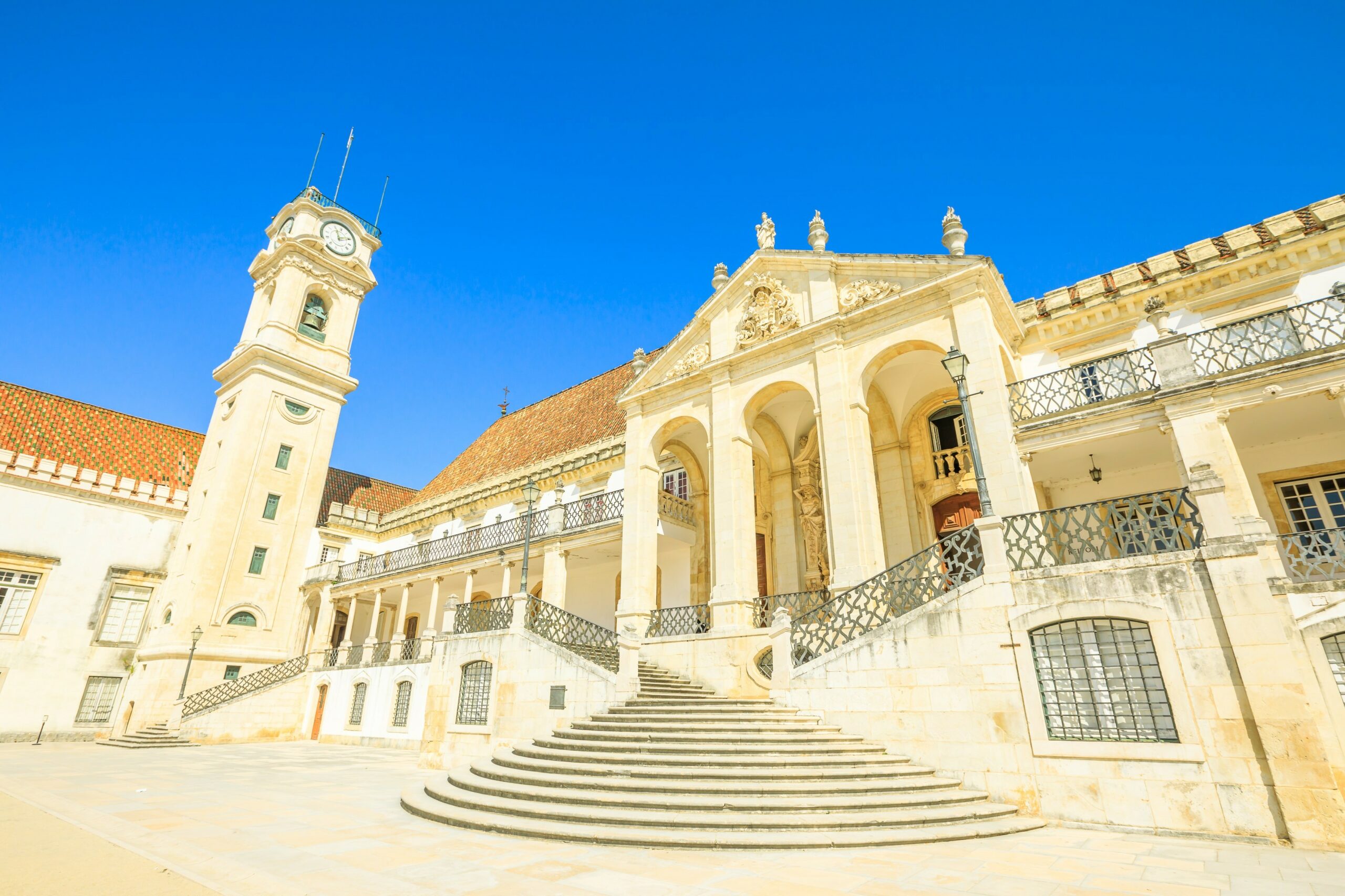
Within the former royal palace at the university, this early-16th-century chapel preserves the religious life of an institution whose roots reach back to 1290. Its Manueline doorway, tiled interior and ornate 18th-century organ reward slow looking. Access generally forms part of the university’s visitor arrangements rather than an unrestricted parish-church visit, and religious or university events may affect entry. Insider tip: check explicitly that your chosen university ticket includes the chapel; do not assume that every ticket or visiting circuit covers the same spaces. For prayer or Mass, ask about the chapel’s current religious programme rather than relying on tourist opening hours.
05Monastery of Santa Clara-a-Velha
Founded in 1283 and refounded under Queen Isabel’s patronage in 1314, this Gothic monastery stands on the lower ground across the Mondego. Repeated flooding eventually forced the Poor Clare community to leave for a higher site. Today, the surviving church and archaeological remains reveal both the monastery’s scale and its struggle with the river. This is a heritage attraction, not a regular Mass stop; confirm current site access before planning your visit. Insider tip: see it before Santa Clara-a-Nova if possible. The change in elevation makes the nuns’ relocation immediately understandable, and the two sites tell one connected story.
06Monastery of Santa Clara-a-Nova and the Tomb of Saint Elizabeth
Construction began in 1649 on the hillside monastery built to replace flood-prone Santa Clara-a-Velha. Its church holds the tomb and relics of Saint Elizabeth of Portugal, known locally as Rainha Santa Isabel, who died in 1336 and was canonized in 1625. Her silver tomb makes this one of Coimbra’s most important devotional destinations. Check church admission and service arrangements; entry to the church does not imply access throughout the former convent. Insider tip: reserve genuine quiet time here, rather than fitting the saint’s tomb into the last few minutes before closing. This is a natural spiritual centrepiece for a Coimbra pilgrimage.
07Church of Santo António dos Olivais
On Coimbra’s eastern heights, this church marks the place associated with Fernando de Bulhões entering Franciscan life in 1220 and taking the name António. He later became Saint Anthony of Padua. The church seen today reflects later rebuilding, but the location is fundamental to his vocation story. Visit the approach, staircase and church, then pause to reflect on the connection between Coimbra and the saint usually associated with Lisbon and Padua. It is an active Franciscan parish, so check Mass times and avoid sightseeing during worship. Insider tip: arrange a separate vehicle stop here; it is not a convenient extension of the cathedral quarter’s short walking circuit.
08Carmelo de Santa Teresa and the Memorial of Sister Lúcia
Sister Lúcia, one of the three Fátima visionaries, entered Coimbra’s Carmelite convent in 1948 and lived here until her death in 2005. Her remains were transferred to the Sanctuary of Fátima in 2006, so this is not her present burial place. The associated memorial explores her life through objects and documentary material. The Carmelite community remains enclosed: visitors should distinguish the memorial and any publicly accessible chapel areas from private convent space. Insider tip: combine this stop with Santo António dos Olivais, but confirm memorial opening hours independently of chapel or service times.
09Church of São Tiago
Facing Praça do Comércio in the Baixa, São Tiago is a Romanesque church consecrated in 1206. Its surviving portals and carved capitals provide a quieter counterpoint to Coimbra’s larger monasteries. The dedication to Saint James also gives pilgrims a reason to reflect on the wider Iberian tradition of pilgrimage, without assuming that the church offers pilgrim services. Interior access can be limited, so treat it as an exterior architectural stop unless opening has been confirmed. Insider tip: look closely at the different portal carvings before walking the short distance to Santa Cruz; the two churches fit naturally into the same lower-town visit.
For a route shaped around your religious interests rather than a checklist, ask Portugal Magik for a personalized private tour plan. Visiting every site in one day would leave little time for prayer, services or the details that make these churches in Coimbra distinctive.
Plan with confidence
Plans change. Your options are clear.
Change dates without an extra change charge when available, and cancel early for a refund or travel credit. Our team confirms every detail before you pay.

Travel with Portugal Magik
Explore Portugal in a Mercedes-Benz V-Class
For smaller groups, a private V-Class offers a comfortable way to travel between places, with an English-speaking driver, door-to-door pickup and a flexible itinerary planned with our team. Vehicle choice depends on your group and availability.
Plan a personalized journey →A private pilgrimage itinerary through Coimbra
For a pilgrimage, Coimbra works best with four principal stops and room to adjust around worship. From central Lisbon, the journey is approximately 205–215 km each way; allow around 2½–3 hours on the road, depending on traffic and pickup location. A private day trip is possible, but an overnight stay gives a more contemplative pace.
Morning departure from Lisbon
Arrange door-to-door pickup with Portugal Magik for a private Mercedes-Benz journey with an English-speaking driver. For smaller groups, a Mercedes-Benz V-Class is a comfortable option, subject to availability. An early departure leaves more of the day for Coimbra itself rather than a rushed succession of entrances.
First stop: Santa Cruz and the lower town
Begin with Portugal’s early royal history and the tombs at Santa Cruz. If São Tiago is accessible, include a short visit; otherwise, study its Romanesque exterior. When a suitable Mass is available, build the morning around it instead of trying to fit worship between timed monument entries.
Late morning: Sé Velha and the upper town
Continue towards the Old Cathedral. Coimbra’s historic lanes are steep and often cobbled, and a driver cannot necessarily deliver you to every doorway. Discuss walking tolerance beforehand so vehicle access points and the amount of uphill walking can be planned realistically. Add either Sé Nova or the university chapel if opening arrangements and your pace allow, rather than automatically including both.
Lunch and a proper pause
Allow an unhurried restaurant lunch before crossing the Mondego. Chanfana, goat slowly cooked with red wine, is a regional speciality associated with central Portugal, including the Coimbra district. On a day of religious abstinence, ask the restaurant about suitable fish or meatless options rather than assuming a traditional set menu will fit.
Afternoon: Saint Elizabeth’s Coimbra
Visit Santa Clara-a-Velha when open, then continue uphill to Santa Clara-a-Nova for the saint’s tomb. Seeing the abandoned riverside monastery before its replacement gives the afternoon a coherent historical and devotional sequence. If Saint Anthony is your main interest, replace Santa Clara-a-Velha with Santo António dos Olivais instead of adding another hurried stop.
Return or stay overnight
Return to Lisbon in the evening, allowing for a long day. For a two-day visit, keep the Carmelo de Santa Teresa, Santo António dos Olivais and an additional Mass for the second morning. Portugal Magik offers private day and multi-day tours and private transfers, with flexible itineraries and an English-speaking driver; church admission, access to enclosed communities and participation in services remain subject to each institution’s arrangements.
Request a personalized quote with your preferred date, pickup address, group size and any priority saint, shrine or Mass. That information helps shape a journey that respects both your pace and the places you have come to visit.
Feast days, dress code and respectful visiting
Saint Elizabeth of Portugal: 4 July
Coimbra honours Rainha Santa Isabel on 4 July, the city’s municipal holiday. Major festivities traditionally follow a biennial pattern in even-numbered years, with processions connecting her hilltop shrine and the city. Confirm the programme published by the Confraria da Rainha Santa Isabel for your travel year: procession dates, church access and road restrictions should never be inferred from the feast date alone.
Saint Anthony: 13 June
The feast of Saint Anthony is especially meaningful at Santo António dos Olivais. Check the parish’s current programme for Masses and other observances. A feast-day visit can be spiritually rewarding, but ordinary sightseeing access may be reduced.
Holy Week, Easter and Corpus Christi
These are important periods of worship rather than normal monument-visiting days. Easter and Corpus Christi change date each year. Cathedral and parish programmes may include services, processions or preparations that alter access, so reconfirm arrangements close to departure.
Dress for an active place of worship
Choose clothing that covers shoulders and is not excessively short. Remove hats inside churches where appropriate, and carry a light layer if visiting in summer. Comfortable shoes with good grip matter on the cobbles and gradients around Sé Velha and the university.
Prayer comes before photography
Silence your phone, speak softly and avoid walking around to inspect altarpieces during Mass. Follow each site’s photography rules; never assume that flash, tripods or photographs of worshippers are permitted. At the Carmelite convent, respect enclosure boundaries and do not seek access to the sisters’ private areas.
Attending Mass respectfully
Visitors are generally welcome at public Catholic services, but Holy Communion is for Catholics properly disposed to receive it. Other visitors can remain quietly in their places during Communion. For confession, an English-language service or a conversation with clergy, enquire directly in advance; an English-speaking driver does not imply that services will be available in English.
Tickets, offerings and practical planning
A monument ticket and a devotional offering are different things. Keep some euros available for candles, donations or smaller admission payments, without assuming every site accepts cards. Tell Portugal Magik if a service or feast-day procession is your priority so your personalized itinerary can allow for crowds, access changes and time for prayer.