The best things to do in Peneda-Gerês
The best things to do in Peneda-Gerês combine granite mountain villages, oak woodland, waterfall viewpoints and stretches of Roman road. Established in 1971, Portugal’s only national park rewards an unhurried visit: choose one area for a day, or stay several nights to explore its contrasting landscapes.
10 best things to do in Peneda-Gerês
These top places to visit in Peneda-Gerês span the national park and its immediate gateways. They belong on several different routes, rather than one ambitious day of driving.
01Caniçada Reservoir
This reservoir, created by the Caniçada dam on the Cávado River, forms a scenic southern approach to the park around Rio Caldo. Stop for the views of wooded slopes and bridges before heading into the mountains; use established parking areas rather than stopping on the bridges or narrow road shoulders.
02São Bento da Porta Aberta
In Rio Caldo, this major pilgrimage sanctuary combines an older church with a much larger modern worship space, reflecting the enduring importance of devotion to Saint Benedict in northern Portugal. Visit early for a quieter look around, particularly during the August pilgrimage celebrations, and remember that services take priority over sightseeing.
03Vila do Gerês
Also known as Caldas do Gerês, this spa town in the Vilar da Veiga parish is a useful base for cafés, restaurants and access to the mountain roads above it. Allow time for a gentle stroll through the town rather than treating it simply as a place to pass through; it is also a practical lunch stop before a more remote afternoon.
04Miradouro da Pedra Bela
At roughly 830 metres above sea level, Pedra Bela offers a wide view over the Gerês valley and Caniçada Reservoir. It is one of the most rewarding Peneda-Gerês attractions for visitors who want a mountain panorama without a long hike, although the viewpoint involves uneven ground and steps; choose a clear day and avoid the busiest midday period when possible.
05Cascata do Arado
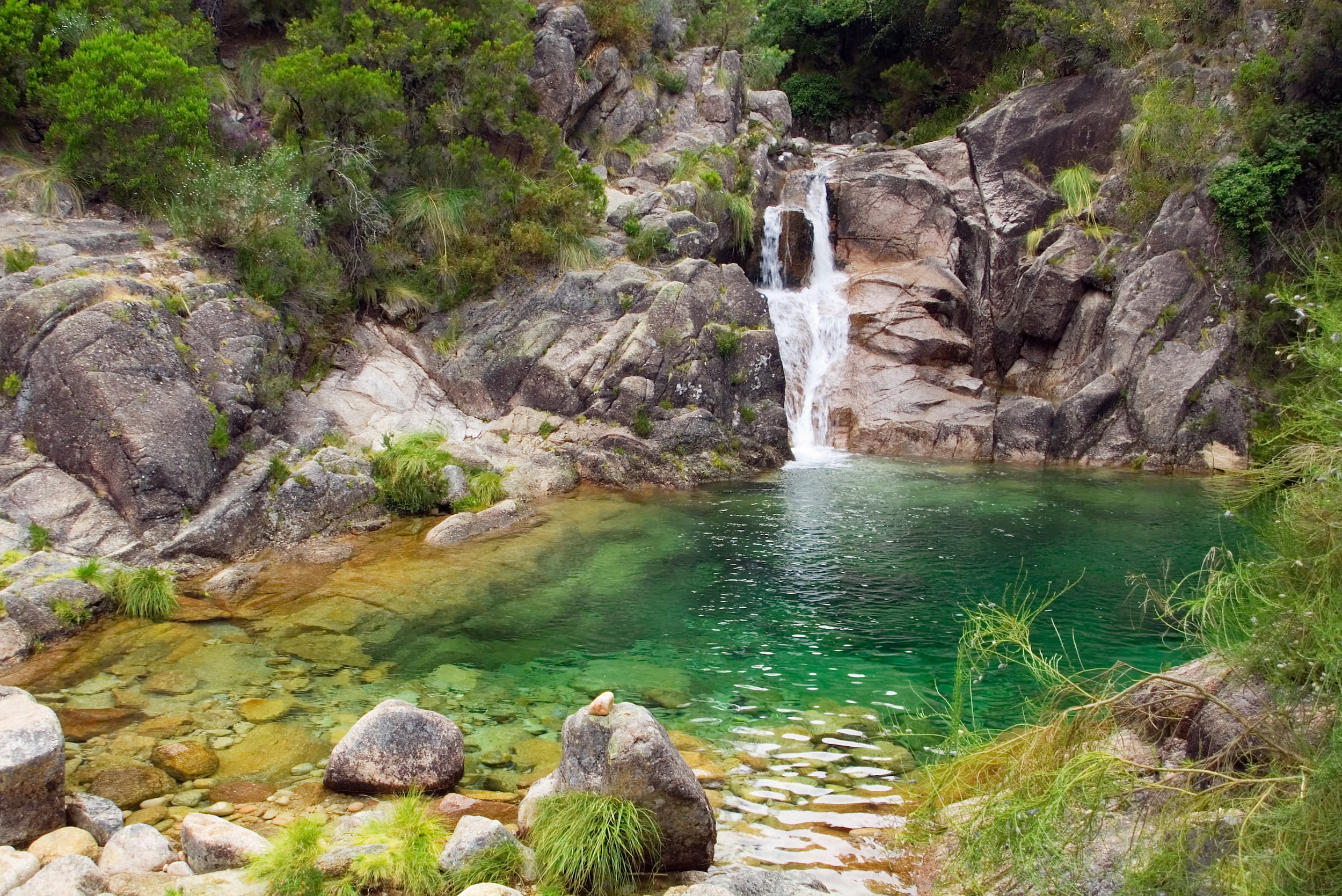
Near the village of Ermida, the Arado waterfall drops through a rocky mountain valley and is one of the park’s best-known waterfall stops. The approach includes a rough access road and a stepped path to the viewpoint, so agree on a suitable drop-off point with your driver and wear shoes with grip; after rain, enjoy the water from a safe distance rather than scrambling onto wet rocks.
06Mata da Albergaria and the Geira
This protected woodland shelters native oak forest and stretches of the Roman road known as the Geira, or Via XVIII, which linked Bracara Augusta, today’s Braga, with Asturica Augusta, today’s Astorga in Spain. Explore only permitted routes and check current access restrictions before setting out, because motor access and stopping can be controlled; a short, lawful woodland walk is more rewarding than trying to cover the whole road.
07Lindoso Castle and Granaries
Close to the Spanish border in the municipality of Ponte da Barca, Lindoso pairs a medieval castle with an extensive group of stone espigueiros, traditional granaries raised above the ground to protect stored crops. Walk between the castle surroundings and the communal threshing area to appreciate how defence and farming shaped the village; confirm castle opening arrangements if you want to visit the interior.
08Soajo
This granite village in Arcos de Valdevez is celebrated for its group of 24 espigueiros standing together on a rocky communal threshing floor. Give yourself time to explore the village lanes as well as the granaries, and photograph the structures from ground level without climbing on them: these are agricultural heritage, not viewing platforms.
09Santuário de Nossa Senhora da Peneda
Beneath a towering granite escarpment, the Peneda sanctuary is approached by a monumental staircase and a sequence of devotional chapels. It makes a striking cultural stop in the park’s northwestern sector, but it is not a quick detour from Vila do Gerês; allow time for the winding approach and expect more visitors during the early-September pilgrimage.
10Vilarinho das Furnas Reservoir
Near Campo do Gerês, this reservoir covers the former community of Vilarinho da Furna, which was submerged in 1972. When water levels fall, parts of the old village may reappear, but visibility is never guaranteed; visit the Museu Etnográfico de Vilarinho da Furna in Campo do Gerês for the community’s story rather than planning your day around exposed ruins.
Trusted across Portugal and Spain
Journeys backed by 1,300+ verified reviews
Consistently five-star rated since 2012, Portugal Magik is a TripAdvisor Hall of Fame recipient. Our Portugal Ambassadors bring local knowledge, thoughtful service and dependable private travel to every journey.

Travel with Portugal Magik
Explore Portugal in a Mercedes-Benz V-Class
For smaller groups, a private V-Class offers a comfortable way to travel between places, with an English-speaking driver, door-to-door pickup and a flexible itinerary planned with our team. Vehicle choice depends on your group and availability.
Plan a personalized journey →How to combine the sights into a relaxed private route
For one day, choose a single sector. Peneda-Gerês covers several mountain ranges, and short distances on a map can mean slow journeys along winding roads. A private driver simplifies navigation and parking, but it does not remove the walking required at waterfalls, viewpoints or village lanes.
A relaxed southern day from Braga or Porto: begin around Caniçada Reservoir, visit São Bento da Porta Aberta, and continue to Vila do Gerês for lunch. Spend the afternoon at Pedra Bela, adding Arado only if the weather, access conditions and your walking preferences make it sensible. From Porto, allow roughly 1.5–2 hours each way to the southern gateways, depending on your pickup point and traffic; Braga is closer, often around 45–75 minutes away.
A quieter alternative around Campo do Gerês: combine the ethnographic museum, views of Vilarinho das Furnas Reservoir and a short permitted walk. Make this an alternative to the waterfall circuit, not an extra list of stops squeezed into the same afternoon. Access to Mata da Albergaria should be checked separately before including it.
For two days, spend the first around Vila do Gerês, Pedra Bela and either Arado or Campo do Gerês. On the second, focus on Lindoso and Soajo, leaving time for a village lunch and unhurried photography. Choose accommodation with the following day’s route in mind: moving between the southern and western sectors takes time.
For three days, add the Peneda sanctuary and a slower exploration of the northwestern landscape. This gives you room to adjust for mountain weather instead of pressing on to a viewpoint hidden by cloud. From Lisbon, allow roughly 4.5–5.5 hours to the southern Gerês area before substantial stops, making a multi-day journey much more comfortable than a same-day return.
Portugal Magik offers private day and multi-day tours and transfers with door-to-door pickup and flexible itineraries. Your Portugal Ambassador is a knowledgeable local English-speaking driver-guide from Portugal who can help shape a realistic sequence of stops. A private Mercedes-Benz V-Class is a comfortable option for smaller groups on these longer journeys, subject to availability.
Share your starting point, overnight plans and preferred amount of walking to request a personalized route. Established in 2012, Portugal Magik has 1,300+ verified reviews and is consistently five-star rated.
Best time to visit and practical insider tips
May, June, September and early October often offer a good balance of daylight, walking temperatures and visitor numbers. Spring brings fresh foliage and waterfalls that are often stronger after rain; autumn can bring attractive woodland colour, although rainfall and visibility vary considerably.
July and August are popular, especially around Rio Caldo, Vila do Gerês and the best-known waterfalls. Start early, allow extra time for parking and avoid planning demanding walks in the hottest part of the day. Pilgrimage dates can also make São Bento da Porta Aberta and Peneda much busier than usual.
Winter can be atmospheric, but short days, heavy rain, fog and occasional snow or ice at higher elevations call for a conservative itinerary. Keep village visits and lunch stops as alternatives to exposed viewpoints, and never assume that a mountain road or trail will be suitable simply because it appears on a map.
Check current ICNF notices before visiting protected woodland or choosing a walk. Conservation rules, wildfire danger and weather can affect access, particularly in sensitive areas such as Mata da Albergaria. A flexible private itinerary should work around restrictions, not promise access through them.
Wear grippy footwear even for short waterfall visits, and carry water, a light waterproof layer and an offline map for any independent walking. Mobile reception can be patchy. Do not rely on social-media photographs to judge whether a pool is safe: slippery granite, cold water and changing flows create real hazards, and bathing may be restricted.
For lunch, look for regional dishes such as cabrito assado, roast kid, or dishes featuring locally raised Barrosã or Cachena beef where available. Mountain restaurants can have limited opening days or service hours, so identify a sensible lunch stop before heading into a remote sector.
Tell Portugal Magik about mobility needs and whether you prefer village walks, viewpoints or longer outdoor stops when requesting your personalized itinerary. That helps keep the day comfortable without turning every scenic pause into a race against the clock.
Your route
Direct or with stops
Tell us where you would like to pause along the way and we shape the day around it.
Request a proposal →Your pace
One day or several
Spread the journey over a few days with overnight suggestions from our team.
Request a proposal →Your Ambassador
A local by your side
An English-speaking driver-guide from Portugal in a private Mercedes-Benz.
Request a proposal →★★★★★ 1,300+ verified reviews · TripAdvisor Hall of Fame · Since 2012
Keep exploring
Related journeys and routes
10 things you can't miss in Belmonte
These 10 things you can't miss in Belmonte connect a medieval castle, a remarkable Jewish community and the family of Pedro Álvares Cabral. This Belmonte travel guide helps you choose meaningful stops, understand what you are seeing and leave enough time to enjoy this hillside town in Portugal's Beira Interior.
Read more →The top places to visit in Guimarães
The top places to visit in Guimarães connect Portugal’s early history with granite lanes, lively medieval squares and wooded hills above the city. This guide explains what deserves your time, what to combine on foot and how to build a comfortable private itinerary without rushing.
Read more →A local guide to sightseeing in Comporta
The pleasure of sightseeing in Comporta lies in its contrasts: Atlantic dunes, working rice fields, wooden fishing jetties and quiet village streets. This guide connects the places worth your time, with practical advice for exploring comfortably from Lisbon or staying a little longer.
Read more →Frequently Asked Questions
Personalized and without obligation
Speak with a travel designer
1,300+ five-star reviews · TripAdvisor Hall of Fame · Trusted since 2012 · Mercedes-Benz fleet