10 things you can't miss in Viana do Castelo
These 10 things you can't miss in Viana do Castelo connect hilltop archaeology, Atlantic seafaring and the embroidery traditions of Portugal’s northern Minho region. Use this guide to balance the essential sights with unhurried time around Praça da República and the Lima waterfront.
10 things you can't miss in Viana do Castelo: the essential stops
01Santuário de Santa Luzia
Construction of this hilltop sanctuary began in 1904, and its setting reveals how Viana fits between the Lima estuary, the Atlantic and the surrounding hills. Visit on the clearest part of your day rather than automatically saving it for sunset; low cloud can erase the coastal panorama, and access to the upper viewpoint should be checked separately from church admission.
02Citânia de Santa Luzia
Beyond the sanctuary, this fortified settlement preserves the foundations of a community with Iron Age origins that continued into the Roman period. Look for the contrast between circular and rectangular house plans, and check opening arrangements before heading uphill because this archaeological site does not necessarily share the sanctuary’s visiting hours.
03Praça da República
Viana’s main square brings together the 16th-century fountain, the former town hall and the distinctive arcaded Misericórdia building. Pause here before entering any museums, and look up at the carved figures on the Misericórdia façade rather than treating the square simply as a café stop.
04Sé de Viana do Castelo
The city’s cathedral began as a 15th-century parish church, with twin towers and a Gothic entrance that give its façade an almost fortified appearance. Approach along Largo do Instituto Histórico do Minho to appreciate the doorway’s carved figures, and plan an interior visit around services rather than entering during worship.
05Museu do Traje
Set on Praça da República, the Costume Museum explains the rural clothing and ceremonial dress that underpin Viana’s strong regional identity. Pay particular attention to the differences between working clothes and festive outfits; seeing those distinctions makes the embroidered costumes associated with the August festivities much easier to understand.
06Museu de Artes Decorativas
Housed in the historic Casa dos Barbosa Maciel on Largo de São Domingos, this museum pairs domestic decorative arts with notable Portuguese azulejo panels. Allow time for the building itself, not just individual objects, and combine the visit with nearby São Domingos rather than doubling back across the historic centre later.
07Navio Hospital Gil Eannes
Built in Viana do Castelo in 1955, this former hospital ship supported Portugal’s cod-fishing fleet in the North Atlantic and now serves as a museum on the waterfront. Give it around an hour rather than squeezing it into a quick photo stop, and ask about access before boarding if steep stairs or narrow shipboard passages could be difficult.
08Forte de Santiago da Barra
This fortress beside the river mouth recalls the need to defend Viana’s port and maritime trade. Its low, substantial ramparts are best appreciated from the surrounding open space; treat this as an exterior stop unless current access arrangements confirm which areas can be entered.
09Igreja de Nossa Senhora da Agonia
This church is the spiritual focus of the Romaria de Nossa Senhora da Agonia, the August celebration closely associated with Viana’s costumes, gold jewellery and maritime community. Pair it with the nearby fortress, and check the festival programme before choosing your date because processions and preparations can reshape access around the church.
10Praia do Cabedelo
Across the Lima on its southern bank, Cabedelo offers a broad Atlantic beach backed by dunes and pinewoods, with views towards the river entrance. Ask your driver to make it a separate coastal stop rather than assuming it is beside the old-town waterfront, and bring a light windproof layer even when the historic centre feels warm.

Plan with confidence
Plans change. Your options are clear.
Change dates without an extra change charge when available, and cancel early for a refund or travel credit. Our team confirms every detail before you pay.
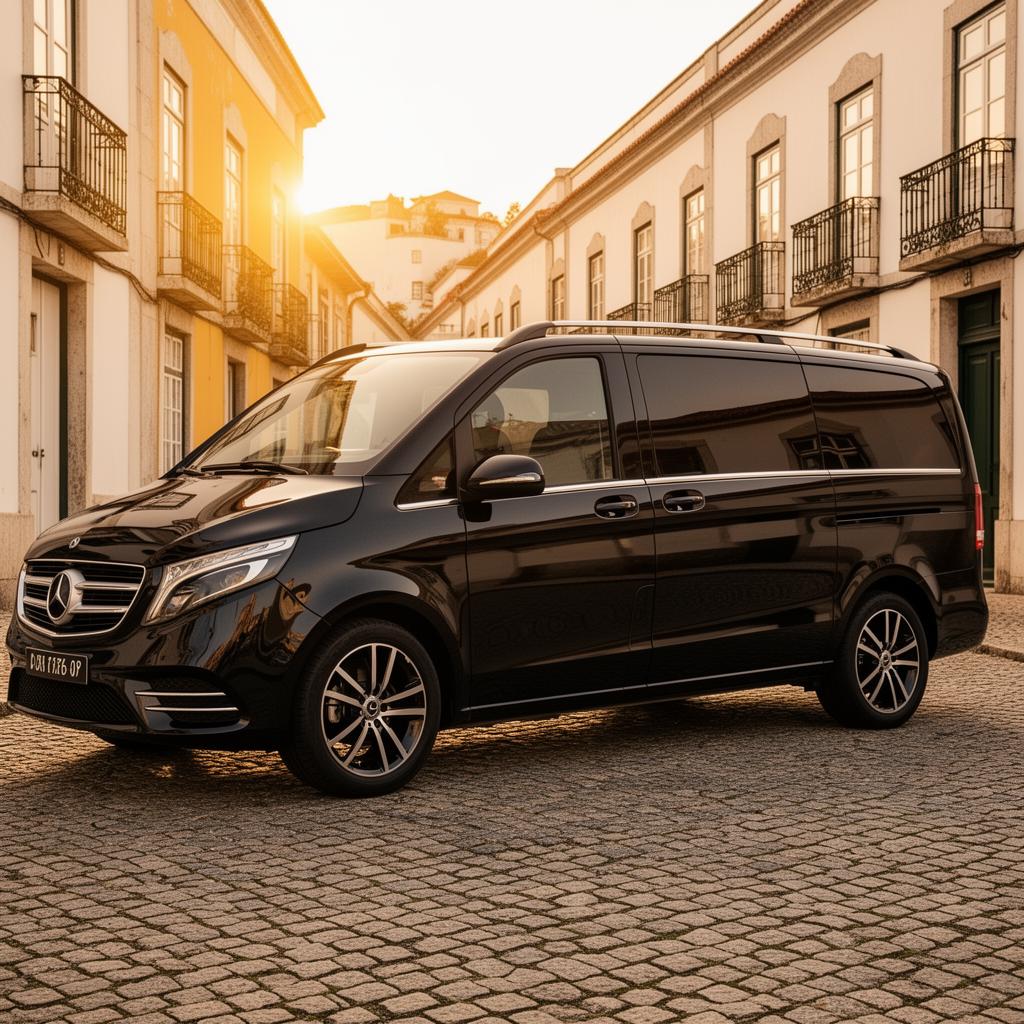
Travel with Portugal Magik
Explore Portugal in a Mercedes-Benz V-Class
For smaller groups, a private V-Class offers a comfortable way to travel between places, with an English-speaking driver, door-to-door pickup and a flexible itinerary planned with our team. Vehicle choice depends on your group and availability.
Plan a personalized journey →Combine the highlights into a relaxed private route
For a private day from Porto, Viana do Castelo is roughly 75–80 kilometres north, usually around an hour to an hour and a quarter by road, depending on your pickup point and traffic. Start with Santa Luzia when visibility is good, adding the Citânia only if its opening arrangements and your interest in archaeology justify the extra time. A Portugal Magik private Mercedes-Benz tour with an English-speaking driver allows you to adjust that order to the weather rather than follow a rigid schedule.
Continue into the historic centre for Praça da República, the cathedral and one museum. Leave a proper lunch break: arroz de sarrabulho is closely associated with nearby Ponte de Lima, while Viana’s maritime setting makes fish and bacalhau natural choices here. For something specifically tied to the city, try a bola de Berlim at the longstanding Confeitaria Natário, checking its opening hours before making a special detour.
Spend the afternoon aboard Gil Eannes, then choose between the fortress and Agonia church area or a longer pause at Cabedelo. All ten stops, with substantial visits inside both museums, are too much for a genuinely relaxed single day. Ask Portugal Magik for a personalized itinerary that prioritizes the Viana do Castelo highlights you most want to experience, with door-to-door pickup and flexible timing.
Two days in Viana work better for the complete list. Dedicate the first to the historic centre, museums and hospital ship; use the second for Santa Luzia, the Citânia, the fortress, Agonia and Cabedelo, adjusting around museum opening days. This also leaves room for coffee, photographs and a waterfront walk without watching the clock.
From Lisbon, allow approximately 390 kilometres and around four to five hours of driving before substantial sightseeing stops. Rather than treating Viana as a rushed Lisbon day trip, make it part of a three- or four-day northbound journey with overnight stays in Porto and Viana. Portugal Magik can provide the private Mercedes-Benz transfers or multi-day touring with an English-speaking driver; request a personalized quote based on your hotels, preferred stops and pace.
Best time to visit and local planning tips
May, June, September and early October often offer a comfortable balance of sightseeing weather and manageable crowds, though northern Portugal can be rainy in any season. Summer brings longer evenings and more beach visitors, but Atlantic wind and cool water mean Cabedelo is not automatically a warm-water swimming stop. Follow posted beach flags and lifeguard advice.
August is especially significant because of the Romaria de Nossa Senhora da Agonia. The programme typically includes religious events, traditional dress and processions, but dates and arrangements should be checked for your travel year. Reserve accommodation well ahead if you want to experience it, and expect a driver to adapt pickup locations around road closures rather than promise access directly beside the festivities.
For Santa Luzia, cloud cover matters more than the time on your watch. If the hill is obscured on arrival, begin with the old town and revisit the decision later. Keep a light waterproof layer with you, and wear shoes with grip for polished paving, archaeological walkways and the ship’s steps.
Check official opening days for the museums, Citânia and Gil Eannes before fixing your route, particularly on Mondays and public holidays. Church interiors may be unavailable during services, and admission arrangements can change. A useful Viana do Castelo travel guide should leave space for these realities, not promise every interior in one uninterrupted circuit.
The historic centre rewards walking, but this is not a completely step-free itinerary. Discuss walking distances and mobility needs when requesting your Portugal Magik tour or transfer, especially for Gil Eannes and the archaeological site. Your English-speaking driver can coordinate practical drop-offs, while visits inside attractions remain subject to their own access rules and opening arrangements.