10 things you can't miss in Tomar
These 10 things you can't miss in Tomar connect its Templar stronghold with synagogue history, riverside gardens and the streets around Praça da República. Allow time for both the monumental hilltop and the quieter town below: Tomar rewards a day with breathing room.
10 things you can't miss in Tomar: the essential places
01Convent of Christ
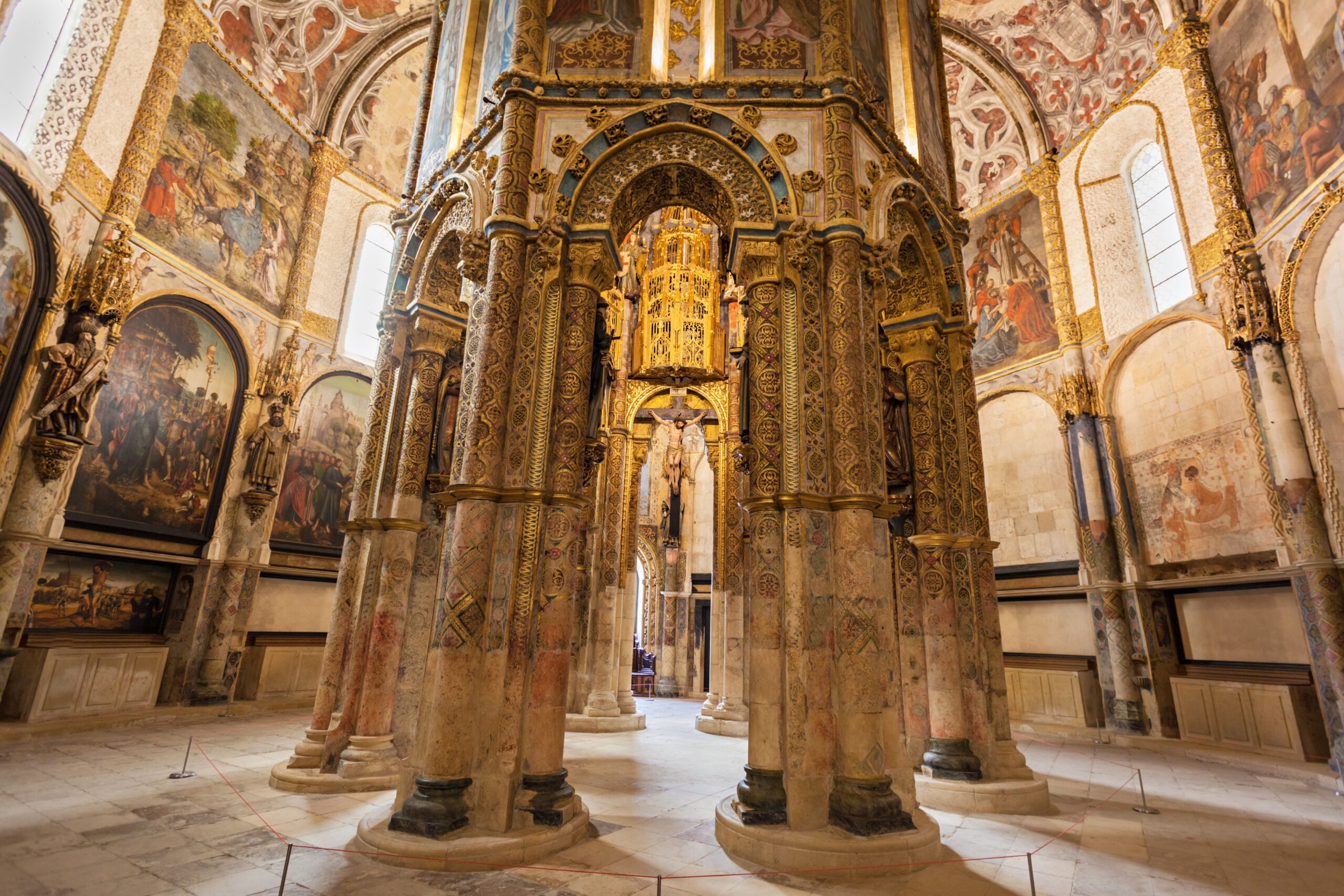
Inscribed on UNESCO’s World Heritage List in 1983, this vast complex brings together the Templars’ richly decorated Charola, Renaissance cloisters and the celebrated Manueline Chapter House window. Allow roughly two hours rather than treating it as a quick monument stop, and check current ticketing arrangements before visiting. Seek out the exterior view of the Chapter House window: its carved ropes and maritime forms are details worth lingering over.
02Castle of Tomar
Founded in 1160 under the Templar master Gualdim Pais, the castle shares the hilltop complex with the Convent of Christ but deserves attention for its defensive walls and setting above the town. Combine the two in one visit rather than planning separate journeys uphill. Wear shoes with reliable grip, and enjoy the views from accessible areas without assuming every wall or elevated section is open to visitors.
03Praça da República
Tomar’s principal square is framed by the town hall and the Church of São João Baptista, with a statue of Gualdim Pais at its centre. It is the best place to pause and understand how the historic centre sits beneath the castle hill. Come back after your hilltop visit for a terrace break, when the square feels less like another sightseeing stop and more like the town’s everyday meeting place.
04Church of São João Baptista
Facing Praça da República, this church is known for its late-Gothic and Manueline architecture and paintings by the Portuguese Renaissance artist Gregório Lopes. The entrance portal merits a close look even before you step inside. Visit outside services where possible, and keep the interior stop flexible because worship takes precedence over sightseeing.
05Synagogue of Tomar
On Rua Dr. Joaquim Jacinto, this rare surviving medieval Portuguese synagogue dates from the 15th century and preserves a compact prayer hall with four central columns and a vaulted ceiling. It offers an essential counterpoint to the town’s Templar story, recalling the Jewish community before the forced conversions of 1497. Check opening arrangements in advance and leave time to study the ceiling rather than rushing through the small room.
06Church of Santa Maria do Olival
This Gothic church, largely rebuilt in the 13th century, served as a burial church for the Knights Templar and is associated with the tomb of Gualdim Pais. Across the Nabão from the historic centre, it is a quieter but important stop for understanding why Tomar mattered to the order. Notice the detached bell tower and plan around religious services rather than relying on continuous sightseeing access.
07Mata Nacional dos Sete Montes
Below the castle, this roughly 39-hectare woodland and garden landscape provides a welcome change from stone interiors and busy sightseeing. Its formal planting gives way to shaded paths, with the small classical structure known as the Charolinha among its distinctive features. Choose a short garden stroll if time is limited, and remember that the deeper woodland paths are not all level or equally easy underfoot.
08Mouchão Park
Set beside and between channels of the Nabão River, Mouchão is one of Tomar’s most pleasant places for an unhurried walk, with footbridges, lawns and the recognisable wooden waterwheel. The wheel recalls traditional river-powered irrigation rather than the town’s military history. Make this a late-afternoon pause, when you can enjoy the river without adding another museum or church to the day.
09Pegões Aqueduct
Built between 1593 and 1614 to supply the Convent of Christ, this approximately six-kilometre aqueduct crosses the countryside west of Tomar on striking tiers of arches. It is easiest to appreciate as a separate driver-assisted stop rather than an extension of your old-town walk. Ask for a suitable ground-level viewpoint and avoid exposed elevated sections, especially in wind or wet weather.
10Museu dos Fósforos
Housed at the Convent of São Francisco, Tomar’s match museum grew from Aquiles da Mota Lima’s collection and displays matchboxes and labels from around the world. Its miniature advertisements, illustrations and packaging make an engaging contrast to the town’s medieval monuments. Check current opening hours before building it into your route, and look closely at a few countries or themes instead of trying to absorb every display.
Plan with confidence
Plans change. Your options are clear.
Change dates without an extra change charge when available, and cancel early for a refund or travel credit. Our team confirms every detail before you pay.

Travel with Portugal Magik
Explore Portugal in a Mercedes-Benz V-Class
For smaller groups, a private V-Class offers a comfortable way to travel between places, with an English-speaking driver, door-to-door pickup and a flexible itinerary planned with our team. Vehicle choice depends on your group and availability.
Plan a personalized journey →A relaxed private day from Lisbon—or a two-day Tomar stay
Tomar lies roughly 135 kilometres by road northeast of Lisbon; allow around 1 hour 45 minutes to 2 hours each way, depending on traffic and your pickup address. Portugal Magik offers private Mercedes-Benz day and multi-day tours with an English-speaking driver, door-to-door pickup and flexible itineraries. For smaller groups, a private Mercedes-Benz V-Class can be a comfortable option for the journey, subject to availability. Ask for a personalized itinerary based on your walking pace and the places that interest you most.
For a relaxed day, make the Convent of Christ and Castle of Tomar the morning priority. After about two to three hours across the hilltop complex, head down for lunch near Praça da República. Use the afternoon for São João Baptista, the synagogue if open, and a gentle walk beside the Nabão at Mouchão. This covers several defining Tomar highlights without pretending that all ten stops fit comfortably between journeys from Lisbon.
If the aqueduct particularly appeals, ask your driver to include it as a planned countryside stop and shorten the afternoon in town. Museum enthusiasts might instead choose the Museu dos Fósforos; visitors following Templar history may prefer Santa Maria do Olival. The value of a flexible itinerary is making these choices before the day becomes a race.
An overnight stay allows a much more satisfying sweep of the list. Spend day one on the castle, convent and historic centre, then use day two for Santa Maria do Olival, the match museum, Sete Montes and the aqueduct, adjusting the order to opening hours. With an additional day, Tomar can also form part of a private route linking the monasteries at Batalha and Alcobaça, rather than squeezing all three towns into one rushed excursion.
Share your Lisbon hotel or onward destination with Portugal Magik when requesting a personalized quote. Your private tour or transfer can then be planned around the actual journey, with realistic time for visits and meals; an English-speaking driver should not be confused with a specialist guide inside the monuments.
Best time to visit Tomar and practical insider tips
April to June and September to October generally offer a good balance of walking weather and daylight. Spring brings fresh growth to Sete Montes and the riverside, while early autumn can remain warm. July and August can be hot, particularly around exposed stonework, so visit the hilltop early, carry water and leave shaded gardens or indoor stops for later.
Winter can be rewarding if you prefer a quieter historic centre, but rain, shorter days and reduced opening hours require a more selective plan. No Tomar travel guide can replace a final check of each attraction’s current schedule: smaller museums, religious buildings and individual monument areas may have closures or access restrictions.
Tomar’s Festa dos Tabuleiros is normally held every four years, not annually. Its towering bread-and-flower trays and decorated streets transform the town, but the festival also brings substantial crowds and changes to access. Confirm official dates before booking around it, and reserve accommodation well ahead if the festival is your reason for travelling.
The castle and convent stand above the town, and cobbles, gradients, stairs and uneven surfaces matter when planning the day. A driver-assisted approach can reduce the uphill walk, but it does not eliminate walking inside the complex. Tell Portugal Magik about mobility needs in advance so suitable drop-off points, visit lengths and alternatives can be discussed.
For a local sweet, look for fatias de Tomar, an egg-rich speciality served in syrup, and ask a café or pastry shop whether it is available that day. Keep lunch unhurried rather than filling every hour with admissions. Finally, treat the synagogue and active churches as places of cultural and religious significance: follow posted photography rules, dress respectfully and keep voices low.