10 things you can't miss in Lisbon
These 10 things you can't miss in Lisbon bring together the city's medieval lanes, riverside monuments, tiled façades and most famous custard tarts. Use this Lisbon travel guide to choose what deserves your time, rather than squeezing every stop into one hurried day.
Your essential 10 things you can't miss in Lisbon
01Praça do Comércio
Opening directly onto the Tagus, this grand square occupies the site of the royal palace destroyed in the earthquake of 1755 and anchors the rebuilt downtown district, Baixa. Walk through the Arco da Rua Augusta, then look for the Cais das Colunas steps at the river's edge. Visit early for quieter photographs, and keep clear of the lowest steps when waves wash over them.
02Alfama
Lisbon's old hillside quarter is a tangle of stairways, small squares and tiled houses, closely associated with the city's fado tradition. Start near the Miradouro das Portas do Sol and explore downhill toward Largo de São Miguel, rather than beginning with a steep climb from the waterfront. Wear shoes with grip: the pale limestone paving becomes slippery in rain, and these narrow streets are also residents' front doorsteps.
03Castelo de São Jorge
Occupying a commanding hilltop, this fortress recalls Lisbon's medieval history, including its capture from Muslim rule by Afonso Henriques in 1147. The ramparts and terraces help you understand the city's geography, from Baixa's grid to the Tagus beyond. Book through the official ticket channel, allow around 90 minutes, and arrive near opening before the exposed grounds become hot.
04Miradouro da Senhora do Monte
This viewpoint in Graça gives you a wide-angle view across the castle hill, central Lisbon and the river. Its elevated position makes it especially useful for understanding how the city's neighborhoods fit together. Sunset draws a crowd, so try the morning for a calmer visit and arrange the closest suitable vehicle drop-off rather than assuming a driver can stop beside the viewing area.
05Elevador de Santa Justa
Opened in 1902, this intricate iron landmark links the lower streets of Baixa with the higher Carmo area and reflects Lisbon's long struggle with its steep terrain. It was designed by engineer Raoul Mesnier du Ponsard, not Gustave Eiffel. Admire its structure from Rua de Santa Justa, then explore Largo do Carmo for an upper-level perspective without making a long queue the focus of your visit.
06Chiado
Bookshops, theaters and historic cafés make Chiado one of Lisbon's most rewarding neighborhoods for an unhurried walk. Along Rua Garrett, look for Livraria Bertrand, recognized as the world's oldest operating bookshop, and the statue of Fernando Pessoa outside A Brasileira. Browse the bookshop before settling down for coffee; the café's famous terrace is often busier than nearby streets around Largo de São Carlos.
07Mosteiro dos Jerónimos
Construction of this Manueline monastery began in 1501 under King Manuel I, and its carved stonework reflects the wealth and maritime ambitions of Portugal's early modern monarchy. The monastery and nearby Belém Tower share UNESCO World Heritage status, but church and cloister visits have different access arrangements. Reserve the appropriate admission in advance and check current opening hours, including any restrictions around religious services.
08Torre de Belém
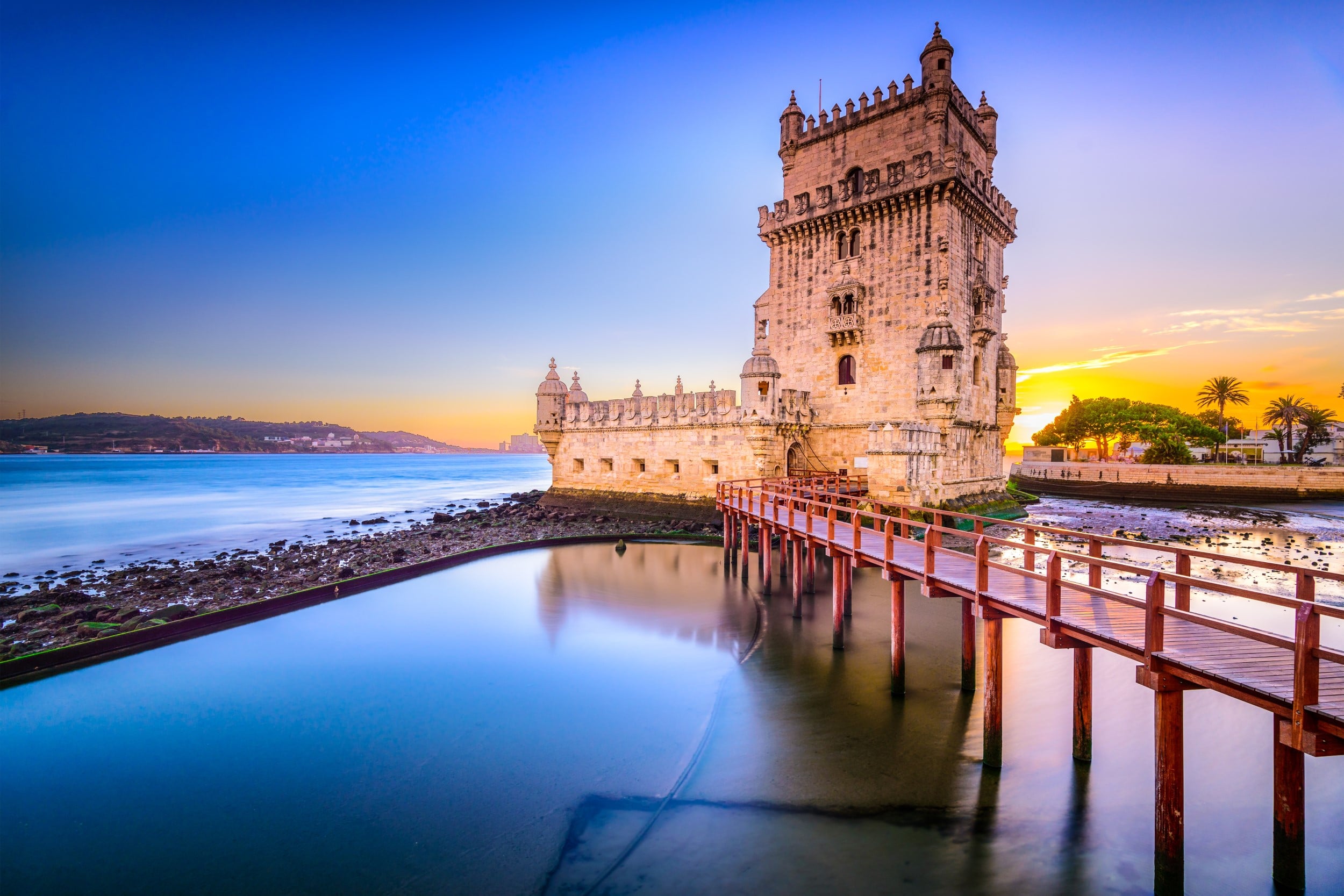
Built in the early 16th century to help defend the Tagus approach, this riverside tower combines military architecture with elaborate Manueline decoration. It stands roughly 1.5 kilometers from Jerónimos Monastery, making the two natural companions for a Belém visit. Check whether interior access is available before planning around it; the exterior remains a worthwhile stop, particularly in late-afternoon light.
09Padrão dos Descobrimentos
The present monument was inaugurated in 1960, marking 500 years since the death of Prince Henry the Navigator, whose figure leads its procession of navigators, patrons and other historical figures. It is also a useful place to consider both Portugal's maritime achievements and the colonial expansion connected with them. Before approaching the monument, look at the large compass rose and world map set into the pavement on its landward side.
10Pastéis de Belém
This historic bakery has sold its celebrated custard tarts since 1837, using a recipe associated with the nearby monastery. Order a pastel de Belém with a coffee and taste the crisp pastry and warm custard before deciding whether to add cinnamon or sugar. If the takeaway line is long, check the separate arrangements for table service inside rather than assuming everyone is waiting for the same thing.
Plan with confidence
Plans change. Your options are clear.
Change dates without an extra change charge when available, and cancel early for a refund or travel credit. Our team confirms every detail before you pay.

Travel with Portugal Magik
Explore Portugal in a Mercedes-Benz V-Class
For smaller groups, a private V-Class offers a comfortable way to travel between places, with an English-speaking driver, door-to-door pickup and a flexible itinerary planned with our team. Vehicle choice depends on your group and availability.
Plan a personalized journey →Combine the Lisbon highlights without rushing
A relaxed private day should prioritize a few meaningful stops, not promise all ten with every interior included. With Portugal Magik's English-speaking driver, door-to-door pickup and flexible itinerary, you can connect neighborhoods comfortably while leaving time for walking, lunch and the occasional pause over coffee.
For one day, begin in Belém with a reserved Jerónimos visit and a stop at Pastéis de Belém. Add exterior views of the Padrão dos Descobrimentos and Belém Tower, then return toward central Lisbon for lunch. Spend the afternoon around Praça do Comércio and either Chiado or Alfama; choose one hillside viewpoint instead of trying to add the castle as well. Ask Portugal Magik for a personalized itinerary built around the places you most want to explore.
For two days, dedicate the first to central Lisbon: start at Castelo de São Jorge, explore Alfama downhill, pause at Praça do Comércio, and continue to Chiado and the Santa Justa landmark if you still feel energetic. Include Senhora do Monte as a separate driver-assisted viewpoint stop rather than an extra uphill walk. Keep the second day for Belém's four listed stops, allowing a proper monastery visit and a leisurely lunch.
Belém is roughly 8 kilometers west of Praça do Comércio, so a private transfer between districts helps preserve energy for the places themselves. A private Mercedes-Benz V-Class is a comfortable option for smaller groups, subject to availability; the appropriate vehicle depends on your party and luggage requirements.
Historic streets have restricted access, and some attractions require walking from the nearest permitted stopping point. Portugal Magik provides private Mercedes-Benz transfers and private day or multi-day tours with an English-speaking driver; confirm attraction tickets and opening arrangements separately when planning. If you are arriving with luggage, request a personalized transfer quote and discuss how sightseeing might fit your arrival schedule.
Best time to visit and practical insider tips
April to May and late September to October usually offer a pleasant balance of sightseeing weather and daylight, although popular monuments still attract queues. Spring can bring showers, while early autumn can remain hot. July and August call for early starts, shaded lunch breaks and fewer exposed viewpoints in the middle of the day.
Winter can be rewarding for museums, cafés and less crowded walks, but plan around shorter daylight hours and the possibility of heavy rain. Belém's waterfront and the hilltop viewpoints can feel windy even when sheltered central streets are warm.
June brings Lisbon's popular neighborhood festivities, especially around the night of 12 June and Saint Anthony's Day on 13 June. Alfama becomes particularly lively, with grilled sardines, music and busy streets; expect noise, crowds and altered vehicle access rather than a quiet evening stroll.
Reserve high-demand attractions through official channels and recheck opening days, restoration notices and timed-entry requirements shortly before visiting. Do not assume that a private vehicle changes monument queues or guarantees access. Keep some flexibility for weather: a clear morning may be your best opportunity for castle views.
Carry water, sun protection and supportive shoes with good soles. Lisbon's cobbles, slopes and steps can challenge anyone with limited mobility, so describe your walking tolerance when requesting a personalized Portugal Magik route. Shorter walks and carefully chosen drop-off points are usually more useful than simply reducing the number of stops.