Your guide to the top places to visit in Évora
The top places to visit in Évora bring together Roman stonework, medieval rooftops and whitewashed streets best explored without rushing. Within a historic centre listed by UNESCO in 1986, short walks connect major monuments with shaded squares and inviting Alentejo restaurants.
10 top places to visit in Évora and nearby
01Roman Temple of Évora
Dating from the first century AD, Évora’s Roman temple preserves a striking group of Corinthian columns on the city’s highest ground. Often called the Temple of Diana, its dedication to Diana is not historically established; visit early for quieter photographs, then pause in the neighbouring Jardim de Diana.
02Cathedral of Évora, Sé de Évora
Begun in 1186, this granite cathedral combines Romanesque solidity with Gothic features and dominates the old town’s skyline. Choose an admission option that includes the roof terrace if you want views across the tiled roofs and Alentejo countryside, but expect stairs and uneven surfaces.
03Chapel of Bones and Church of São Francisco
Created by Franciscan friars in the 16th century, the Capela dos Ossos uses human bones and skulls to encourage reflection on mortality, beneath an inscription reminding visitors that their own bones will follow. Pair it with the adjoining Church of São Francisco, and consider whether the chapel’s imagery will suit younger children before entering.
04Praça do Giraldo
Évora’s central square takes its name from Geraldo Sem Pavor, associated with the city’s capture from Muslim rule in 1165, and is framed by arcades and the Church of Santo Antão. Use the 16th-century marble fountain as an easy meeting point, then explore Rua Cinco de Outubro on the uphill walk towards the cathedral.
05Museu Nacional Frei Manuel do Cenáculo
Housed in the former episcopal palace beside the cathedral, this museum brings together archaeology, sculpture and painting, including the 16th-century panels of the Évora Cathedral altarpiece. Allow roughly an hour rather than treating it as a quick stop, especially if you want a quieter indoor counterpoint to the surrounding monuments.
06University of Évora, Colégio do Espírito Santo
Founded in 1559, the university has its historic heart in this former Jesuit college, known for its arcaded courtyard and azulejo-lined teaching rooms. It remains a working academic setting, so check visitor access and expect some rooms to be unavailable during classes or university events.
07Aqueduto da Água de Prata
Inaugurated in 1537, this aqueduct carried water into Évora and still makes a memorable impression where houses fit between its arches. Walk along Rua do Cano to appreciate this unusual meeting of infrastructure and everyday life, choosing the cooler morning hours for a longer stroll.
08Jardim Público and Palácio de Dom Manuel
Évora’s public garden offers shaded paths beside the surviving palace associated with the Portuguese royal court, including its distinctive Galeria das Damas. Make this your pause after São Francisco, and remember that the garden’s picturesque Ruínas Fingidas are a 19th-century decorative construction rather than an untouched medieval ruin.
09Igreja da Graça
This 16th-century church is recognised for its Renaissance façade and four monumental seated stone figures, locally nicknamed the Meninos da Graça. It makes a rewarding short detour between Praça do Giraldo and São Francisco; plan around seeing the exterior rather than assuming the interior will be open.
10Cromeleque dos Almendres
Roughly 20 kilometres west of Évora by road, this Neolithic stone enclosure near Guadalupe reveals a landscape shaped thousands of years before the Roman city. Treat it as a separate countryside excursion: confirm current access and track conditions, wear sturdy shoes and discuss the appropriate vehicle drop-off point rather than assuming door-to-stone access.
Trusted across Portugal and Spain
Journeys backed by 1,300+ verified reviews
Consistently five-star rated since 2012, Portugal Magik is a TripAdvisor Hall of Fame recipient. Our Portugal Ambassadors bring local knowledge, thoughtful service and dependable private travel to every journey.

Travel with Portugal Magik
Explore Portugal in a Mercedes-Benz V-Class
For smaller groups, a private V-Class offers a comfortable way to travel between places, with an English-speaking driver, door-to-door pickup and a flexible itinerary planned with our team. Vehicle choice depends on your group and availability.
Plan a personalized journey →A relaxed private day or multi-day route
A private day from Lisbon works well if you prioritise rather than try to enter every monument. Évora is approximately 135 kilometres from Lisbon, with the journey usually taking around 1½–2 hours each way, depending on your pickup point and traffic. Portugal Magik provides door-to-door private Mercedes-Benz transfers and private tours with an English-speaking driver; a Mercedes-Benz V-Class is a comfortable option for smaller groups, subject to availability.
For a balanced day, begin around the Roman Temple and cathedral while temperatures are lower. Choose either the cathedral interior and roof or the museum for your first substantial visit, then walk downhill through Rua Cinco de Outubro to Praça do Giraldo. Leave an unhurried lunch break before the Chapel of Bones, the façade of Igreja da Graça and a shaded pause in the public garden.
At lunch, look for regional dishes such as açorda à alentejana, a garlic-and-coriander bread soup, or migas, often served with pork. Sericaia, a traditional egg-and-cinnamon dessert, is a good introduction to Alentejo sweets. Restaurant service can form a substantial part of the afternoon, so avoid squeezing lunch between tightly timed monument visits.
Ask Portugal Magik for a personalized route built around your preferred balance of history, walking and lunch. Your Portugal Ambassador—a knowledgeable local English-speaking driver-guide from Portugal—can help sequence the day and arrange practical pickup points around the historic centre. Narrow streets, pedestrian areas and monument stairs mean that some sightseeing is necessarily on foot; agree on shorter walking sections if mobility is a concern.
With two nights in Évora, spread the city over two days: explore the principal monuments on the first, then visit the university, museum and aqueduct at a gentler pace on the second. Almendres can become a separate morning outing when access conditions are suitable, rather than an extra stop attached to an already full Lisbon day trip.
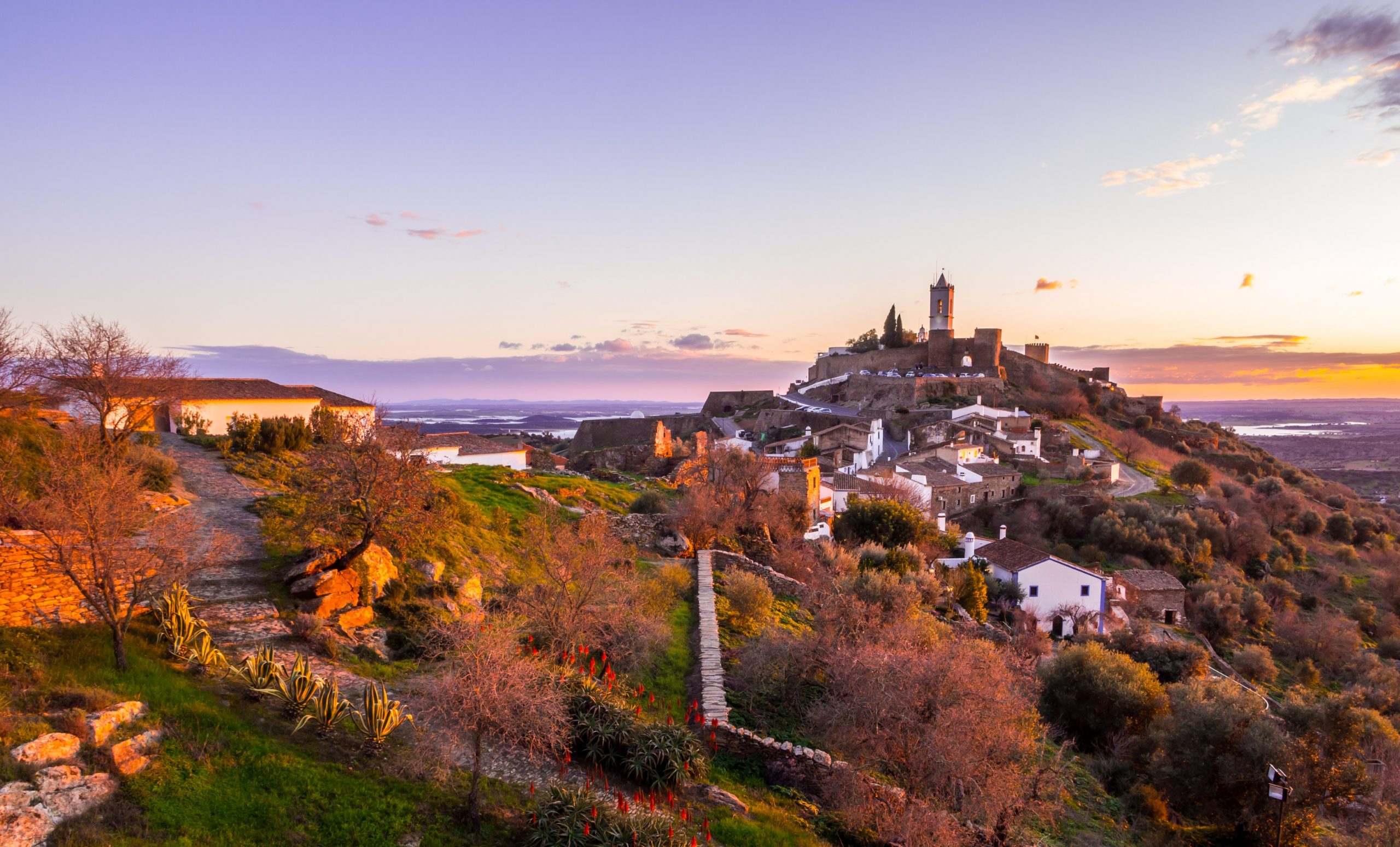
For a longer mainland journey, continue to Monsaraz, approximately 55 kilometres east of Évora, for its walled streets and views over the Alqueva reservoir. Portugal Magik can incorporate this into a flexible multi-day itinerary or provide a private onward transfer. Established in 2012, the company has 1,300+ verified reviews.
Best time to visit Évora and practical insider tips
April–May and late September–October generally offer the most comfortable conditions for Évora sightseeing, although hot spells and rain remain possible. Spring brings greener countryside around the city; autumn often suits longer walks once summer’s strongest heat has eased.
July and August can be intensely hot, with daytime temperatures sometimes exceeding 35°C. Start outdoor sightseeing early, carry water and a hat, and use the middle of the day for lunch or an indoor visit. The exposed stones at Almendres offer little shade, making an early start particularly worthwhile.
Winter is quieter and can be rewarding for museums and churches, but expect shorter daylight hours, occasional rain and cold evenings. Polished stone and cobbled streets can become slippery when wet, so shoes with grip are more useful than smooth-soled footwear.
Check current opening hours and ticket options for the cathedral, Chapel of Bones, museum and university before finalising your route. Religious services, academic use and temporary closures can affect access, and not every ticket includes every part of a monument.
Évora’s centre is compact but not flat. The climb from Praça do Giraldo towards the cathedral, uneven paving and rooftop stairs deserve consideration when planning for children or anyone with limited mobility. Share your walking preferences when requesting a personalized Portugal Magik itinerary so the day can include sensible vehicle access points and proper rest stops.
For photographs, visit the Roman Temple early, then return to the cathedral area later if your overnight stay allows. For atmosphere, leave time simply to walk Rua do Cano and the streets off Praça do Giraldo: Évora makes more sense when its inhabited lanes receive as much attention as its headline monuments.
Your route
Direct or with stops
Tell us where you would like to pause along the way and we shape the day around it.
Request a proposal →Your pace
One day or several
Spread the journey over a few days with overnight suggestions from our team.
Request a proposal →Your Ambassador
A local by your side
An English-speaking driver-guide from Portugal in a private Mercedes-Benz.
Request a proposal →★★★★★ 1,300+ verified reviews · TripAdvisor Hall of Fame · Since 2012
Keep exploring
Related journeys and routes
The top places to visit in Setúbal: markets, coast and culture
The top places to visit in Setúbal bring together a working fishing city, remarkable Manueline architecture and the limestone slopes of Arrábida. Start with the morning market, leave time for a proper seafood lunch, and explore the coast without trying to fit every stop into one day.
Read more →10 things you can't miss in Portugal
These 10 things you can't miss in Portugal connect Lisbon's maritime monuments with royal palaces, medieval towns, vineyard terraces and the Algarve coast. This mainland Portugal travel guide explains what makes each stop worthwhile, when to go and how to combine them without turning your holiday into a checklist.
Read more →10 things you can't miss in Fátima
These 10 things you can't miss in Fátima connect the great sanctuary with the village homes and quiet walking paths behind its story. Whether you come on pilgrimage or to understand an important chapter of Portuguese history, leave time for reflection rather than rushing between monuments.
Read more →Frequently Asked Questions
Personalized and without obligation
Speak with a travel designer
1,300+ five-star reviews · TripAdvisor Hall of Fame · Trusted since 2012 · Mercedes-Benz fleet