Portuguese Age of Discoveries history: dates and places
Portuguese Age of Discoveries history connects Lisbon’s riverside monuments with Atlantic exploration, ocean trade and the creation of an overseas empire. Follow the key dates, understand both the achievements and the human costs, and discover where this complicated history remains visible today.
Portuguese Age of Discoveries history: 10 key moments
The “Age of Discoveries” is the conventional name for Portugal’s maritime expansion, particularly during the fifteenth and sixteenth centuries. It describes voyages that transformed European geographical knowledge, not the discovery of uninhabited worlds: Africa, Asia and the Americas already had societies, political systems and trading networks of their own.
01The conquest of Ceuta (1415)
King João I’s forces captured Ceuta, a North African port opposite Gibraltar. The campaign combined crusading ambitions, dynastic prestige and commercial interests, and is commonly used as the opening date of Portuguese overseas expansion. Prince Henrique, better known in English as Henry the Navigator, participated. Visitor tip: at Lisbon’s Padrão dos Descobrimentos, identify Henry at the prow, but remember that his importance lay chiefly in patronage and organization rather than personally undertaking the later ocean voyages.
02Madeira’s exploration and settlement (1419–1420)
Portuguese expeditions associated with João Gonçalves Zarco, Tristão Vaz Teixeira and Bartolomeu Perestrelo explored the Madeira archipelago, with settlement following during the 1420s. Madeira subsequently became an important sugar-producing colony, where enslaved labor formed part of the plantation economy. Reading tip: distinguish the dates conventionally given for exploration from the slower process of settlement; Madeira’s history cannot be reduced to a single arrival.
03Gil Eanes rounds Cape Bojador (1434)
Gil Eanes sailed beyond Cape Bojador, on the coast of present-day Western Sahara, overcoming a major barrier in Portuguese Atlantic navigation. Successive voyages depended on practical knowledge of winds, currents and coastlines, not simply on sailing farther south. Museum tip: when looking at Atlantic charts in Lisbon’s Museu de Marinha, notice how an offshore return route could exploit favorable winds more effectively than retracing the African coast.
04The documented sale of enslaved Africans in Lagos (1444)
A public division and sale of enslaved Africans brought by Portuguese raiders took place in Lagos, described by the chronicler Gomes Eanes de Zurara. This is a crucial part of the period’s history: maritime expansion developed alongside forced displacement, violence and slavery. Visitor tip: Lagos’s Mercado de Escravos museum occupies a later building at a site traditionally associated with the event; do not mistake the surviving structure for a building from 1444.
05Bartolomeu Dias rounds southern Africa (1488)
Dias’s expedition rounded the southern tip of Africa, demonstrating that the Atlantic connected with the Indian Ocean. He did not reach India, but his voyage established the geographical possibility of doing so by sea. Map tip: distinguish the Cape of Good Hope from Cape Agulhas, Africa’s southernmost point; the two are often confused in simplified accounts.
06The Treaty of Tordesillas (1494)
Portugal and Castile agreed to divide their claimed spheres of overseas expansion along a meridian 370 leagues west of the Cape Verde islands. The treaty sought to settle rivalry between two European crowns; it did not involve the consent of the peoples whose lands were affected. Visitor tip: use the pavement map beside the Padrão dos Descobrimentos to understand the broad geography, while remembering that the exact placement of the treaty line was difficult to determine with contemporary methods.
07Vasco da Gama reaches India (1498)
Having departed Lisbon in July 1497, Vasco da Gama reached Calicut, now Kozhikode, on India’s Malabar Coast in May 1498. His expedition connected Portugal directly by sea with an established Indian Ocean trading world, rather than creating that world’s commerce. Visitor tip: visit the Church of Santa Maria de Belém at Jerónimos to see his commemorative tomb; the church and monastery visitor routes can have different access arrangements.
08Cabral’s fleet reaches Brazil (1500)
Pedro Álvares Cabral’s India-bound fleet reached the coast of what is now Brazil in April 1500 and claimed the territory for the Portuguese crown. Indigenous peoples had inhabited the region for millennia. Part of the fleet then continued toward India. Reading tip: accounts differ over whether the westward landfall was intentional; treat confident claims that settle that question as established fact with caution.
09An armed trading empire expands across Asia (1505–1557)
Portugal established the office of viceroy in India in 1505, captured Goa in 1510 and Malacca in 1511, and consolidated control at Hormuz in 1515. A Portuguese settlement became established at Macau in 1557 under Chinese authority. Fortresses, negotiated privileges and naval violence supported a network of strategic ports rather than uniform control over Asia. Museum tip: locate these places on a map before examining ship models; the distances help explain why access to harbors, supplies and maritime chokepoints mattered so much.
10Dynastic crisis and the Iberian Union (1578–1580)
King Sebastião died in the disastrous Moroccan campaign at Alcácer Quibir in 1578. After the death of his successor, Cardinal-King Henrique, Philip II of Spain secured the Portuguese crown in 1580, beginning a dynastic union that lasted until 1640. Portugal retained distinct institutions, and its overseas empire continued well beyond this period. Interpretation tip: use 1580 as a political turning point, not as a neat end date for Portuguese exploration, trade or colonial rule.

Plan with confidence
Plans change. Your options are clear.
Change dates without an extra change charge when available, and cancel early for a refund or travel credit. Our team confirms every detail before you pay.

Travel with Portugal Magik
Explore Portugal in a Mercedes-Benz V-Class
For smaller groups, a private V-Class offers a comfortable way to travel between places, with an English-speaking driver, door-to-door pickup and a flexible itinerary planned with our team. Vehicle choice depends on your group and availability.
Plan a personalized journey →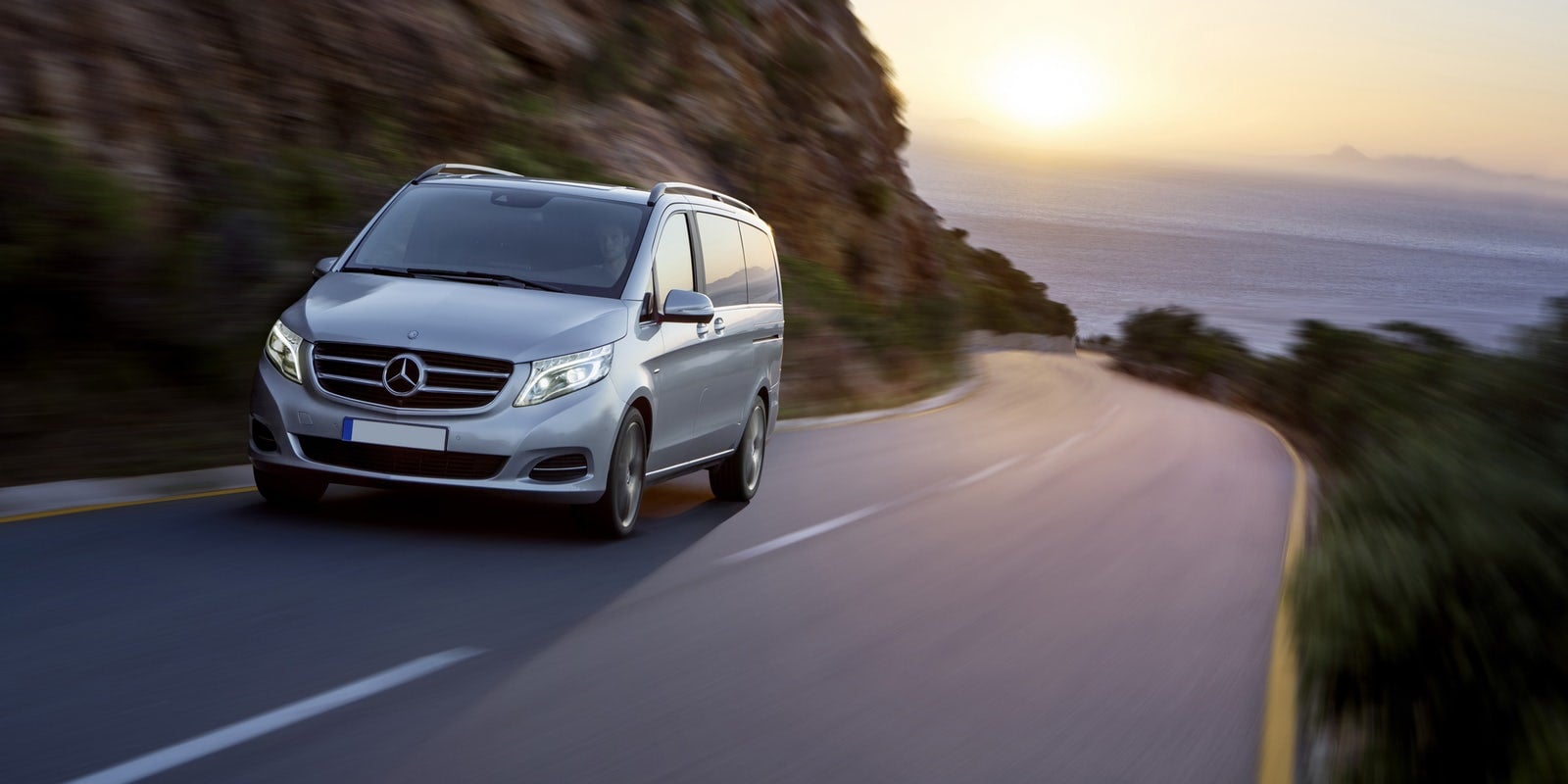
Where to see this history in Portugal today
For a first visit, Belém offers the strongest concentration of relevant landmarks, approximately 7 km west of central Lisbon. Lagos adds an essential Algarve perspective, but belongs in a separate regional visit or a longer itinerary rather than a rushed Lisbon day trip.
01Jerónimos Monastery, Belém
Construction began under Manuel I in 1501, and the monastery became a major expression of royal wealth and religious ambition during maritime expansion. Its Manueline architecture includes elaborate vegetal, religious and maritime imagery. The adjoining Church of Santa Maria de Belém contains the tombs of Vasco da Gama and Luís de Camões. Insider tip: allow time to study the south portal before joining any entrance queue; it is a significant work in its own right. Check current church and cloister access separately.
02Belém Tower, Lisbon’s riverfront
Built between 1514 and 1519, the tower formed part of the defensive system protecting the Tagus approach to Lisbon. Its position makes more sense when imagined against the sixteenth-century shoreline: it was originally surrounded by water rather than attached to today’s landscaped riverfront. Insider tip: look for the carved rhinoceros beneath a turret, a small detail connected to the extraordinary animal sent to Manuel I in 1515. Confirm current access before planning an interior visit.
03Padrão dos Descobrimentos, Belém
The permanent monument dates to 1960, marking 500 years since Henry the Navigator’s death; it is not a surviving Renaissance monument. Its figures and ship-like form reveal how Portugal’s twentieth-century Estado Novo dictatorship presented the maritime past. Insider tip: view the monument from both sides to compare the figures, then examine the large pavement map nearby. Read the whole ensemble as an interpretation of history, not as a neutral account of it.
04Museu de Marinha, Belém
Housed partly in the Jerónimos complex, the Maritime Museum provides the practical context that monuments alone cannot offer. Ship models, charts and navigational objects help explain the differences between vessels and the demands of long ocean passages. Insider tip: prioritize the early navigation displays before moving into later naval history; this keeps an Age of Discoveries visit focused rather than turning it into a quick circuit of every gallery.
05Praça do Comércio, central Lisbon
Today’s square was created after the 1755 earthquake, on the site of the earlier Ribeira Palace and its surroundings. Manuel I moved the royal residence to this waterfront area in the early sixteenth century, bringing the monarchy close to the commercial machinery of overseas trade. Insider tip: stand at the river-facing edge and imagine a working waterfront of cargo, officials and royal buildings, not the open eighteenth-century square visible today.
06Casa dos Bicos, Alfama’s western edge
Built in 1523 for Brás de Albuquerque, son of the imperial commander Afonso de Albuquerque, this house has an unmistakable façade of diamond-shaped stonework. It offers a more personal link to the wealth and status associated with overseas expansion. Insider tip: combine an exterior stop with nearby Praça do Comércio, roughly 600 meters away on foot, and look closely at the irregular arrangement of the windows rather than only photographing the pointed stones.
07Mercado de Escravos, Lagos
Around 300 km by road south of Lisbon, Lagos was an important base for fifteenth-century voyages along the African coast. Its slavery museum addresses the people subjected to capture, sale and forced labor, providing a necessary counterpoint to celebratory maritime monuments. Insider tip: leave time for the interpretation rather than treating this as a brief photo stop; the subject deserves attention, and the present building is later than the 1444 event associated with the site.
For Portugal travel centered on history, a focused route usually reveals more than a long checklist. Ask Portugal Magik for a personalized Belém and central Lisbon itinerary, or discuss including Lagos within a private multi-day tour.
How a private guided day brings the history to life
The most useful history day connects three things: what happened, how it worked and how later generations chose to remember it. Belém makes that sequence unusually easy to follow.
01Begin with royal ambition at Jerónimos
Arrange door-to-door pickup with Portugal Magik and start in Belém, subject to opening times and your interests. The monastery introduces Manuel I, religious patronage and the wealth associated with overseas trade. Planning tip: make any desired interior visit the anchor of the morning, since timed admission, services or queues can affect the rest of the day.
02Put navigation beside commemoration
Pair selected displays at the Museu de Marinha with the riverfront and Padrão dos Descobrimentos. This contrasts the practical challenges of ocean travel with the twentieth-century story told about those voyages. Planning tip: keep the museum visit selective and allow a pause between stops; dense historical detail is easier to absorb when there is time to look back across the Tagus.
03Return to Lisbon’s commercial waterfront
Continue to Praça do Comércio and, if it suits your pace, Casa dos Bicos. Together they shift attention from departing ships to the monarchy, merchants and imperial administrators who shaped the city. Planning tip: treat the journey between Belém and central Lisbon as traffic-dependent rather than scheduling it to an exact minute; the flexibility is valuable if a museum visit runs longer than expected.
04Choose comfort without overloading the itinerary
Portugal Magik offers private day and multi-day tours with an English-speaking driver, flexible itineraries and door-to-door pickup, as well as private Mercedes-Benz transfers. For smaller groups, a private Mercedes-Benz V-Class is a comfortable option, subject to availability. Planning tip: mention walking preferences and your priorities when requesting a personalized quote, and confirm admission arrangements rather than assuming monument tickets or specialist interior guiding are included.
Share whether your interests lean toward navigation, architecture, trade or the consequences of empire. Portugal Magik can shape the driving itinerary around those priorities, with enough room in the day to understand what you are seeing.