The history of Viseu: A Guide to the City’s Past
The history of Viseu unfolds around its cathedral hill, where Roman settlement, medieval power and Renaissance painting meet within a compact historic centre. Follow the city’s key eras, discover what survives and plan a visit that leaves time to look closely.
The history of Viseu in nine key eras
Viseu’s past is best understood as a succession of layers rather than a single founding story. Its connection with the Lusitanian leader Viriathus is celebrated locally, but that tradition should not be confused with proof that he was born here.
01Roman Viseu (1st century BC–5th century AD)
Viseu developed as a settlement within Roman Lusitania, connected to the road network linking inland communities. Archaeological discoveries beneath the present city establish its Roman occupation, although the old centre is not an exposed Roman archaeological park. Tip: start around the cathedral hill to understand the elevated setting, but do not assume the streets visible today preserve an unchanged Roman plan.
02An established Christian bishopric (572)
Viseu appears in the records of the Second Council of Braga in 572, during the period of Suevic rule. This is an important documentary anchor for the city’s early Christian history; the region subsequently came under Visigothic control. Tip: distinguish the age of the bishopric from the age of the cathedral building, whose surviving fabric belongs to later centuries.
03An unstable frontier (8th–11th centuries)
Following the Muslim conquest of much of Iberia in the early 8th century, Viseu became part of a contested frontier. Control shifted between Muslim and Christian powers, rather than following a simple, uninterrupted sequence. Tip: treat stories assigning every old structure to either “the Romans” or “the Moors” cautiously, especially at Cava de Viriato, whose origins remain debated.
04Ferdinand I’s conquest (1058)
Ferdinand I of León took Viseu in 1058, bringing the city firmly into the Christian political sphere. This happened well before Portugal became an independent kingdom, a distinction that helps make sense of the region’s medieval chronology. Tip: when visiting the cathedral precinct, remember that its later monumental appearance grew out of a religious centre re-established and developed across successive generations.
05Teresa’s charter (1123)
Teresa, mother of Afonso Henriques, granted Viseu a foral, or municipal charter, in 1123. Such charters defined local rights and obligations and helped organise urban life in the emerging Portuguese territory. Tip: walk down Rua Direita after visiting the cathedral; its commercial character offers a useful setting for thinking about medieval Viseu as a working town, not merely a religious centre.
06The medieval defensive circuit (14th–15th centuries)
The surviving city gates belong to the later medieval fortifications, associated with construction under João I and completion under Afonso V. These defences enclosed the town and controlled access through designated entrances. Tip: visit both Porta do Soar and Porta dos Cavaleiros; together they make the former walled town easier to imagine than either gate alone.
07Manueline renewal and Grão Vasco (c. 1500–1542)
Viseu flourished artistically during the age of Manuel I, who issued a new municipal charter in 1513. Vasco Fernandes, known as Grão Vasco, worked in the city during the early 16th century and became one of Portugal’s defining Renaissance painters. The cathedral’s elaborate ribbed vaulting also reflects this period of renewal. Tip: pair the cathedral with the museum next door so that the architecture and paintings illuminate the same historical moment.
08A new face for the cathedral square (18th century)
The present Igreja da Misericórdia took shape in the 18th century, giving the cathedral square a markedly different architectural voice. Its lighter, more theatrical façade contrasts with the cathedral’s heavier mass and illustrates how religious institutions continued to reshape Viseu. Tip: stand between the two churches and compare their façades before entering either building.
09Preserving the city’s artistic legacy (1916)
The Museu Grão Vasco was founded in 1916, establishing a public institution dedicated to an artistic inheritance closely connected with Viseu Cathedral. Today, the Museu Nacional Grão Vasco occupies the former episcopal seminary beside the cathedral. Tip: give the museum a proper place in your itinerary rather than treating it as a short stop after the churches; its paintings are central evidence for Viseu history.

Plan with confidence
Plans change. Your options are clear.
Change dates without an extra change charge when available, and cancel early for a refund or travel credit. Our team confirms every detail before you pay.

Travel with Portugal Magik
Explore Portugal in a Mercedes-Benz V-Class
For smaller groups, a private V-Class offers a comfortable way to travel between places, with an English-speaking driver, door-to-door pickup and a flexible itinerary planned with our team. Vehicle choice depends on your group and availability.
Plan a personalized journey →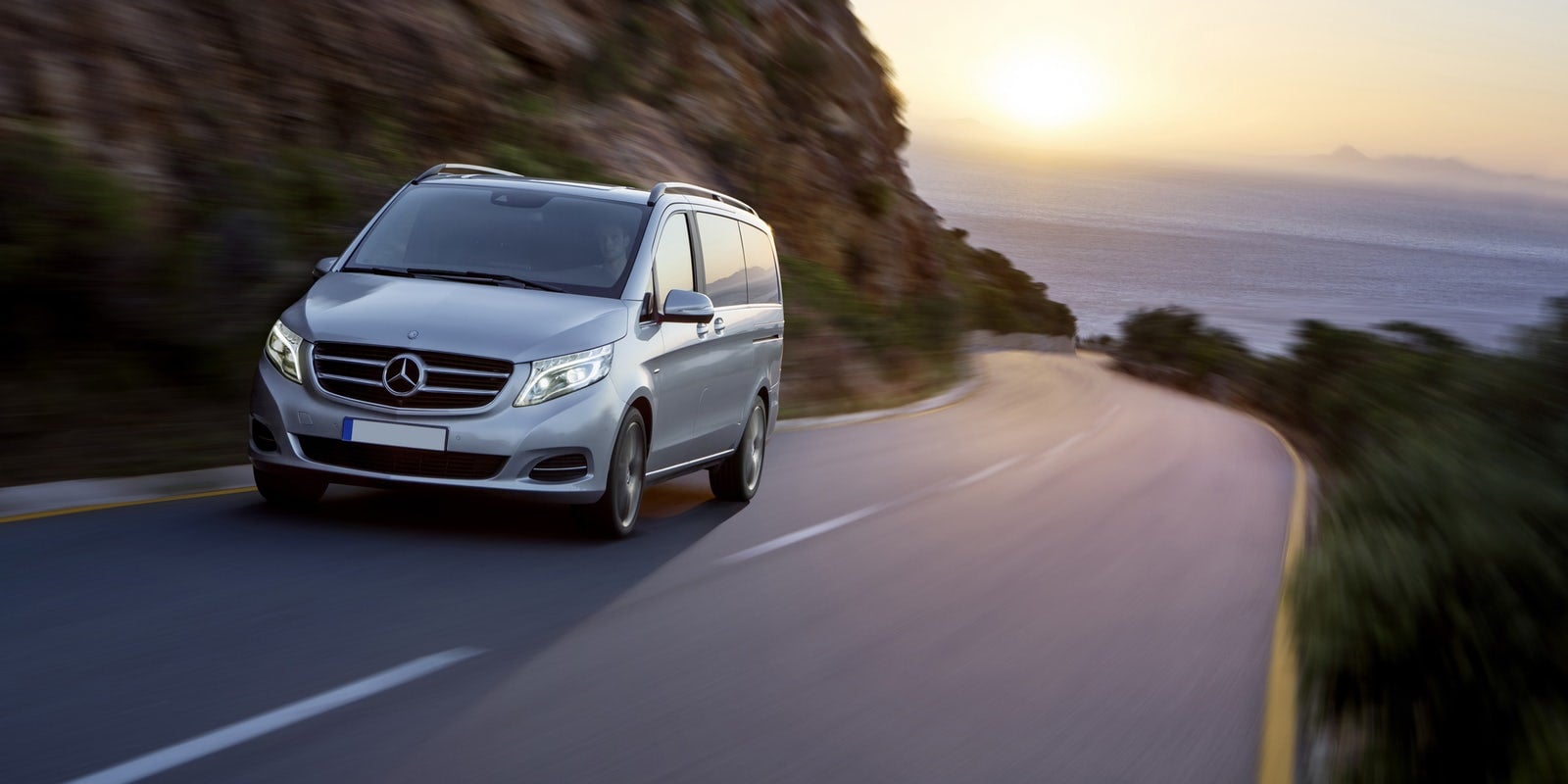
Where Viseu’s history can still be seen today
Most of the central landmarks sit within a relatively compact area, but slopes, cobbles and museum visits make a slower approach worthwhile. For travellers researching historic sites Viseu has to offer, the cathedral square is the most useful starting point.
01Sé de Viseu
The cathedral combines medieval origins with substantial later alterations. Inside, the intricate Manueline vaulting is a highlight; outside, the façade reminds visitors that a historic building can contain several different periods. Tip: look up once you enter the nave, then visit the cloister if it is accessible. Religious services and visitor arrangements can affect access.
02Museu Nacional Grão Vasco
Immediately beside the cathedral, this museum occupies the Paço dos Três Escalões, the former episcopal seminary. Its collection includes Vasco Fernandes’s monumental Saint Peter and works connected with the cathedral’s Renaissance commissions. Tip: seek out the Adoration of the Magi, notable for its depiction of an Indigenous Brazilian figure, and use the accompanying interpretation to understand its early-16th-century context. Check current opening arrangements before fixing your visit date.
03Igreja da Misericórdia
Facing the cathedral across Adro da Sé, this church introduces the history of the Misericórdia brotherhood and its charitable role. The 18th-century façade provides one of the square’s clearest architectural contrasts. Tip: photograph the relationship between the two churches rather than only their individual fronts; the square itself tells the story of changing religious patronage.
04Porta do Soar
This surviving medieval gateway marks an entrance through Viseu’s former defensive circuit. It helps restore a sense of boundary to an old centre that now flows into the modern city. Tip: approach from outside the former walls and pass through the gate, rather than simply viewing it from within; the transition is easier to appreciate that way.
05Porta dos Cavaleiros
The other principal surviving medieval gate stands on the eastern side of the historic centre, near the Fonte de São Francisco. Its location helps explain how the fortified town connected with routes beyond its walls. Tip: include it as a deliberate extension to your walk; a cathedral-and-museum visit alone can leave the city’s defensive history out of the picture.
06Rua Direita
This traditional commercial street links the upper historic centre with the lower town. Its shopfronts, narrow proportions and adjoining lanes reveal a more everyday side of Viseu than the monumental cathedral precinct. Tip: walk downhill from the cathedral area if that suits your mobility, and allow time for the side streets rather than treating Rua Direita only as a shortcut.
07Rossio and the azulejo panel
Praça da República, generally known as Rossio, represents the civic face of the city beyond the cathedral quarter. The large tile panel by Joaquim Lopes, dated 1931, depicts rural life and regional figures, including a useful reminder of Viseu’s relationship with the surrounding countryside. Tip: look closely at the clothing, animals and agricultural scenes; this is a 20th-century representation of regional identity, not a medieval artwork.
08Cava de Viriato
North of the historic centre, this enormous octagonal earthwork is one of Viseu’s most intriguing monuments. Its name associates it with Viriathus, who resisted Roman expansion in the 2nd century BC, but neither that association nor the monument’s traditional identification as a Roman camp should be presented as settled fact. Tip: allow a separate stop to appreciate its scale; it is not part of the tightly grouped cathedral-square sights.
Ask Portugal Magik to shape a personalized itinerary around your priorities, whether that means more time with Grão Vasco’s paintings or a broader introduction to the city’s streets, gates and monuments.
How a private day brings Viseu’s past to life
A rewarding day follows the historical geography of the city: begin on the cathedral hill, connect the church with the paintings in the Museu Nacional Grão Vasco, then walk through the commercial streets towards the surviving gateways. Add Rossio for the civic story and Cava de Viriato if the monument’s unresolved origins interest you. Rather than collecting landmarks, you build an understanding of how Viseu changed.
Portugal Magik offers private day and multi-day tours with an English-speaking driver, door-to-door pickup and flexible itineraries. The driver-led journey can connect the different parts of the visit, while museum interpretation provides the detail inside the collections. Interior visits should be planned around current opening hours, admission requirements and religious services; an English-speaking driver should not be confused with a specialist museum guide.
Departure point matters. Viseu is approximately 290–300 kilometres from Lisbon by road, usually around three to three-and-a-half hours each way before stops or traffic. A Lisbon day trip is possible, but it makes for a long day; an overnight or multi-day itinerary generally gives the history more breathing room. From Porto, allow approximately 130–150 kilometres and one-and-a-half to two hours each way, depending on the pickup point and route.
For smaller groups, a private Mercedes-Benz V-Class can be a comfortable option on these longer journeys, subject to availability. Share your accommodation address, travel dates and walking preferences when requesting a personalized proposal so that the timing reflects your actual day.
If Viseu is part of a longer journey through central Portugal, ask about a private Mercedes-Benz transfer or multi-day tour. Portugal Magik can propose a flexible itinerary that gives the cathedral and museum sufficient time rather than squeezing them between lengthy road journeys.