The history of Viana do Castelo, from hillfort to harbour
The history of Viana do Castelo unfolds between an Iron Age hilltop settlement, a medieval trading town and the shipyards beside the River Lima. Follow that story through dated milestones and surviving landmarks, with practical advice on what deserves your time.
The history of Viana do Castelo: 10 key moments
Viana’s setting explains much of its past: a sheltered river mouth facing the Atlantic, with the heights of Santa Luzia overlooking the coast. Its story begins long before the present city received its name.
01An earlier settlement above the Lima (Iron Age–Roman period)
The Citânia de Santa Luzia, also called Cidade Velha, preserves a fortified settlement occupied before and during the Roman period. Its stone houses and defensive walls belong to the castro tradition of northwestern Iberia. This was not yet the medieval town below. Tip: compare the hilltop’s commanding position with the river-mouth location of later Viana; the change makes the shift from defence towards maritime commerce easy to understand.
02Afonso III establishes Viana da Foz do Lima (1258)
King Afonso III granted the settlement a royal charter, or foral, in 1258. The town developed as Viana da Foz do Lima, its name explicitly linking it to the mouth of the river. The charter is the key medieval foundation date, rather than the beginning of all human settlement here. Tip: start your old-town walk near the waterfront before heading inland towards the civic centre.
03A medieval town takes shape (15th century)
The fortified town acquired the church now known as the Sé, or Cathedral of Santa Maria Maior. Built in the early 15th century, it retains a Gothic character and a distinctive façade framed by two towers. Its cathedral status came much later, with the creation of the Diocese of Viana do Castelo in 1977. Tip: pause at the entrance to examine the carved figures around the portal before stepping inside.
04Atlantic trade brings prosperity (15th–16th centuries)
Viana became an important northern Portuguese port, participating in Atlantic shipping, commerce with northern Europe and trade connected to Portugal’s overseas expansion. Merchant wealth helped finance substantial houses and civic buildings. This prosperity also belongs within the wider history of an empire shaped by colonisation and slavery, not simply a story of adventurous voyages. Tip: look above modern shopfronts for older stone doorways, coats of arms and decorated windows.
05The river entrance gains stronger protection (from 1568)
Construction of the Forte de Santiago da Barra began in 1568, incorporating an earlier defensive structure, the Torre da Roqueta. Later enlargements strengthened the protection of the harbour entrance. The fort shows why a commercially valuable port also needed military investment. Tip: view it from the surrounding open ground to appreciate its low, broad defensive profile rather than expecting a tall medieval castle.
06Civic ambition and charitable institutions leave their mark (1589–18th century)
The Misericórdia building on Praça da República was completed in 1589, bringing an elaborate Renaissance façade to the town’s principal civic space. The adjoining church acquired its richly decorated Baroque interior in the early 18th century. Together they reveal how charity, religion and public prestige shaped urban life. Tip: treat the façade and church interior as different historical chapters, not as one building campaign.
07Viana becomes a city and changes its name (1848)
Queen Maria II elevated Viana da Foz do Lima to city status on 20 January 1848, when it became Viana do Castelo. The honour followed the town’s loyalty to the Crown during the political struggles surrounding the Patuleia civil war. Tip: remember the older name when reading historical displays; references to Viana da Foz do Lima concern the same town.
08The Eiffel Bridge connects the two riverbanks (1878)
Inaugurated in 1878, the iron bridge associated with Gustave Eiffel’s engineering company carried both road and railway traffic across the Lima. It represents a different kind of landmark from the churches and merchant houses: infrastructure built for an industrialising country. Tip: the riverside offers a clearer view of its separate transport levels than crossing the bridge itself.
09Santa Luzia gains its great sanctuary (from 1904)
Construction of the monumental sanctuary dedicated to the Sacred Heart of Jesus began in 1904, following a design by Miguel Ventura Terra. Work continued over subsequent decades. Although its architectural language recalls much older churches, the sanctuary is a modern addition to the skyline, not a medieval monument. Tip: pair it with the nearby Citânia to contrast two very different uses of the same hill.
10Shipbuilding and the cod fleet enter living memory (1955–1998)
Built at Viana’s shipyards in 1955, the Gil Eannes served as a hospital and support ship for Portugal’s cod-fishing fleet in the North Atlantic. After retirement and rescue from scrapping, it returned to Viana in 1998 and became a museum ship. Tip: give the medical spaces as much attention as the bridge; they explain why this vessel mattered to crews working far from shore.

Plan with confidence
Plans change. Your options are clear.
Change dates without an extra change charge when available, and cancel early for a refund or travel credit. Our team confirms every detail before you pay.
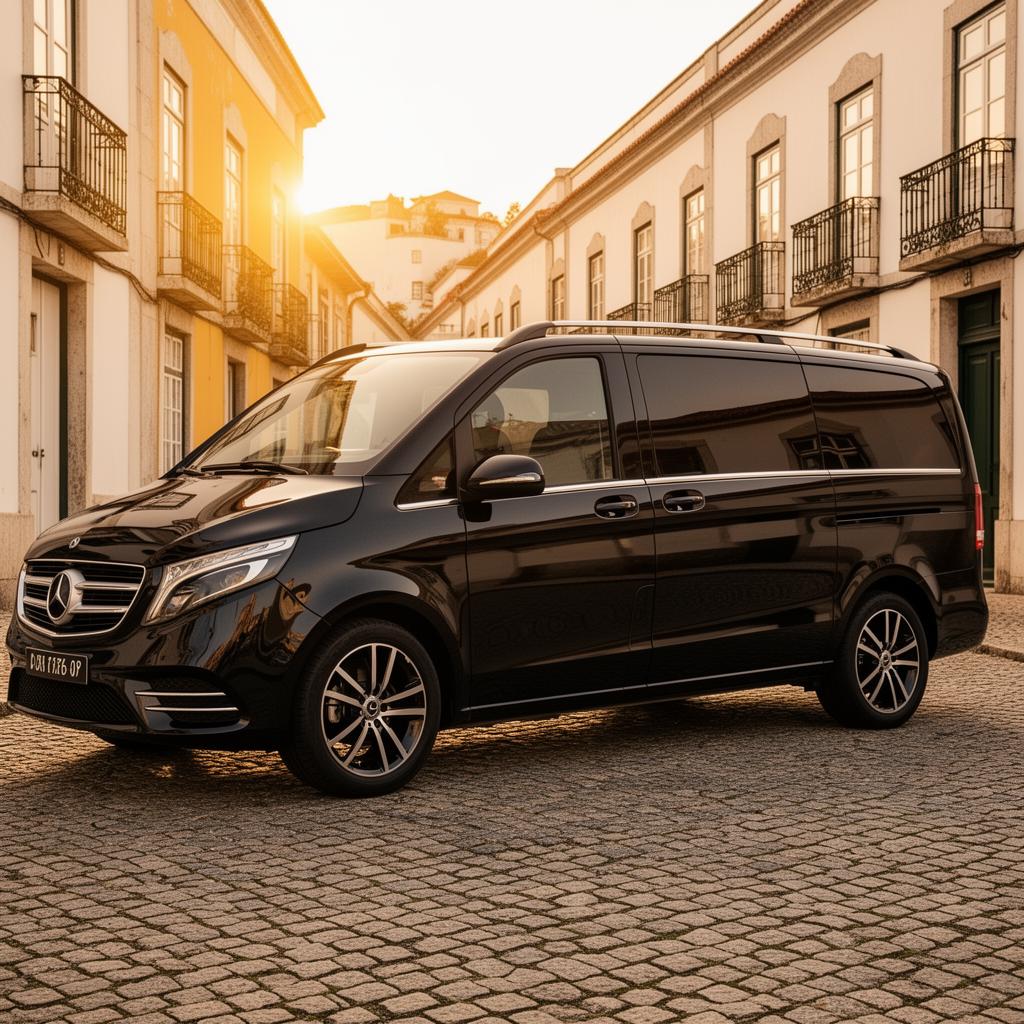
Travel with Portugal Magik
Explore Portugal in a Mercedes-Benz V-Class
For smaller groups, a private V-Class offers a comfortable way to travel between places, with an English-speaking driver, door-to-door pickup and a flexible itinerary planned with our team. Vehicle choice depends on your group and availability.
Plan a personalized journey →Historic sites Viana do Castelo preserves today
The most useful route combines the compact historic centre with the waterfront and Santa Luzia hill. These places let you test the chronology against actual streets, buildings and objects rather than relying on dates alone.
01Citânia de Santa Luzia
Above the modern city, the excavated settlement preserves house foundations, walls and the layout of an earlier community. It is the clearest place to explore Viana’s pre-medieval past. Access hours can be more limited than those of the surrounding hilltop area. Tip: check the archaeological site’s opening schedule specifically; an accessible sanctuary does not mean the Citânia is also open.
02Sé de Viana do Castelo
On Largo da Matriz, the cathedral anchors the medieval part of town. Its twin towers, Gothic doorway and stonework make it particularly rewarding from the outside, even when religious services limit sightseeing inside. Tip: approach through the nearby old streets rather than treating it as an isolated stop; the close-set buildings help convey the scale of the medieval town.
03Praça da República and the Misericórdia
This square brings several centuries into one view: the 16th-century former town hall, the Renaissance fountain dated 1559 and the Misericórdia’s distinctive arcaded façade. Inside the adjoining church, painted ceilings, gilded woodwork and azulejos shift the story towards the Baroque. Tip: stand beside the fountain and compare the restrained civic building with the much more decorative Misericórdia before deciding which interior to visit.
04Forte de Santiago da Barra
Near the river mouth, the fort makes the relationship between commerce and coastal defence tangible. Its bastioned outline belongs to the age of artillery, while the incorporated Torre da Roqueta represents an earlier phase. Interior access may depend on current use and events. Tip: plan the exterior circuit as the essential visit, with any interior access treated as a welcome addition.
05Ponte Eiffel and the Lima waterfront
The bridge is best understood as part of the working river landscape, not merely as a photo stop. Its metal structure marks the arrival of new transport connections in the late 19th century. Tip: leave time to look both upstream towards the crossing and downstream towards the harbour; the two views connect industrial infrastructure with Viana’s older maritime geography.
06Santuário de Santa Luzia
The sanctuary’s domes and monumental stonework dominate the hill, but the terrace is just as valuable for understanding history. From here, the old centre, Lima estuary, coast and harbour can be read together. Tip: prioritise this stop when visibility is good; low cloud can remove much of the geographical context that makes the climb worthwhile.
07Gil Eannes museum ship
Moored on the waterfront, the ship brings 20th-century maritime history into unusually close focus. Medical rooms, crew accommodation and working areas reveal both the danger of distant-water fishing and the infrastructure needed to support it. Expect stairs, narrow passages and shipboard thresholds. Tip: visitors with reduced mobility should check the current accessible route before purchasing admission.
08Museu do Traje
On Praça da República, the Costume Museum adds a social dimension through the clothing traditions of Viana and the surrounding region. It helps explain the embroidered dress and regional identity associated with celebrations such as the Romaria de Nossa Senhora d’Agonia. Tip: read the labels for differences in locality and use; these garments are not a single costume worn unchanged across every period.
For a personalized route through these landmarks, ask Portugal Magik to balance archaeological sites, church interiors and maritime history around your interests and the day’s opening hours.
How a private day brings Viana’s history to life
A satisfying historical visit needs contrasts, not a race through every monument. Begin on Santa Luzia when the weather offers clear views, then descend to the medieval centre and Praça da República. After a relaxed lunch, continue to the Gil Eannes and waterfront, adding the fort if your pace and opening hours allow. The sequence moves from landscape and early settlement to civic wealth, coastal defence and working life at sea.
Portugal Magik offers private day and multi-day tours with an English-speaking driver, door-to-door pickup and flexible itineraries. This makes it easier to link the hilltop with the walkable centre while keeping time for the places that genuinely interest you. Museum interpretation provides the detailed stories inside each attraction; check admission arrangements and any specialist on-site guiding separately when planning.
From Porto, Viana do Castelo is approximately 75–80 km by road, usually around an hour to an hour and a quarter each way, depending on pickup point and traffic. That makes a private day a comfortable way to give the city several unhurried hours. Ask Portugal Magik about a personalized itinerary starting from your northern Portugal accommodation.
From Lisbon, allow roughly 400 km and around four to four and a half hours each way before stops or significant traffic. For most travellers, a multi-day journey is more rewarding than an out-and-back day trip. Viana can form part of a northern Portugal itinerary or a private transfer with a planned sightseeing stop, provided sufficient visiting time is built in.
For smaller groups, a private Mercedes-Benz V-Class is a comfortable option for these journeys, subject to availability. Portugal Magik also provides private Mercedes-Benz transfers, so you can request either a dedicated historical tour or a door-to-door journey shaped around your wider travel plans.
Share your departure point, preferred pace and strongest interests—medieval streets, archaeology, religious architecture or maritime heritage—and request a personalized quote. A focused route with room to pause will tell you more about Viana than a checklist of hurried stops.