The history of the Douro Valley: Wine, Stone and River
The history of the Douro Valley begins long before port wine, with prehistoric engravings, medieval monasteries and generations of work on steep vineyard slopes. Follow the key moments, then discover the places where that past still shapes a visit today.
The history of the Douro Valley in 10 key moments
The Douro is both a river valley and a working cultural landscape. Its story reaches beyond the familiar vineyards around Peso da Régua and Pinhão, extending into the Côa Valley and the monastic country south of the river.
01Prehistoric artists leave their mark (Upper Palaeolithic, before c. 10,000 BC)
Along the Côa, a tributary of the Douro, prehistoric communities engraved horses, aurochs and other animals into exposed rock. These open-air panels are among the most important surviving records of Palaeolithic art in Europe. They belong to a much older landscape than the vineyards visitors associate with the region today. Insider tip: distinguish between the Côa Museum, which explains the art, and the archaeological sites, where the original engravings remain outdoors.
02Roman settlement and agriculture expand (1st century BC–5th century AD)
Roman rule connected northern Portugal through roads, settlements and agricultural estates. Vine cultivation in the wider Douro region predates the modern port trade by many centuries, although today's terraces should not simply be labelled Roman. Archaeological remains reveal a varied rural economy rather than a valley devoted exclusively to wine. Insider tip: use the regional collections at the Museu do Douro in Peso da Régua to place wine production within this longer history of settlement.
03Monasteries help organize the countryside (12th–13th centuries)
Following the formation of the Portuguese kingdom, monasteries became important landholders and centres of agricultural organization. Cistercian communities at São João de Tarouca and Santa Maria de Salzedas, south of the Douro, developed estates and influenced the surrounding rural economy. Their churches and surviving monastic buildings show a different source of regional wealth and authority. Insider tip: choose one monastery for a focused visit rather than adding both to an already full vineyard day.
04The wine export trade strengthens (17th century–1703)
Wine shipped through Porto found a growing market in England during the 17th century. The Methuen Treaty of 1703 gave Portuguese wines a favourable tariff position relative to French wines in England, reinforcing an existing trade. Port's familiar fortified style developed over time; neither the treaty nor a single merchant invented it overnight. Insider tip: keep production and export geography separate: the grapes grew inland, while Porto and Vila Nova de Gaia became central to the shipping trade.
05The Douro is formally demarcated (1756–1761)
In 1756, under the government of the future Marquis of Pombal, the crown created the Companhia Geral da Agricultura das Vinhas do Alto Douro. The company regulated the wine trade, and boundary surveys and granite markers followed. This made the Douro one of the world's earliest formally demarcated and regulated wine regions. Insider tip: look for references to marcos pombalinos, the historic boundary stones; they explain how wine quality, geography and state power became connected.
06Phylloxera transforms the vineyards (1860s onward)
The vine-destroying insect phylloxera reached the Douro in the 19th century, devastating vineyards and livelihoods. Replanting eventually relied on European vines grafted onto resistant American rootstocks. Some abandoned terraces became known as mortórios, leaving physical traces of the crisis on the hillsides. Insider tip: ask your driver-guide to point out differences between old stone-walled terraces, abandoned plots and later vineyard layouts rather than treating every slope as the same historical layer.
07The railway changes access and trade (1879–1887)
The Douro railway reached Peso da Régua in 1879, Pinhão in 1880 and Barca d'Alva in 1887. It provided an alternative to difficult river transport and helped connect the inland wine-growing districts with coastal markets. Railway buildings remain part of the valley's industrial heritage. Insider tip: Pinhão station's celebrated tile panels date from 1937, so read them as a later portrayal of vineyard and river life, not decoration installed when the line first opened.
08Dams reshape the river (1970s–1980s)
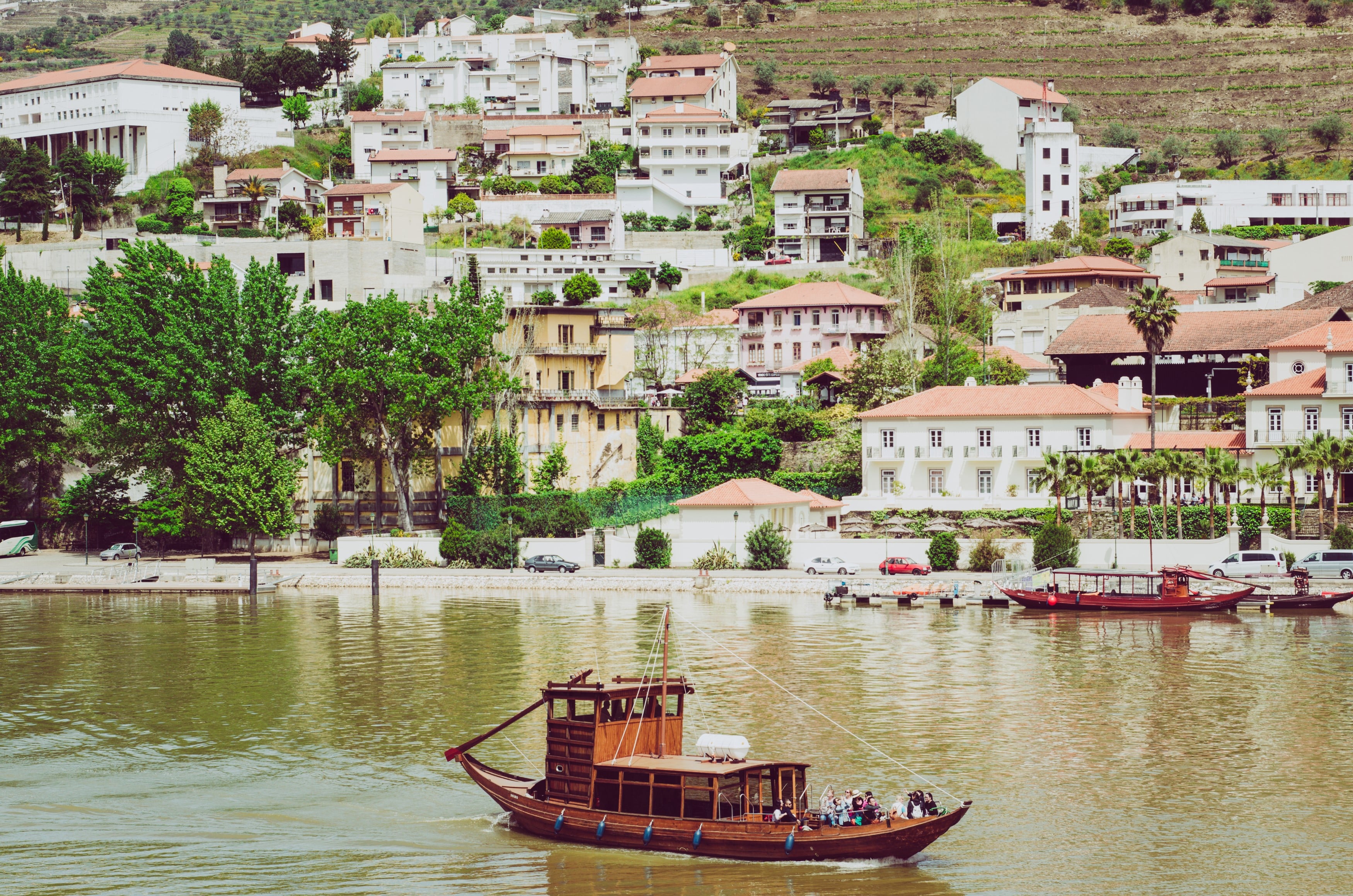
Hydroelectric development changed the Douro from a river of rapids and dangerous shallows into a sequence of regulated stretches. Carrapatelo Dam, completed in 1972, was one of the major projects on the Portuguese river. The calmer water seen today can disguise the hazards once faced by crews carrying wine in rabelo boats. Insider tip: compare historic river photographs at the Museu do Douro with the present waterfront to appreciate how substantially the waterway changed.
09Two distinct landscapes gain UNESCO recognition (1998 and 2001)
The prehistoric rock-art sites of the Côa Valley were inscribed on the UNESCO World Heritage List in 1998; the property was later extended to include Siega Verde in Spain. The Alto Douro Wine Region received its own inscription in 2001 as a cultural landscape shaped by wine production. These are separate listings, not one designation covering everything along the river. Insider tip: decide whether your priority is prehistoric archaeology or vineyard history before choosing your day's route.
10A living wine region balances continuity and change (21st century)
Port remains central to the Douro's identity, alongside internationally recognized Douro DOC still wines. Growers continue to work with demanding terrain while responding to labour pressures, heat and water availability. The landscape is not an open-air museum: walls, vines, villages and working estates still require constant care. Insider tip: notice the contrast between traditional narrow terraces, broader patamares and vertically planted vinha ao alto; these layouts reveal different responses to farming steep ground.
If a particular era interests you, ask Portugal Magik to shape a personalized itinerary around it rather than trying to cover the entire valley in one day.
Trusted across Portugal and Spain
Journeys backed by 1,300+ verified reviews
Consistently five-star rated since 2012, Portugal Magik is a TripAdvisor Hall of Fame recipient. Our Portugal Ambassadors bring local knowledge, thoughtful service and dependable private travel to every journey.

Travel with Portugal Magik
Explore Portugal in a Mercedes-Benz V-Class
For smaller groups, a private V-Class offers a comfortable way to travel between places, with an English-speaking driver, door-to-door pickup and a flexible itinerary planned with our team. Vehicle choice depends on your group and availability.
Plan a personalized journey →Where this history can still be seen today
Among the historic sites the Douro Valley preserves, some explain the wine trade while others reveal much older histories. These places work best as a selection, not as a single-day checklist.
01Museu do Douro, Peso da Régua
Housed in the former headquarters of the historic wine-regulating company, this museum is the clearest starting point for understanding the region. Its displays connect vineyard labour, commercial regulation, river transport and local identity. Régua's position beside the river also makes it a useful introduction to the geography of the wine trade. Insider tip: allow roughly 60–90 minutes and visit before exploring the terraces; the landscape becomes easier to interpret once you understand how it was worked.
02Pinhão railway station and waterfront
About 25 kilometres east of Régua along the N222, Pinhão brings railway, river and vineyard history together in a compact setting. The station's 1937 azulejo panels depict grape harvesting, wine transport and regional scenes. Nearby, the meeting of the Pinhão and Douro rivers helps explain the settlement's strategic position. Insider tip: study the clothing, baskets and boats in the tiles; the small working details are more revealing than a quick photograph of the whole façade.
03Provesende
On the slopes above the Douro, roughly 13 kilometres by road from Pinhão, Provesende preserves a historic village centre with manor houses, a church and a pillory. It offers a useful counterpoint to the riverfront: agricultural wealth and local authority were also expressed in upland settlements. Insider tip: leave time for a slow walk through the lanes and wear shoes with a reliable grip; the village's stone surfaces and gradients reward an unhurried visit.
04Monastery of São João de Tarouca
Around 35–40 kilometres south of Régua, this medieval Cistercian foundation introduces the religious and agricultural organization of the wider region. The surviving church and monastic remains make a worthwhile contrast with the wine-trade story along the river. Insider tip: check current access arrangements before including it, and treat Tarouca as a southern extension rather than a quick stop between Régua and Pinhão.
05Côa Museum, Vila Nova de Foz Côa
Near the confluence of the Côa and Douro, the museum explains the valley's prehistoric engravings and the campaign that helped secure their protection. Its hilltop position also makes the relationship between the two valleys easy to understand. This is substantially farther east than the central Régua–Pinhão corridor. Insider tip: reserve enough time for the interpretation before visiting a rock-art site; knowing how to identify an engraved animal makes the original panels much more rewarding.
06Canada do Inferno, Penascosa and Ribeira de Piscos
These are real archaeological sites within the Côa Valley Archaeological Park, where prehistoric engravings survive on rock surfaces in the landscape. Access follows the park's arrangements and involves specialist guided visits rather than unrestricted wandering. Terrain, walking requirements and available visits vary by site. Insider tip: confirm access directly with the park or an authorized provider before fixing your wider itinerary; a museum visit alone does not include seeing the original panels outdoors.
The Douro Valley history you encounter today depends heavily on where you spend your time. Ask Portugal Magik for a route that gives your chosen sites room to breathe, with any specialist admission or guided access confirmed separately.
How a private guided day brings the past to life
The most useful historical tour connects what you see through the window with what you explore on foot. A Portugal Ambassador is a knowledgeable local English-speaking driver-guide from Portugal who can explain why villages sit above the river, how terrace designs differ and why Régua became an important commercial centre.
From Porto, a realistic history-focused day can combine the Museu do Douro in Régua, the riverside N222 towards Pinhão, the station tiles and one carefully chosen village or viewpoint. Porto to Régua is approximately 100–125 kilometres by road, depending on the route, usually requiring around 1½–2 hours. Museum time, lunch and winding valley roads all need space in the schedule; adding Tarouca and the Côa archaeological sites would turn a coherent day into a rushed one.
For prehistoric history, build a separate day around Vila Nova de Foz Côa, the museum and a pre-arranged archaeological visit. From the central wine valley, reaching the Côa area can take around two hours each way, depending on your starting point and road choice. Specialist rock-art visits are delivered under the archaeological park's access arrangements, not by Portugal Magik.
From Lisbon, the Douro is better approached as a multi-day journey than as a sightseeing day trip. Régua is roughly 350–400 kilometres away by road, with approximately four hours or more of driving each way before stops. An overnight stay gives you time to understand the landscape instead of spending most of the experience travelling.
Portugal Magik offers private Mercedes-Benz transfers and private day or multi-day tours, with an English-speaking driver, door-to-door pickup and flexible itineraries. For smaller groups, a private Mercedes-Benz V-Class is a comfortable option on these journeys, subject to availability. Your itinerary can prioritize shorter walks, museum time, village architecture or the longer journey east towards the Côa.
Established in 2012, Portugal Magik has 1,300+ verified reviews, is consistently five-star rated and holds TripAdvisor Hall of Fame recognition. Share your starting point, available time and historical interests to request a personalized private tour or transfer quote.
Your route
Direct or with stops
Tell us where you would like to pause along the way and we shape the day around it.
Request a proposal →Your pace
One day or several
Spread the journey over a few days with overnight suggestions from our team.
Request a proposal →Your Ambassador
A local by your side
An English-speaking driver-guide from Portugal in a private Mercedes-Benz.
Request a proposal →★★★★★ 1,300+ verified reviews · TripAdvisor Hall of Fame · Since 2012
Keep exploring
Related journeys and routes
The history of Coimbra: Romans, Royalty and University Life
The history of Coimbra unfolds above the Mondego River, from the buried galleries of Roman Aeminium to the courtyards of Portugal’s oldest university. Understanding those layers makes its steep lanes, royal tombs and student traditions far more rewarding to explore.
Read more →The history of Marvão: A Guide to Portugal’s Frontier
The history of Marvão connects a Roman town in the valley with an Islamic rebel leader, medieval kings and centuries of border defence. Understanding those layers turns a walk through its granite lanes into something richer than a castle visit.
Read more →The history of Comporta: Rice, Tides and Coastal Life
The history of Comporta is written in rice fields, fishermen’s jetties and the working landscape of the Sado estuary. Understanding that heritage turns a visit beyond Lisbon into something richer than a day at the beach.
Read more →Frequently Asked Questions
Personalized and without obligation
Speak with a travel designer
1,300+ five-star reviews · TripAdvisor Hall of Fame · Trusted since 2012 · Mercedes-Benz fleet