The history of Portugal, Told Through Its Places
The history of Portugal is written into Roman pavements, medieval border towns, Atlantic-facing monasteries and Lisbon’s rebuilt streets. This guide connects the essential dates with places you can visit today, helping you choose a journey that goes beyond monuments and royal names.
The history of Portugal in 12 key moments
Portugal’s borders are old, but the story of the land is much older than the country. These twelve turning points explain how a territory on Europe’s Atlantic edge became a kingdom, an overseas empire and, eventually, a modern democracy.
01Prehistoric communities (c. 6000–2000 BCE)
Farming communities established settlements and built megalithic monuments thousands of years before Portugal existed. Around Évora, the Almendres Cromlech developed through several Neolithic phases, while nearby burial monuments reveal different uses of the landscape. Tip: distinguish a cromlech, an arrangement of standing stones, from an anta, a megalithic tomb; they are not interchangeable terms.
02Roman rule (218 BCE–5th century CE)
Rome began its conquest of the Iberian Peninsula in 218 BCE, although control of the western territories came much later. Much of present-day central and southern Portugal belonged to Lusitania; the north lay within other Roman administrative divisions. Latin, roads, urban planning and agricultural estates left lasting foundations. Tip: at Conímbriga, near Coimbra, look for domestic mosaics and heating systems rather than expecting only temples and military remains.
03Islamic Iberia and competing frontiers (711–1249)
Muslim forces entered Iberia in 711, and much of present-day Portugal became part of al-Andalus. Political control shifted over centuries as Christian kingdoms expanded southward. Islamic rule left important traces in irrigation, place names and architecture, particularly in the south. The Portuguese conquest of Faro in 1249 ended Muslim political rule within the kingdom’s mainland territory. Tip: Mértola’s main church preserves elements of its former mosque, making it especially revealing for this period.
04The emergence of the Portuguese kingdom (1128–1179)
Afonso Henriques consolidated power after the Battle of São Mamede in 1128. The Treaty of Zamora in 1143 is a conventional milestone in Portugal’s recognition as a kingdom, while papal recognition followed in 1179. Lisbon was captured in 1147 with crusader assistance. Tip: in Guimarães, read the castle and the nearby Church of São Miguel as parts of an early royal landscape, while treating picturesque founding legends separately from documented events.
05The succession crisis and the Avis dynasty (1383–1385)
A disputed succession threatened Portugal’s independence from Castile. João, Master of Avis, became João I in 1385, and the Portuguese victory at Aljubarrota that August secured his position. His patronage of Batalha Monastery turned a military victory into an enduring dynastic statement. Tip: inside the Founder’s Chapel at Batalha, connect the royal tombs with the family that shaped Portugal’s fifteenth-century expansion.
06Maritime expansion and empire (1415–1580)
The conquest of Ceuta in 1415 marked an early step in overseas expansion. Bartolomeu Dias rounded southern Africa in 1488, Vasco da Gama reached India by sea in 1498, and Pedro Álvares Cabral reached Brazil in 1500. Trade brought wealth, but empire also depended on conquest, coercion and the trafficking and exploitation of enslaved people. Tip: at Jerónimos Monastery, examine the maritime and royal imagery while remembering the unequal imperial economy behind the monument.
07The Iberian Union and restored independence (1580–1668)
Following a succession crisis, Portugal shared monarchs with Spain from 1580 while retaining distinct institutions. The revolution of 1 December 1640 placed João IV of the Braganza dynasty on the Portuguese throne. Warfare continued until Spain recognized Portugal’s restored independence in 1668. Tip: Lisbon’s Praça dos Restauradores commemorates 1640; its nineteenth-century monument shows how later generations chose to remember the restoration.
08The Lisbon earthquake and reconstruction (1755–late 18th century)
On 1 November 1755, an earthquake, tsunami and fires devastated Lisbon and affected other areas, including the Algarve. Reconstruction under José I and his minister, later titled Marquis of Pombal, reshaped the Baixa with planned streets and innovative earthquake-resistant construction. Tip: compare the regular street grid around Rua Augusta with the irregular lanes of Alfama, then visit the roofless Carmo church to understand what reconstruction did not replace.
09Invasions, constitutional conflict and the republic (1807–1910)
Napoleon’s forces invaded in 1807, prompting the royal court to move to Brazil. The Liberal Revolution of 1820 challenged the old order; Brazil declared independence in 1822, and Portugal’s Liberal Wars followed in 1828–1834. Political instability continued, and the monarchy ended with the republican revolution of 5 October 1910. Tip: Lisbon’s National Coach Museum makes court culture tangible, but its ceremonial vehicles represent elite life rather than everyday Portuguese experience.
10Dictatorship and colonial war (1926–1974)
A military coup in 1926 ended the First Republic’s parliamentary system. The authoritarian Estado Novo was institutionalized in 1933 under António de Oliveira Salazar, restricting political opposition through censorship and repression. Wars against independence movements in Angola, Guinea-Bissau and Mozambique, beginning in 1961, 1963 and 1964 respectively, placed growing pressure on the regime. Tip: Lisbon’s Aljube Museum, housed in a former political prison, provides essential context beyond the period’s official architecture.
11The Carnation Revolution and democracy (1974–1976)
On 25 April 1974, a military movement overthrew the dictatorship, with widespread civilian support. Decolonization and intense political change followed, alongside the movement of large numbers of people from former African colonies to Portugal. A democratic constitution was adopted in 1976. Tip: stand in Largo do Carmo, where Marcello Caetano surrendered, before visiting the Carmo ruins; the same square connects two very different turning points.
12European integration and contemporary Portugal (1986–present)
Portugal joined the European Economic Community in 1986, strengthening its integration with European institutions and markets. Euro notes and coins entered circulation in 2002. Lisbon’s Expo ’98 also transformed a former industrial waterfront into today’s Parque das Nações. Tip: finish a longer historical itinerary there to contrast medieval and imperial Portugal with the transport infrastructure, public spaces and architecture of the democratic era.

Plan with confidence
Plans change. Your options are clear.
Change dates without an extra change charge when available, and cancel early for a refund or travel credit. Our team confirms every detail before you pay.

Travel with Portugal Magik
Explore Portugal in a Mercedes-Benz V-Class
For smaller groups, a private V-Class offers a comfortable way to travel between places, with an English-speaking driver, door-to-door pickup and a flexible itinerary planned with our team. Vehicle choice depends on your group and availability.
Plan a personalized journey →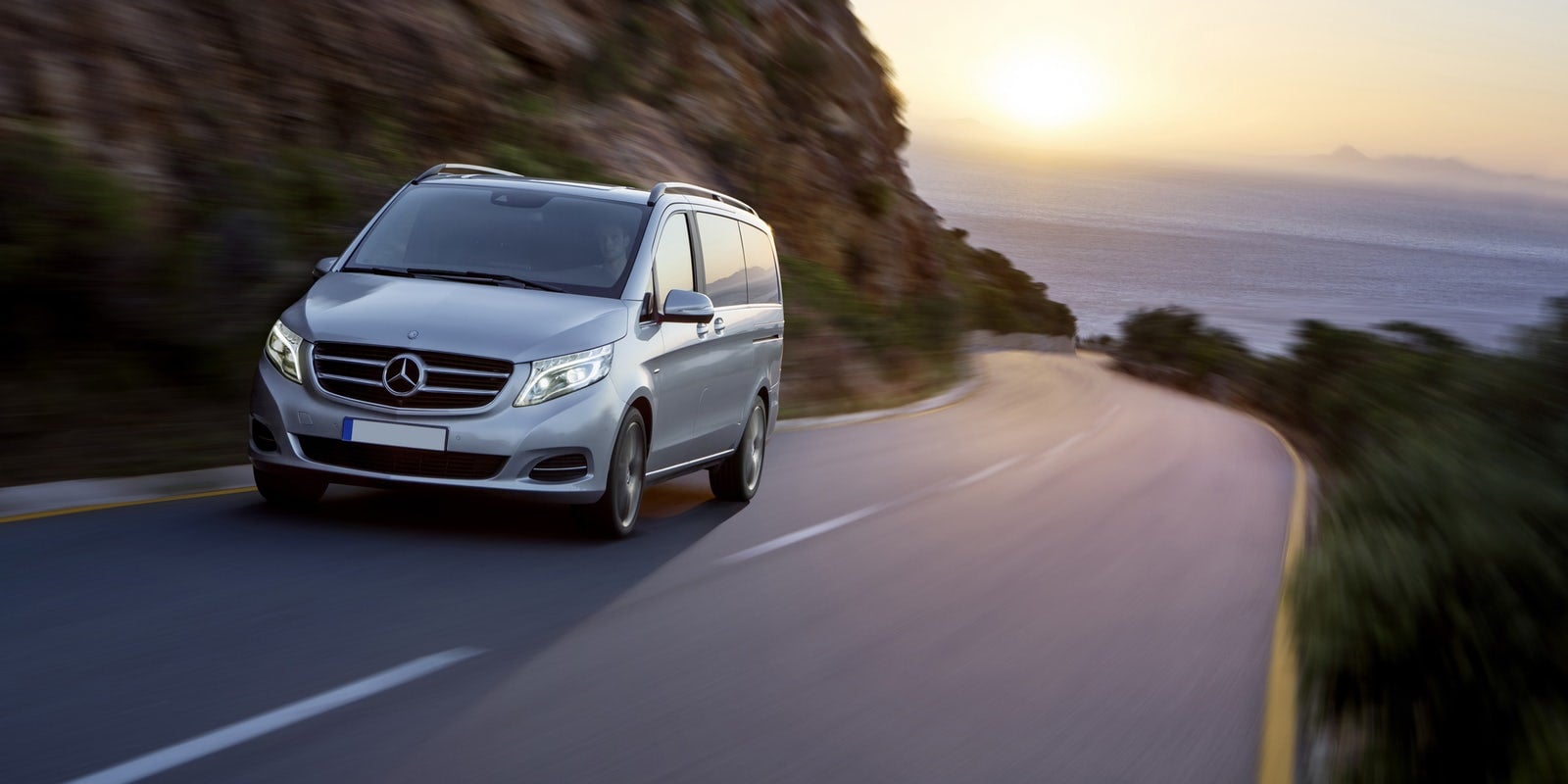
Where Portugal’s past can still be seen today
Among the historic sites Portugal is best known for, some explain a single turning point; others contain several eras within a short walk. The distances below are approximate road distances from central Lisbon, not suggestions to combine every stop into one day.
01Lisbon: Alfama, Baixa and Largo do Carmo
Begin around Lisbon Cathedral, founded after the Christian conquest of 1147, then compare Alfama’s hillside lanes with the eighteenth-century planning of Baixa. Praça do Comércio occupies the waterfront area once dominated by the royal palace destroyed in 1755. Largo do Carmo adds the events of April 1974. Tip: plan the hillier streets first and finish on the flatter waterfront; several viewpoints involve slopes or steps even with nearby vehicle access.
02Belém: Jerónimos Monastery and the riverfront
Roughly 7 km west of Baixa, Belém is central to understanding maritime expansion and its later commemoration. Construction of Jerónimos began in 1501 under Manuel I. Nearby, the present Monument to the Discoveries dates to 1960, not the era of the voyages. Tip: compare these two monuments deliberately: one belongs to the imperial period itself, while the other reveals how the Estado Novo presented that past centuries later.
03Sintra: the National Palace and Moorish Castle
About 30 km from Lisbon, Sintra brings Islamic-era fortification and later royal residence into the same landscape. The National Palace’s rooms and tilework reveal successive royal alterations; the Moorish Castle helps explain the defensive importance of the hills before the Christian conquest. Tip: choose monuments according to your interests and mobility, rather than trying to include every palace; castle ramparts and palace approaches can involve substantial climbing.
04Évora: Roman remains and a medieval city (about 130 km)
Évora’s Roman temple, medieval cathedral and surviving urban fabric make the city a strong choice for a layered Portugal history itinerary. The temple is often called the Temple of Diana, but that dedication is not established. Outside the city, prehistoric monuments extend the story much further back. Tip: allow time for the streets between major sights; the relationship between Roman remains, religious buildings and later houses is part of Évora’s historical value.
05Alcobaça and Batalha: two very different monasteries
Approximately 120 km and 145 km from Lisbon respectively, these monasteries offer a useful comparison. Alcobaça, founded in 1153, expresses Cistercian ideals and houses the fourteenth-century tombs of Pedro I and Inês de Castro. Batalha commemorates Aljubarrota and the Avis dynasty. Tip: compare Alcobaça’s restrained church interior with Batalha’s elaborate royal architecture instead of treating both as interchangeable Gothic monuments.
06Tomar: the Templars and the Order of Christ (about 135 km)
Tomar’s castle was founded in 1160 by the Knights Templar. The Convent of Christ later became associated with the Order of Christ, established after the Templars’ suppression. Its buildings span centuries, linking medieval military religion with royal patronage during maritime expansion. Tip: look for both the round Charola and the Manueline Chapter House window; they belong to different architectural phases and tell different parts of the story.
07Coimbra and Conímbriga: Roman life and a university city
Coimbra lies roughly 205 km from Lisbon, while Conímbriga is about 17 km south of Coimbra. The archaeological site reveals Roman domestic life; Coimbra adds a former royal palace and a university founded in 1290, which moved permanently to the city in 1537. Tip: reserve a substantial part of the day for each rather than squeezing both into a brief stop between Lisbon and Porto. Coimbra’s upper town also requires uphill walking.
08Guimarães: early kingship in northern Portugal (about 360 km)
Guimarães is better suited to a northern stay or multi-day itinerary than a day trip from Lisbon. Its castle and medieval center help place Portugal’s formation in a specific landscape. The Palace of the Dukes of Braganza adds fifteenth-century aristocratic history, although the building underwent extensive twentieth-century restoration. Tip: notice the difference between the early kingdom associated with the castle and the later ducal residence; they are not products of the same moment.
If you have one particular era in mind, ask Portugal Magik for a personalized itinerary built around it. A focused day usually reveals more than a long checklist of unrelated monuments.
How a private guided day brings the story together
The most rewarding historical day has a clear thread. In Lisbon, that might be the city before and after 1755: Alfama and the cathedral area, the Carmo ruins, then Baixa and Praça do Comércio. Alternatively, connect the imperial architecture of Belém with the twentieth-century history explored at the Aljube Museum. Opening hours, admission arrangements and the time needed inside each site should shape the final plan.
Outside the capital, Évora offers a coherent journey from Roman urban life to the medieval city. Alcobaça and Batalha work well as a comparison of monastic power and royal ambition. Tomar deserves a more concentrated visit if the Templars and the Order of Christ are your priority. Avoid adding Sintra to an already full Évora day: they lie in different directions from Lisbon, and the extra distance takes time away from the places themselves.
Portugal Magik offers private day and multi-day tours with an English-speaking driver, door-to-door pickup and flexible itineraries. The driver-led journey helps connect locations and keeps the day manageable, with time allocated for your visits inside monuments. Do not assume specialist interior guiding or admission tickets are included; confirm the arrangements when requesting your quote.
For smaller groups, a private Mercedes-Benz V-Class is a comfortable option for journeys such as Lisbon to Évora or Tomar, subject to availability. Door-to-door service is especially useful between dispersed sites, although historic centers, archaeological remains and castle ramparts still involve walking and may have access restrictions.
Tell Portugal Magik whether your interests lean toward Roman archaeology, medieval kingship, maritime expansion or modern democracy. Request a personalized private tour, or a private Mercedes-Benz transfer between Lisbon and your next base, with an itinerary that gives the history room to make sense.