The history of Castelo de Vide: A Visitor’s Guide
The history of Castelo de Vide unfolds through prehistoric monuments, medieval fortifications, Jewish heritage and the story of Portugal’s modern democracy. Walk its steep lanes with a little historical context, and a castle gateway, a carved doorway or a public fountain becomes much more than a photograph.
The history of Castelo de Vide in 10 key moments
Castelo de Vide stands in the northern Alentejo, in the district of Portalegre, close to Portugal’s frontier with Spain. Its past is not confined to the castle: it stretches into the surrounding countryside and down through the streets below the walls.
01Megalithic communities leave their monuments (fourth–third millennia BCE)
Long before the town existed, prehistoric communities built collective stone tombs across this landscape. The Anta da Melriça is one of the municipality’s surviving megalithic monuments, placing local human settlement thousands of years before the medieval fortress. Tip: If prehistory interests you, request a countryside stop when planning your itinerary; this monument is not part of the old-town walking circuit.
02A frontier takes shape (1297)
The Treaty of Alcañices between King Dinis of Portugal and Ferdinand IV of Castile settled important frontier disputes. It provides useful context for Castelo de Vide’s position within a wider network of Portuguese border strongholds, although the settlement itself predates the treaty. Tip: Look towards neighbouring Marvão from an elevated viewpoint to understand why this region’s history is best read as a landscape of fortifications, rather than one isolated castle.
03The medieval castle reaches a defining milestone (1327)
The castle’s construction developed over successive reigns, with 1327 generally given as the completion date of its principal medieval works, under Afonso IV. Its enclosure and keep expressed both royal authority and the practical need to defend a frontier settlement. Tip: Explore the streets inside the fortified enclosure as well as the military structures; they reveal how everyday life fitted within the defences.
04A Jewish neighbourhood flourishes (fourteenth–fifteenth centuries)
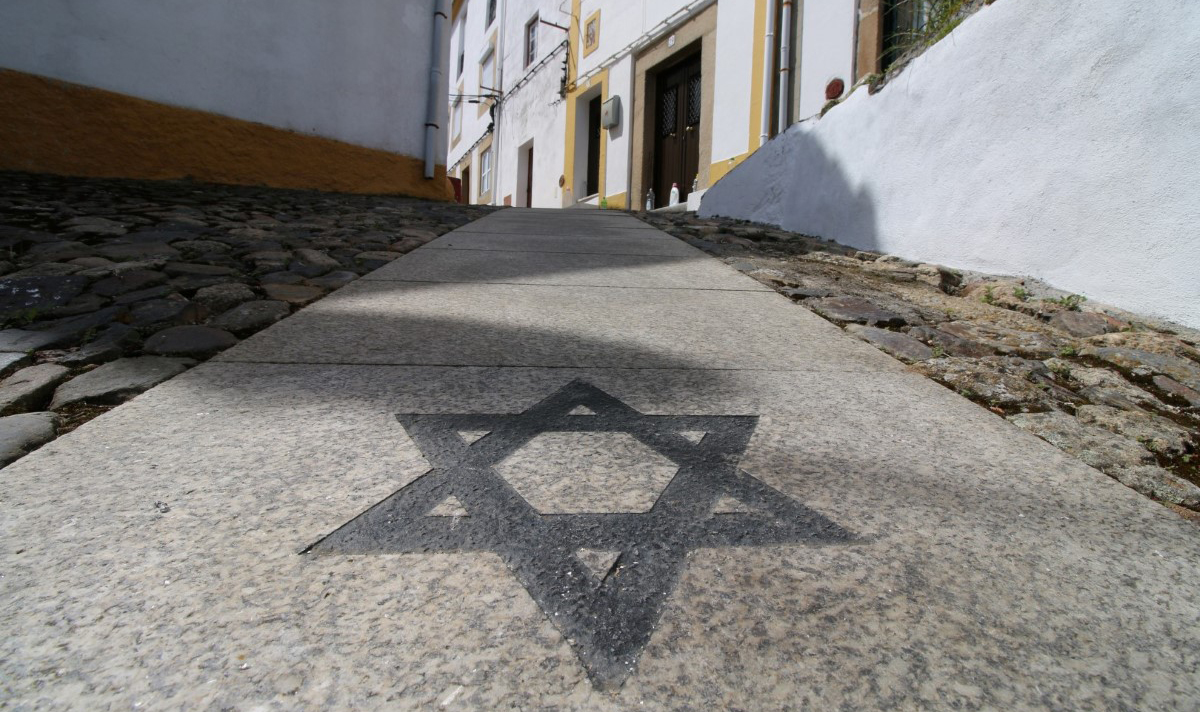
Castelo de Vide supported a Jewish community whose neighbourhood developed on the slope below the castle. The surviving street pattern and the building traditionally identified as its medieval synagogue make this one of the town’s most important historical layers. Tip: Walk the Judiaria slowly before entering the museum, so its account of community life has a recognisable setting outside.
05Refugees cross from Spain (1492)
The expulsion of Jews from the kingdoms of Castile and Aragon brought refugees into Portugal. Castelo de Vide’s proximity to the frontier made it one of the places associated with this movement, adding a wider Iberian dimension to its Jewish history. Tip: Consider the short distance to Spain when visiting the Judiaria; what now feels like an easy border crossing once represented a desperate search for safety.
06Expulsion orders and forced conversion transform Jewish life (1496–1497)
Manuel I’s expulsion decree of December 1496 was followed in 1497 by coercive measures and forced baptisms that brought recognised Jewish communal life in Portugal to an end. Many converts and their descendants became known as New Christians. The Portuguese Inquisition, established in 1536, later subjected suspected Jewish religious practice to persecution. Tip: Read the synagogue museum and Casa da Inquisição together; they address related but distinct chapters, not one simultaneous event.
07Gunpowder warfare reshapes the defences (1640–1668)
Portugal’s Restoration War against Spain renewed the strategic importance of frontier towns. Castelo de Vide acquired and developed bastioned defences, including the Fort of São Roque, suited to artillery warfare rather than the siege methods faced by its medieval castle. Tip: Compare the castle’s tall walls with the lower, angular lines of the later fortifications; their shapes explain the change in military technology.
08A monumental parish church rises (1789–1873)
Construction of the present Igreja de Santa Maria da Devesa began in 1789 and continued into the nineteenth century, with completion generally dated to 1873. Its scale reflects the importance of the civic and religious centre below the castle, around what is now Praça de Dom Pedro V. Tip: Step back across the square to appreciate the church’s full façade before examining details at the entrance.
09The War of the Oranges reaches the town (1801)
During the brief conflict between Portugal and Spain, supported by Napoleonic France, Spanish forces occupied Castelo de Vide. The episode shows that its frontier position remained consequential long after the medieval castle’s construction. Tip: Revisit the view of the surrounding hills after learning this chapter; the same geography shaped several very different periods of warfare.
10A local son helps change Portugal (1944–1974)
Fernando José Salgueiro Maia was born in Castelo de Vide on 1 July 1944. As an army captain, he became a central figure in the Carnation Revolution of 25 April 1974, leading troops in Lisbon during the overthrow of the dictatorship. Tip: Include the Casa da Cidadania Salgueiro Maia in the castle area to connect this small Alentejo town with the events at Terreiro do Paço and Largo do Carmo in Lisbon.
Plan with confidence
Plans change. Your options are clear.
Change dates without an extra change charge when available, and cancel early for a refund or travel credit. Our team confirms every detail before you pay.

Travel with Portugal Magik
Explore Portugal in a Mercedes-Benz V-Class
For smaller groups, a private V-Class offers a comfortable way to travel between places, with an English-speaking driver, door-to-door pickup and a flexible itinerary planned with our team. Vehicle choice depends on your group and availability.
Plan a personalized journey →Where Castelo de Vide history is still visible
Among the historic sites Castelo de Vide preserves, the most rewarding are those that let you compare different periods within a short walk. Short distances do not mean level ground: the routes between the main square, Jewish quarter and castle include slopes, uneven paving and steps.
01Castelo de Castelo de Vide
Start with the fortified enclosure and its surviving medieval structures. The castle makes the town’s defensive position clear, while the houses and lanes within its walls prevent the visit from becoming a story of battles alone. Tip: Ask for a route that considers the day’s heat and your comfort on slopes, rather than automatically leaving the highest part of town until last.
02The Judiaria
The lanes below the castle preserve the setting of the medieval Jewish neighbourhood. Gothic doorways and the tightly packed buildings reward close attention, but an old doorway alone does not establish the religion or occupation of its former residents. Tip: Explore around Rua da Judiaria and Rua da Fonte, and distinguish documented history from appealing local interpretations.
03The synagogue museum and Casa da Inquisição
The building traditionally identified as the medieval synagogue now interprets Jewish heritage. The Casa da Inquisição adds context about persecution and its consequences. Together, they encourage a more thoughtful visit than simply photographing a historic façade. Tip: Check current opening arrangements for both before fixing your day; they are separate visits and should not be treated as interchangeable.
04Fonte da Vila
This sixteenth-century Renaissance fountain stands at a meeting point of old streets near the Jewish quarter. Its stone canopy and columns make it architecturally distinctive, but its everyday purpose matters just as much: a public water source drew residents into shared urban space. Tip: Approach through the surrounding lanes before stopping at the fountain, so you experience its role within the neighbourhood rather than as an isolated monument.
05Igreja de Santa Maria da Devesa and Praça de Dom Pedro V
The large parish church anchors the town’s principal square. This is a useful contrast to the compressed lanes higher on the slope: the open civic space expresses a different phase of urban life. Tip: Use the square for a pause between historical walks, and remember that church access may be affected by services or other religious use.
06Fort of São Roque and the bastioned defences
These later military works broaden the story beyond medieval towers. Their geometry belongs to an age when artillery required different defensive solutions. Tip: Ask to include an exterior reading of the fortifications; understanding their layout does not depend on gaining access to every interior space.
07Casa da Cidadania Salgueiro Maia
In the castle area, this interpretive space brings the story into the twentieth century through the life and legacy of the locally born April captain. It is particularly meaningful if your wider Portugal itinerary includes Lisbon’s revolutionary landmarks. Tip: Request this stop explicitly if modern history interests you, and have opening times checked before your visit.
For a route that balances these sites without rushing the museums, ask Portugal Magik for a personalized private itinerary focused on Castelo de Vide’s history.
How a private guided day brings the history to life
The most useful historical visit follows connections rather than a checklist. See the castle and its relationship to the frontier, walk through the Jewish quarter, then compare the medieval town with the church square and later defences. Allow time inside the heritage museums: the difficult history of expulsion, forced conversion and persecution deserves more than a passing mention.
Portugal Magik offers private day and multi-day tours with an English-speaking driver, private Mercedes-Benz transport, door-to-door pickup and flexible itineraries. Your driver can help structure the day around your interests and practical needs, while museum interpretation supplies detailed context at the individual sites. A driver-led tour should not be confused with specialist guided commentary inside every monument.
From Lisbon, Castelo de Vide is roughly 220 kilometres by road, usually around two and a half to three hours each way, depending on your pickup point and traffic. A day trip is therefore substantial. If Jewish heritage or museum visits are your priority, concentrating on Castelo de Vide can be more satisfying than adding several towns.
Marvão, approximately 12 kilometres away by road, is a natural companion for visitors particularly interested in frontier castles. A private multi-day tour allows more time for both places and avoids compressing their different histories into hurried stops.
Ask Portugal Magik to shape a personalized day around medieval architecture, Jewish heritage or Salgueiro Maia’s story. If you already have accommodation arranged in the region, a private Mercedes-Benz transfer can also connect your stay with Lisbon, with pickup and destination agreed in advance.