The history of Braga: 2,000 Years Written in Stone
The history of Braga stretches from Roman Bracara Augusta to a powerful medieval archbishopric and the monumental stairways of Bom Jesus do Monte. Understanding those layers turns a walk through its squares, churches and archaeological remains into something much richer than a checklist of sights.
The history of Braga in 10 key eras
Braga history is not simply a sequence of churches and bishops. It also follows Roman administrators, a post-Roman kingdom, ambitious archbishops and architects who repeatedly reshaped the city.
01The founding of Bracara Augusta (c. 16 BCE)
Traditionally dated to around 16 BCE, Braga’s Roman foundation belonged to Augustus’s reorganization of northwestern Iberia. Its name combined a reference to the local Bracari people with an imperial dedication. The settlement developed into an administrative and commercial center connected to a substantial road network. Insider tip: visit the Roman baths on Alto da Cividade before exploring the cathedral quarter; they make it easier to picture a city that existed long before medieval Braga.
02A provincial capital in the Roman Empire (late 3rd–early 4th century)
Under the administrative reforms associated with Diocletian, Bracara Augusta became the capital of the province of Gallaecia. Its importance extended across much of northwestern Iberia, well beyond modern Portuguese borders. Insider tip: the D. Diogo de Sousa Archaeology Museum provides valuable context through Roman inscriptions and objects from everyday life; the ruins become more meaningful after seeing what people actually used.
03The Suebi kingdom and the councils of Braga (5th–6th centuries)
After the Suebi entered Iberia in the early fifth century, Braga became a principal royal and religious center of their kingdom. The councils held here in 561 and 572 helped shape Christian practice in the region. Martin of Braga, also known as Martin of Dumio, was a central figure in this religious transformation. Insider tip: investigate the archaeological remains at Dume if this period particularly interests you, but check visiting arrangements before adding the site to your day.
04Visigothic rule and the age of São Frutuoso (585–early 8th century)
The Visigothic king Leovigild conquered the Suebi kingdom in 585, bringing Braga into the Visigothic realm. The seventh-century bishop Fructuosus is associated with the foundation behind today’s Chapel of São Frutuoso de Montélios, an important monument of early medieval architecture. Insider tip: look closely at the chapel’s compact, cross-shaped plan, while remembering that later alterations and restoration complicate the story of its surviving fabric.
05Conquest, frontier changes and episcopal restoration (early 8th century–1071)
The Muslim conquest of Iberia disrupted the region’s political and ecclesiastical structures. Braga subsequently returned to Christian control, but recovery was gradual rather than a single dramatic turning point. The restoration of its episcopal see in 1071 was a decisive step in rebuilding the city’s religious authority. Insider tip: do not expect a preserved Islamic quarter; this era is better understood through historical context than through an intact group of monuments.
06The cathedral and medieval archiepiscopal power (1089–15th century)
Braga Cathedral was consecrated in 1089, before Portugal emerged as an independent kingdom in the twelfth century. The archbishops became major religious and political figures, while walls, streets and ecclesiastical buildings defined the medieval city. The tombs of Henry of Burgundy and Teresa of León, parents of Portugal’s first king, connect the cathedral with the country’s beginnings. Insider tip: allow time for the cathedral’s different visiting areas; the chapels and treasury are not necessarily included in the simplest church visit.
07Diogo de Sousa’s Renaissance transformation (1505–1532)
Archbishop Diogo de Sousa reshaped Braga through new streets, squares, building projects and the promotion of learning. His interventions helped the city expand beyond its medieval framework. The first opening of the Arco da Porta Nova dates to 1512, although the arch visible today is substantially later. Insider tip: stand outside the arch before walking inward; it is a useful place to explain the difference between the Renaissance opening and its eighteenth-century architectural appearance.
08The Baroque city and André Soares (18th century)
Eighteenth-century patrons gave Braga much of its richly decorated character. André Soares, born in Braga in 1720, became a defining figure in its Baroque and Rococo architecture. Palácio do Raio, built in the 1750s, is one of the clearest expressions of his sculptural approach to façades. Insider tip: study the window surrounds and central balcony rather than looking only at the blue tiles; the stonework carries much of the original architectural drama.
09The monumental development of Bom Jesus (1722–1811)
Although worship on the hillside predates the eighteenth century, the major development of the sanctuary began under Archbishop Rodrigo de Moura Teles in 1722. Its stairways turn the ascent into a religious narrative, including the celebrated Stairway of the Five Senses. The present church, designed by Carlos Amarante, was built between 1784 and 1811. Insider tip: view the central stairway from below before ascending; its symmetry and carefully staged landings are easier to understand from that perspective.
10Engineering, preservation and world recognition (1882–2019)
The water-counterbalanced funicular at Bom Jesus opened in 1882, adding an ingenious transport system to the pilgrimage landscape. In 2019, UNESCO inscribed the Sanctuary of Bom Jesus do Monte on the World Heritage List, recognizing the ensemble rather than Braga’s entire historic center. Insider tip: if the funicular is operating during your visit, notice how its water-balancing principle differs from an ordinary electrically hauled system.
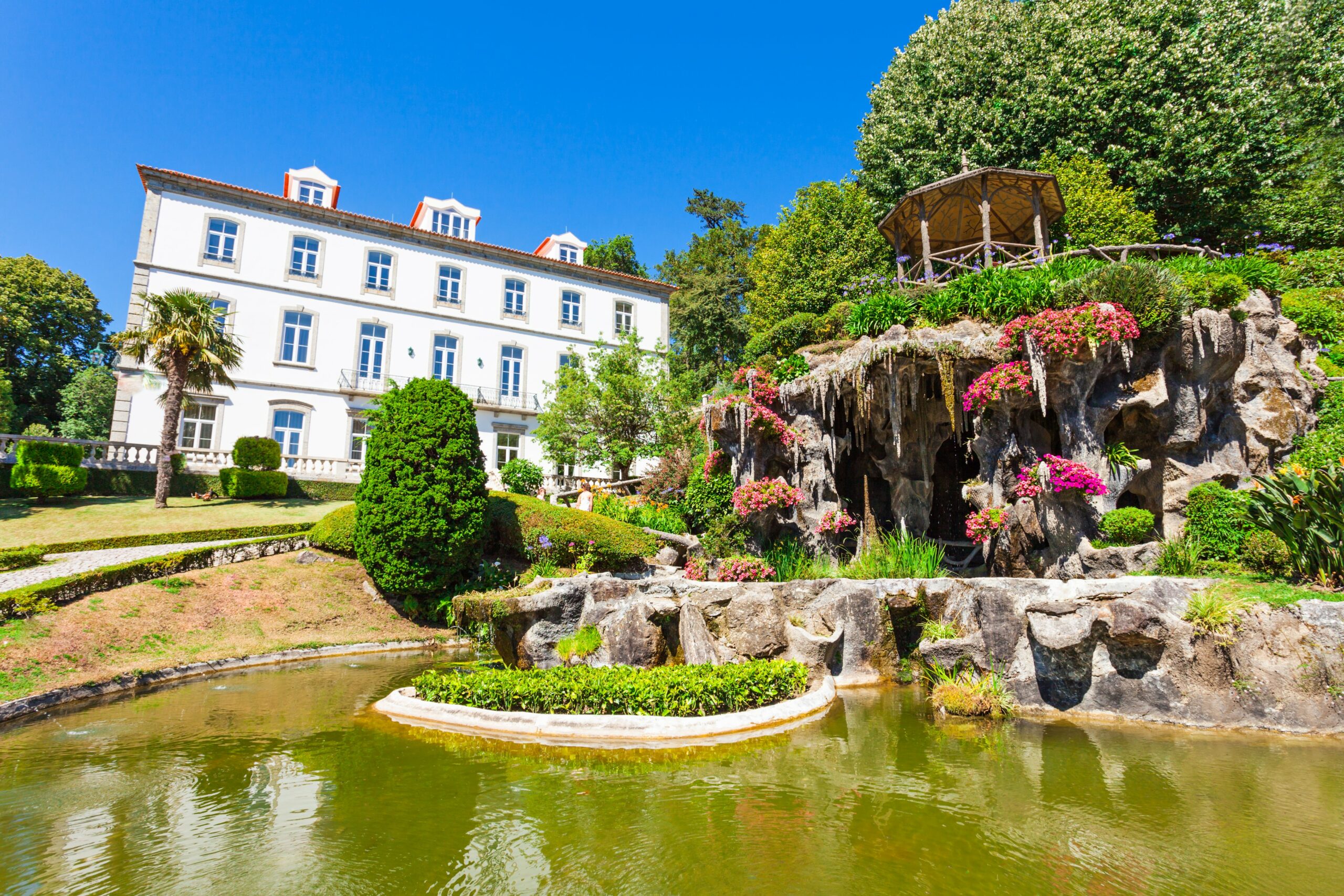
Trusted across Portugal and Spain
Journeys backed by 1,300+ verified reviews
Consistently five-star rated since 2012, Portugal Magik is a TripAdvisor Hall of Fame recipient. Our Portugal Ambassadors bring local knowledge, thoughtful service and dependable private travel to every journey.
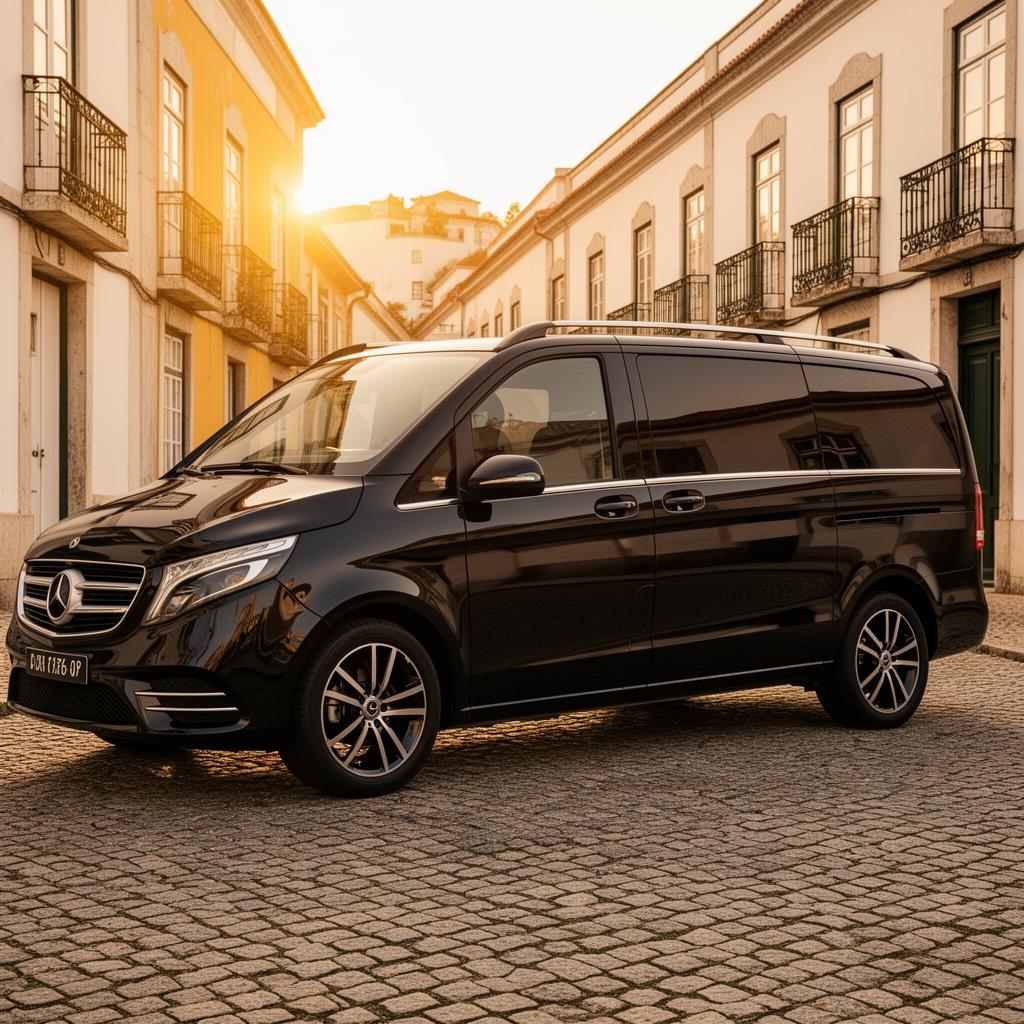
Travel with Portugal Magik
Explore Portugal in a Mercedes-Benz V-Class
For smaller groups, a private V-Class offers a comfortable way to travel between places, with an English-speaking driver, door-to-door pickup and a flexible itinerary planned with our team. Vehicle choice depends on your group and availability.
Plan a personalized journey →Where Braga’s history can still be seen today
These are the historic sites Braga is best known for, alongside a few stops that reveal its less obvious layers. Most central landmarks can be linked on foot, while São Frutuoso and Bom Jesus work better as separate stops on a private itinerary.
01Roman Baths of Alto da Cividade and D. Diogo de Sousa Archaeology Museum
The bath complex reveals the infrastructure and social habits of Roman Bracara Augusta. The nearby museum supplies the objects and explanations that bare foundations cannot provide on their own. Together, they make a stronger introduction than either stop in isolation. Insider tip: plan them as a pair and confirm current opening hours before setting the order of your morning.
02Braga Cathedral
The Sé is the essential monument for understanding the city’s medieval authority. Romanesque elements coexist with later Gothic, Manueline and Baroque additions, including the elaborate organs inside. It is a building repeatedly adapted by generations, not a perfectly preserved snapshot of 1089. Insider tip: ask which chapels, treasury rooms and other areas are accessible that day; worship and visiting arrangements can affect what you see.
03Chapel of São Frutuoso de Montélios
Around 3 km northwest of the cathedral, this small monument provides an unusually tangible connection with early medieval Braga. Its origins are generally associated with the seventh century and Bishop Fructuosus, although its architecture has been altered and interpreted over time. Insider tip: check access before making the detour, particularly if seeing the interior is a priority.
04Arco da Porta Nova and Rua do Souto
The arch marks a historic entrance into the old city, with Rua do Souto leading toward its commercial and ecclesiastical heart. Its current eighteenth-century form should not be confused with the original opening created under Diogo de Sousa. Insider tip: walk this stretch early in the day if you want to examine façades and street alignments with fewer distractions.
05Antigo Paço Arquiepiscopal and Jardim de Santa Bárbara
The former archiepiscopal palace complex shows how extensively the archbishops shaped central Braga. Beside it, Jardim de Santa Bárbara offers a clear view of the palace’s medieval wing, with its stonework and pointed openings. Insider tip: use the garden as a short pause between indoor visits; it is also a good place to distinguish medieval architecture from the later façades elsewhere in the complex.
06Palácio do Raio
This eighteenth-century palace brings Braga’s secular wealth and decorative ambition into focus. Designed by André Soares, it demonstrates how movement, carved granite and elaborate openings could transform a relatively compact urban façade. The familiar blue-tile covering belongs to a later phase. Insider tip: step back across the square to appreciate the whole composition, then approach to inspect the carving around individual windows.
07Bom Jesus do Monte
Roughly 6 km east of central Braga, depending on your starting point, the sanctuary combines architecture, sculpture, gardens and a wooded hillside into a carefully planned devotional landscape. Its UNESCO status applies to this sanctuary, not to every historic building in Braga. Insider tip: decide in advance whether you want a substantial stairway walk or vehicle access closer to the upper sanctuary; the full ascent is not essential to understanding the site.
If Roman archaeology, early Christianity or Baroque architecture is your main interest, ask Portugal Magik for a personalized itinerary built around that theme rather than trying to give every monument equal time.
How a private guided day brings Braga’s past to life
A rewarding Braga day follows a historical thread while leaving room to look properly. From Porto, Braga is approximately 55 km away by road; allow around an hour, with traffic and pickup location affecting the journey. From Lisbon, the road journey is roughly 365 km and generally takes around four hours each way, making Braga a more comfortable part of a northern Portugal multi-day tour than a hurried return day trip.
For a Porto-based visit, a sensible sequence is the Roman archaeological area, the cathedral quarter and a walk linking the Arco da Porta Nova, Rua do Souto and Jardim de Santa Bárbara. After lunch, Palácio do Raio adds the Baroque chapter before the drive to Bom Jesus. Include museum and cathedral interiors selectively: seeing every collection, chapel and outlying monument would make the day rushed.
Your Portugal Ambassador is a knowledgeable local English-speaking driver-guide from Portugal. During the journey and between stops, they can connect Braga’s Roman foundations, medieval archbishops and eighteenth-century building projects, helping you understand why the landmarks belong together. Monument interiors remain subject to their own opening hours, admission arrangements and visitor rules.
Portugal Magik offers private day and multi-day tours and private Mercedes-Benz transfers, with an English-speaking driver, door-to-door pickup and flexible itineraries. A private Mercedes-Benz V-Class is a comfortable option for smaller groups on the Porto–Braga journey, subject to availability. Tell the team about walking preferences in advance, especially if steep stairways or uneven paving would affect your enjoyment.
For a history-focused day, resist automatically adding Guimarães just because it is nearby. Both cities can fit into a broader introductory itinerary, but Braga alone rewards the extra time if you want archaeology, cathedral interiors and an unhurried sanctuary visit. Ask for a personalized private tour quote that reflects the depth you want, not simply the number of stops.
Established in 2012, Portugal Magik has 1,300+ verified reviews, is consistently five-star rated and holds TripAdvisor Hall of Fame recognition. If your accommodation and sightseeing plans are already arranged, you can also request a private transfer to Braga rather than a full touring day.
Your route
Direct or with stops
Tell us where you would like to pause along the way and we shape the day around it.
Request a proposal →Your pace
One day or several
Spread the journey over a few days with overnight suggestions from our team.
Request a proposal →Your Ambassador
A local by your side
An English-speaking driver-guide from Portugal in a private Mercedes-Benz.
Request a proposal →★★★★★ 1,300+ verified reviews · TripAdvisor Hall of Fame · Since 2012
Keep exploring
Related journeys and routes
The history of Óbidos: Queens, Castle Walls and Living Heritage
The history of Óbidos stretches beyond its familiar castle walls, connecting Roman settlement, Islamic rule and centuries of royal patronage. Follow that story through the town’s gateways, churches and streets, with practical advice on what to look for today.
Read more →The history of Central Portugal: a traveller’s guide
The history of Central Portugal unfolds through Roman houses, frontier castles, royal monasteries and a university that helped shape the country’s intellectual life. This guide connects the major turning points with the places you can visit today, helping you choose a journey with depth rather than simply more stops.
Read more →The history of Silves: from Islamic city to Algarve landmark
The history of Silves follows the fortunes of a riverside city whose red sandstone castle still dominates the Algarve’s inland landscape. Understanding its Islamic prosperity, contested conquests and later decline makes the walk between its castle, cathedral and river much more rewarding.
Read more →Frequently Asked Questions
Personalized and without obligation
Speak with a travel designer
1,300+ five-star reviews · TripAdvisor Hall of Fame · Trusted since 2012 · Mercedes-Benz fleet