13 fun facts about Lisbon and where to discover them
These fun facts about Lisbon reveal a city of Roman theatre ruins, earthquake-resistant architecture and a bookshop that has been trading since 1732. Use them to turn a sightseeing day into a closer look at the details behind the Portuguese capital.
13 fun facts about Lisbon worth knowing before you visit
01The world’s oldest operating bookshop
Founded in 1732, Livraria Bertrand in Chiado is recognized by Guinness World Records as the oldest operating bookshop, although it has not always occupied its present premises. Step inside at Rua Garrett 73 rather than stopping at the façade; the rooms extend much farther back than the entrance suggests.
02An earthquake reshaped the city centre
On 1 November 1755, an earthquake, tsunami and fires devastated Lisbon, and the subsequent rebuilding gave Baixa its orderly street grid and innovative timber-framed earthquake-resistant structures known as gaiolas. Walk along Rua Augusta and look down the intersecting streets to appreciate how deliberately this district was planned.
03A Roman theatre lies beneath the castle district
Lisbon’s Roman theatre dates to the first century AD, when the city was known as Olisipo, and its remains form part of Museu de Lisboa – Teatro Romano. Find the site on Rua de São Mamede, below the castle, and check its opening arrangements before adding it to a walking route.
04The aqueduct brought water across a valley
The Águas Livres Aqueduct began supplying Lisbon in 1748, with its monumental stone arches crossing the Alcântara valley. For a closer encounter than a passing photograph, check EPAL’s current visitor schedule for access to the aqueduct crossing from the Calçada da Quintinha entrance.
05Santa Justa was not designed by Gustave Eiffel
The Santa Justa Lift opened in 1902 and was designed by engineer Raoul Mesnier du Ponsard, not Eiffel, despite the frequent attribution. Examine its ironwork from Rua de Santa Justa, then approach the upper structure from Largo do Carmo to understand the difference in street levels without needing to ride it.
06Rua Augusta’s arch was completed in 1873
The triumphal arch facing Praça do Comércio was completed more than a century after the earthquake that prompted the square’s reconstruction. Stand beneath it and compare the straight view up Rua Augusta with the open view towards the Tagus: the contrast makes the city’s post-earthquake design particularly clear.
07Pastéis de Belém has been baking since 1837
The historic Belém bakery began producing its celebrated custard tarts in 1837, and Pastéis de Belém is the establishment’s specific name rather than a generic term for every pastel de nata. If you want to sit down, ask about the interior dining rooms rather than assuming the takeaway queue is your only option.
08A tile panel preserves pre-earthquake Lisbon
The Museu Nacional do Azulejo holds the Grande Panorama de Lisboa, a roughly 23-metre-long tile panel depicting the city before the 1755 earthquake. Check the museum’s current opening and display information, then look for the royal palace on the waterfront where Praça do Comércio stands today.
09Fado has UNESCO recognition
In 2011, UNESCO inscribed fado, the urban popular song of Portugal, on its Representative List of the Intangible Cultural Heritage of Humanity. Start at the Museu do Fado in Alfama to understand the music before attending a performance, where conversation should pause while the singers and musicians perform.
10Lisbon’s red bridge once had another name
Opened in 1966 as the Ponte Salazar, the suspension bridge was renamed Ponte 25 de Abril after the revolution of 25 April 1974. For a close view of its structure without crossing the river, head to the waterfront around Doca de Santo Amaro in Alcântara.
11The purple spring flowers are not native
The jacarandas that colour parts of Lisbon purple in late spring are South American trees, not a native Portuguese species. Check Largo do Rato or Avenida Dom Carlos I around May and June, remembering that the exact flowering period changes with the weather.
12São Roque’s restrained exterior hides lavish chapels
The Church of São Roque contains the eighteenth-century Chapel of Saint John the Baptist, commissioned in Rome and subsequently transported to Lisbon. Once inside, look closely at the chapel’s mosaic images, which can resemble paintings from a distance.
13Lisbon’s traditional paving is made from individual stones
Calçada portuguesa uses small pieces of stone, commonly pale limestone and dark basalt, to create patterns such as the wave design in Rossio. Look at the waves from the square’s edge to see their optical effect, and take extra care on polished stones after rain.
Trusted across Portugal and Spain
Journeys backed by 1,300+ verified reviews
Consistently five-star rated since 2012, Portugal Magik is a TripAdvisor Hall of Fame recipient. Our Portugal Ambassadors bring local knowledge, thoughtful service and dependable private travel to every journey.

Travel with Portugal Magik
Explore Portugal in a Mercedes-Benz V-Class
For smaller groups, a private V-Class offers a comfortable way to travel between places, with an English-speaking driver, door-to-door pickup and a flexible itinerary planned with our team. Vehicle choice depends on your group and availability.
Plan a personalized journey →
Where to experience Lisbon’s curiosities first-hand
Baixa, Chiado and the castle slopes: Start at Praça do Comércio for the Rua Augusta Arch, continue through the rebuilt streets of Baixa, and look at Santa Justa’s ironwork before exploring Chiado’s Bertrand bookshop. São Roque and Largo do Carmo fit naturally into the upper part of this route; the Roman theatre makes a worthwhile separate stop on the slopes below Castelo de São Jorge. These areas involve hills, steps and pedestrian streets, so allow time rather than treating them as a checklist.
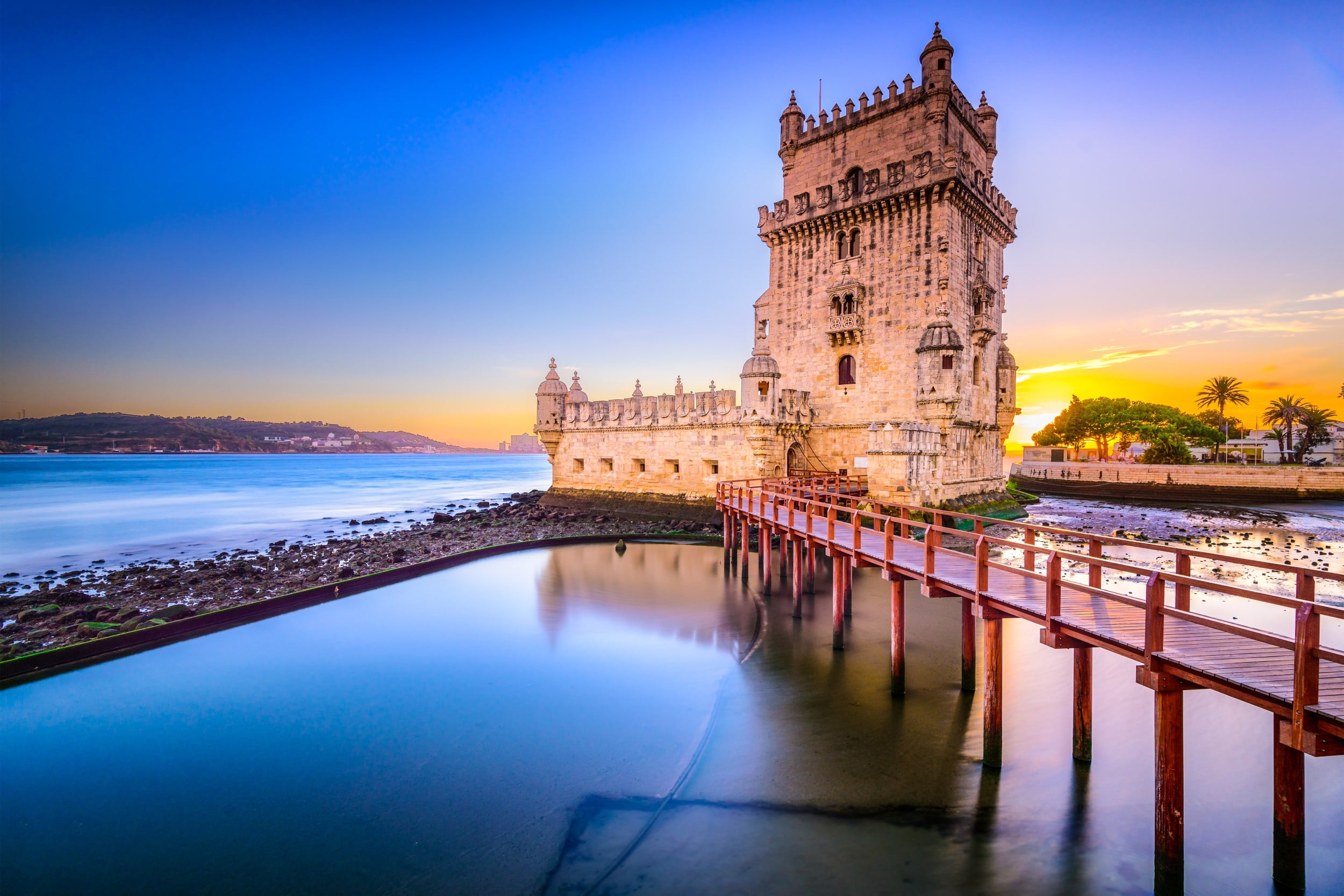
Belém and Alcântara: Pair the pastry tradition at Pastéis de Belém with views of the Ponte 25 de Abril from Doca de Santo Amaro. The waterfront at Belém is roughly 7 kilometres west of Praça do Comércio, making this a sensible separate outing rather than an extension of a long central walking route. The aqueduct is inland from the docks and needs its own planned stop, with visitor access checked beforehand.
Alfama and the tile museum: Visit the Museu do Fado in Alfama, then consider a separate stop farther east at the Museu Nacional do Azulejo, on Rua da Madre de Deus, if it is open during your visit. They illuminate different sides of Lisbon’s identity: music shaped by urban life and tilework that records how the city once looked.
For a day linking these districts, ask Portugal Magik for a personalized route that balances driving with short walks. A Portugal Ambassador is a knowledgeable local English-speaking driver-guide from Portugal who can put the sights in context; door-to-door pickup and a flexible itinerary help keep the day comfortable. A private Mercedes-Benz V-Class is a comfortable option for smaller groups on these journeys, subject to availability.
A few practical tips for a more rewarding Lisbon visit
Choose two or three clusters of sights rather than trying to cover every fact in one day. Central Lisbon rewards walking, but its slopes and slippery paving make supportive shoes useful; in summer, save exposed squares and waterfront stretches for the cooler parts of the day.
Check official attraction information shortly before visiting, particularly for the aqueduct, museum displays and any restoration-related closures. Churches may restrict sightseeing during services, and jacaranda blossom follows the weather rather than a fixed calendar.
Among the most useful Portugal facts to remember is that Lisbon sits beside the Tagus estuary, not directly on an Atlantic beach. For Portugal travel that continues beyond the capital, a day in Sintra focuses on palaces, gardens and wooded hills; coastal stops such as Cascais are separate destinations that need time in the itinerary.
Established in 2012, Portugal Magik offers private Mercedes-Benz transfers and private day or multi-day tours with an English-speaking driver, door-to-door pickup and flexible itineraries. Request a personalized tour or transfer quote if you would like help linking Lisbon’s stories with a comfortable, realistically paced journey.
Your route
Direct or with stops
Tell us where you would like to pause along the way and we shape the day around it.
Request a proposal →Your pace
One day or several
Spread the journey over a few days with overnight suggestions from our team.
Request a proposal →Your Ambassador
A local by your side
An English-speaking driver-guide from Portugal in a private Mercedes-Benz.
Request a proposal →★★★★★ 1,300+ verified reviews · TripAdvisor Hall of Fame · Since 2012
Keep exploring
Related journeys and routes
12 curiosities of Portuguese culture worth discovering
These curiosities of Portuguese culture reveal the stories behind tiled façades, tiny coffees, cork landscapes and much-loved pastries. Discover reliable Portugal facts, plus practical ways to experience them on your mainland travels.
Read more →12 funny curiosities about Portugal worth travelling for
These funny curiosities about Portugal reveal a country where bats protect books, pavements resemble waves and a saint’s name can give the wrong impression. Each fact comes with a practical tip for finding its real-life setting.
Read more →12 fun facts about Porto worth discovering in person
These fun facts about Porto reveal a city of railway-tile storytelling, bridge-building rivalry and sandwiches that demand a proper appetite. Use them to connect the landmarks with the people, traditions and small details that make a visit more rewarding.
Read more →Frequently Asked Questions
Personalized and without obligation
Speak with a travel designer
1,300+ five-star reviews · TripAdvisor Hall of Fame · Trusted since 2012 · Mercedes-Benz fleet