Traditional Food of Monsaraz: An Alentejo Food Guide
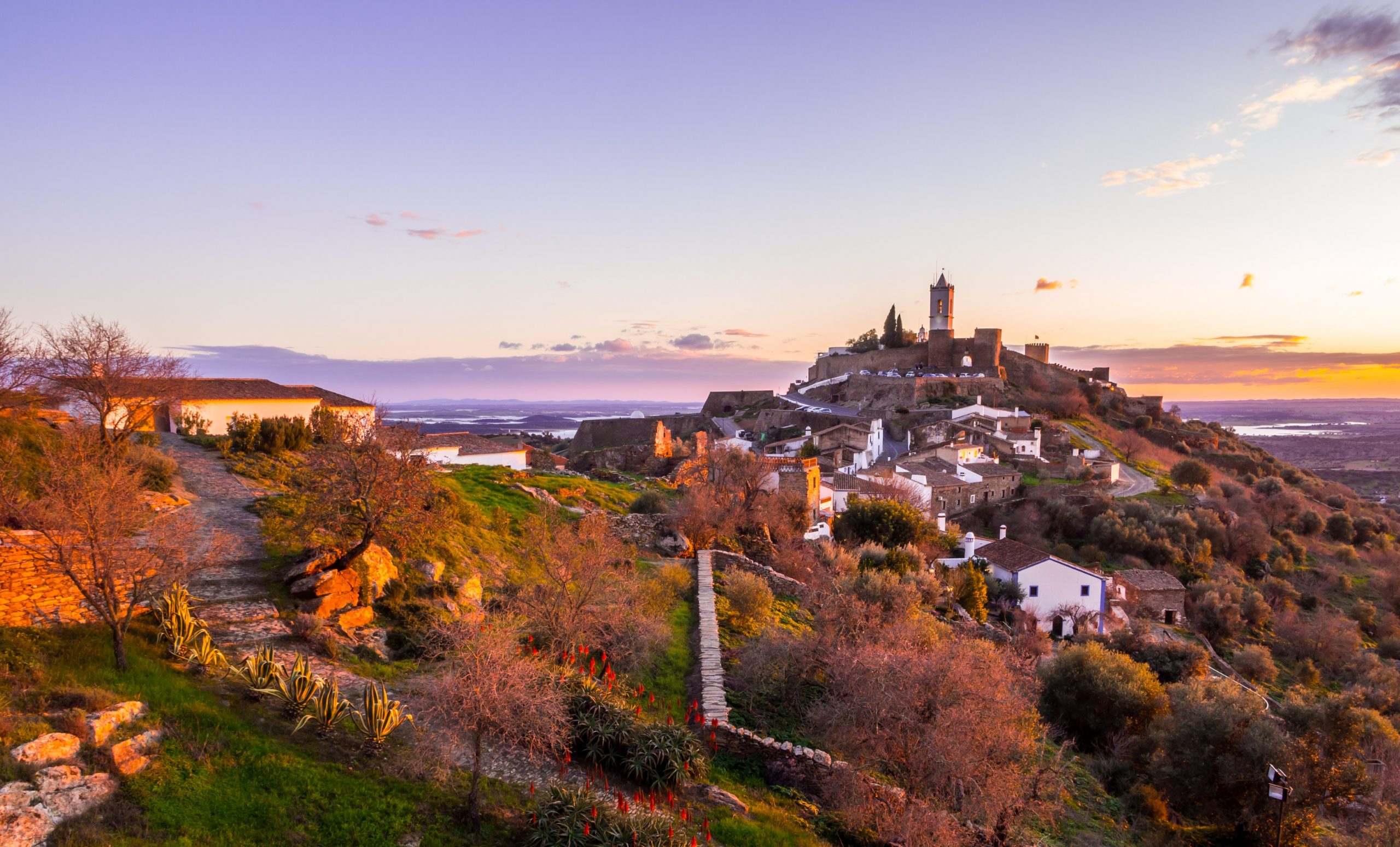
The traditional food of Monsaraz brings together Alentejo bread, olive oil, coriander, lamb and pork, with regional cheeses and wines worth taking time over. Inside this fortified village above the Alqueva reservoir, the most rewarding meals reveal the wider agricultural landscape of southeastern Portugal.
Traditional food of Monsaraz: 10 dishes and products to try
Wondering what to eat in Monsaraz? Start with the Alentejo repertoire rather than expecting dishes exclusive to this small village. Monsaraz belongs to the municipality of Reguengos de Monsaraz, and its tables share many traditions with Évora, Moura, Serpa and the surrounding countryside. Availability changes with the kitchen and season; these are foods to look for, not a promise that every menu carries all ten.
01Açorda alentejana
This bread-based dish combines slices of country bread with a hot infusion of garlic, coriander, olive oil and salt, often finished with a poached egg. Rooted in rural Alentejo cooking, it is eaten at home and in traditional restaurants around Monsaraz and Reguengos. Unlike the thick açordas found elsewhere in Portugal, this version is usually brothy. Insider tip: ask whether the version includes bacalhau; cod is a common addition, but not essential to the basic dish.
02Migas alentejanas
Older wheat bread is softened and worked with garlic and fat into a substantial, cohesive accompaniment, commonly served beside fried pork. This is another Alentejo answer to making good bread last, usually encountered as part of a main course rather than as a separate starter. Around Monsaraz, look for migas com carne de porco. Insider tip: migas de espargos uses asparagus, but the dish may still contain pork fat; vegetables in the name do not make it vegetarian.
03Ensopado de borrego
Lamb simmered with onion, garlic, bay leaf and other seasonings is served with its broth over slices of bread. Closely associated with Alentejo sheep farming and Easter meals, it also appears on traditional restaurant menus outside the holiday period. It is among the top dishes Monsaraz visitors should seek out for a substantial lunch. Insider tip: eat the broth-soaked bread with the lamb rather than treating it as a garnish; it carries much of the dish’s flavor.
04Sopa de cação
Cação, a name used for certain small sharks, is cooked in a garlic-and-coriander broth sharpened with vinegar, often lightly thickened with flour and served with bread. Although Monsaraz is inland, this is an established Alentejo dish, not a preparation of fish from Alqueva. It is typically eaten as a substantial soup or main course. Insider tip: ask how generous the portion is before ordering another main; the bread makes this considerably more filling than a light starter.
05Gaspacho alentejano
Chopped tomatoes, cucumber and peppers meet garlic, oregano, olive oil, vinegar, cold water and bread in this refreshing summer dish. Traditionally associated with hot-weather eating in the Alentejo countryside, it differs from the smooth, blended gazpacho many visitors expect. Look for it at lunch during warmer months. Insider tip: ask what accompanies it; some versions arrive with a separate plate of fried fish, making the meal larger and no longer vegetarian.
06Carne de porco à alentejana
Cubes of pork marinated with garlic, wine and red pepper paste are cooked with clams and generally served with fried potatoes and coriander. Despite its name, its precise geographic origins are debated, and it is now eaten throughout Portugal. It remains a familiar option on traditional Alentejo menus. Insider tip: choose this when you want a pork dish with a briny contrast, but do not mistake the clams for local freshwater produce from the reservoir.
07Queijo Serpa DOP
This protected regional cheese comes from a defined production area in the southern Alentejo, not exclusively from Serpa town. Made with raw sheep’s milk and coagulated with cardoon, it develops a distinctive aroma and a texture that changes with maturation. In Monsaraz, it may appear among regional starters or on a cheese plate. Insider tip: ask specifically for Queijo Serpa DOP if provenance matters; a generic queijo de ovelha is not necessarily the protected cheese.
08Paio de porco preto
This cured pork sausage belongs to the Alentejo’s tradition of preserving meat through seasoning, curing and, commonly, smoking. Garlic, salt and pepper-based seasonings vary by producer. Thin slices are typically eaten with bread as an appetizer or as part of a regional charcuterie board in restaurants and wine settings around Reguengos. Insider tip: order a small mixed board if you want to compare paio with other enchidos without spoiling your appetite for lunch.
09Sericaia
A light, cinnamon-topped sweet made with eggs, milk, sugar and flour, sericaia is particularly associated with Elvas but appears across the Alentejo, including on regional dessert menus around Monsaraz. It is often served with preserved plums, especially plums associated with Elvas. Insider tip: ask whether the plum accompaniment is included; the contrast between airy pudding and syrupy fruit is part of the pleasure, but not every serving comes with it.
10Pão alentejano
Wheat flour, water, salt and a fermented starter or dough produce the substantial country bread that underpins so much cooking here. Its firm crust and close-textured crumb make it suitable both for the table and for açorda, migas and ensopado after it has aged. Find it in bakeries, shops and restaurant bread baskets around Monsaraz and Reguengos. Insider tip: buy a loaf toward the end of your visit and ask which bread was baked that day; it is one of the most practical food souvenirs for an onward mainland journey.
Trusted across Portugal and Spain
Journeys backed by 1,300+ verified reviews
Consistently five-star rated since 2012, Portugal Magik is a TripAdvisor Hall of Fame recipient. Our Portugal Ambassadors bring local knowledge, thoughtful service and dependable private travel to every journey.

Travel with Portugal Magik
Explore Portugal in a Mercedes-Benz V-Class
For smaller groups, a private V-Class offers a comfortable way to travel between places, with an English-speaking driver, door-to-door pickup and a flexible itinerary planned with our team. Vehicle choice depends on your group and availability.
Plan a personalized journey →A private day through Monsaraz and its neighboring towns
The best food day here is not a race to collect ten dishes. Give yourself one proper lunch, a modest cheese or bread tasting, and perhaps a winery visit. Monsaraz is roughly 190 kilometers from Lisbon by road, with driving usually taking around two and a half hours each way, depending on traffic and the route. That makes a focused itinerary more satisfying than a long list of stops.
Reguengos de Monsaraz, approximately 17 kilometers from the hilltop village, is a practical companion stop for regional food shopping and access to surrounding wine estates. You might begin with bread and a small selection of local products, continue to Monsaraz for a walk and a leisurely lunch, then consider a winery stop on the return journey. Winery opening hours, tasting arrangements and availability need checking separately; arriving at an estate does not guarantee a tasting.
Évora lies about 55 kilometers by road from Monsaraz. It can provide an alternative food stop, but combining substantial visits to Évora, Monsaraz and a winery in one Lisbon day leaves little time at the table. Choose Évora or a winery as your main additional stop, or ask Portugal Magik about a personalized multi-day itinerary for a slower exploration of the Alentejo.
A Portugal Magik private day tour provides door-to-door pickup, a private Mercedes-Benz vehicle and a flexible itinerary with an English-speaking driver. Your Portugal Ambassador is a knowledgeable local English-speaking driver-guide from Portugal who can explain regional food traditions and help shape the day around your interests. For smaller groups, a private Mercedes-Benz V-Class is a comfortable option for this journey, subject to availability.
Share your starting point, preferred pace and food interests when requesting a personalized quote. Portugal Magik, established in 2012, offers private tours and transfers; meals and winery experiences are provided by the respective independent businesses. The service makes the travel between them comfortable without turning lunch into a rushed checklist.
Wine pairings and food etiquette in Monsaraz
Start close to the village when choosing wine. Reguengos is one of the subregions of the Alentejo DOC, and vineyards surround the municipality. Labels may instead carry the broader Alentejano regional designation; that is a different classification, not an automatic indication of lower quality.
For ensopado de borrego, grilled pork or migas with meat, try an Alentejo red based on varieties such as Aragonez, Trincadeira or Alicante Bouschet. A younger, fresher red can be easier with lunch than a heavily oaked bottle. For sopa de cação, açorda with cod or pork with clams, consider a dry regional white, including blends featuring Antão Vaz or Arinto. Acidity is particularly helpful alongside vinegar, garlic and rich cooking fats.
With Queijo Serpa, experiment rather than automatically choosing the biggest red: a textured white can work well with a softer, pungent cheese. Sericaia calls for a wine at least as sweet as the dessert, if you want a pairing at all; coffee is an equally sensible finish. Ask for a regional sweet-wine recommendation where one is available.
Vinho de talha refers to the Alentejo tradition of making wine in clay vessels. It is worth asking about, but not every winery near Monsaraz produces it, and talha wine is not synonymous with every local wine. If this tradition interests you, mention it while planning the itinerary so a suitable independent producer can be considered.
At the table, bread, olives, cheese and other items placed before you are usually charged if consumed. You can politely decline them before eating, or ask the price. Confirm whether a portion is intended for sharing: an ensopado or platter of pork and migas can be generous, but portion sizes differ between kitchens.
Explain dietary needs before ordering. Bread-based dishes contain gluten, migas may contain animal fat, and soups may use fish or meat stock even when their names sound simple. For serious allergies, ask the restaurant to confirm ingredients and preparation directly.
Traditional lunches are best planned within normal service hours, broadly around noon to 3 p.m., although individual kitchens vary and smaller establishments may close earlier. Tipping is appreciated rather than compulsory. Requesting a private transfer or tour with Portugal Magik also lets guests enjoy wine without taking on the driving between Monsaraz, Reguengos and their accommodation.
Your route
Direct or with stops
Tell us where you would like to pause along the way and we shape the day around it.
Request a proposal →Your pace
One day or several
Spread the journey over a few days with overnight suggestions from our team.
Request a proposal →Your Ambassador
A local by your side
An English-speaking driver-guide from Portugal in a private Mercedes-Benz.
Request a proposal →★★★★★ 1,300+ verified reviews · TripAdvisor Hall of Fame · Since 2012
Keep exploring
Related journeys and routes
Traditional Food of Tomar: What to Taste and Why
The traditional food of Tomar brings together distinctive egg-rich sweets, Ribatejo country cooking and freshwater fish from the surrounding region. Knowing which specialties belong specifically to Tomar—and which reflect its wider countryside—makes choosing lunch much more rewarding.
Read more →Your guide to the traditional food of Braga
The traditional food of Braga brings together crisp meat pastries, generous Minho dishes and remarkably rich egg-based desserts. This guide explains what to order, which specialties belong to the wider region and how to build a tasting day without spending it all at the table.
Read more →A guide to traditional food of Amarante
The traditional food of Amarante brings together northern Portugal’s generous meat dishes, almond-and-egg sweets and wines from the Vinho Verde region. Beside the River Tâmega, the pleasure is in taking your time: a proper lunch, a small pastry and a glass chosen to suit the plate.
Read more →Frequently Asked Questions
Personalized and without obligation
Speak with a travel designer
1,300+ five-star reviews · TripAdvisor Hall of Fame · Trusted since 2012 · Mercedes-Benz fleet