A relaxed guide to sightseeing in Coimbra
The most rewarding sightseeing in Coimbra combines the university hill, medieval lanes and quieter stretches beside the Mondego River. Allow time between monuments: this is a city best understood through its changing viewpoints, tiled courtyards and long academic history.
10 essential places for sightseeing in Coimbra
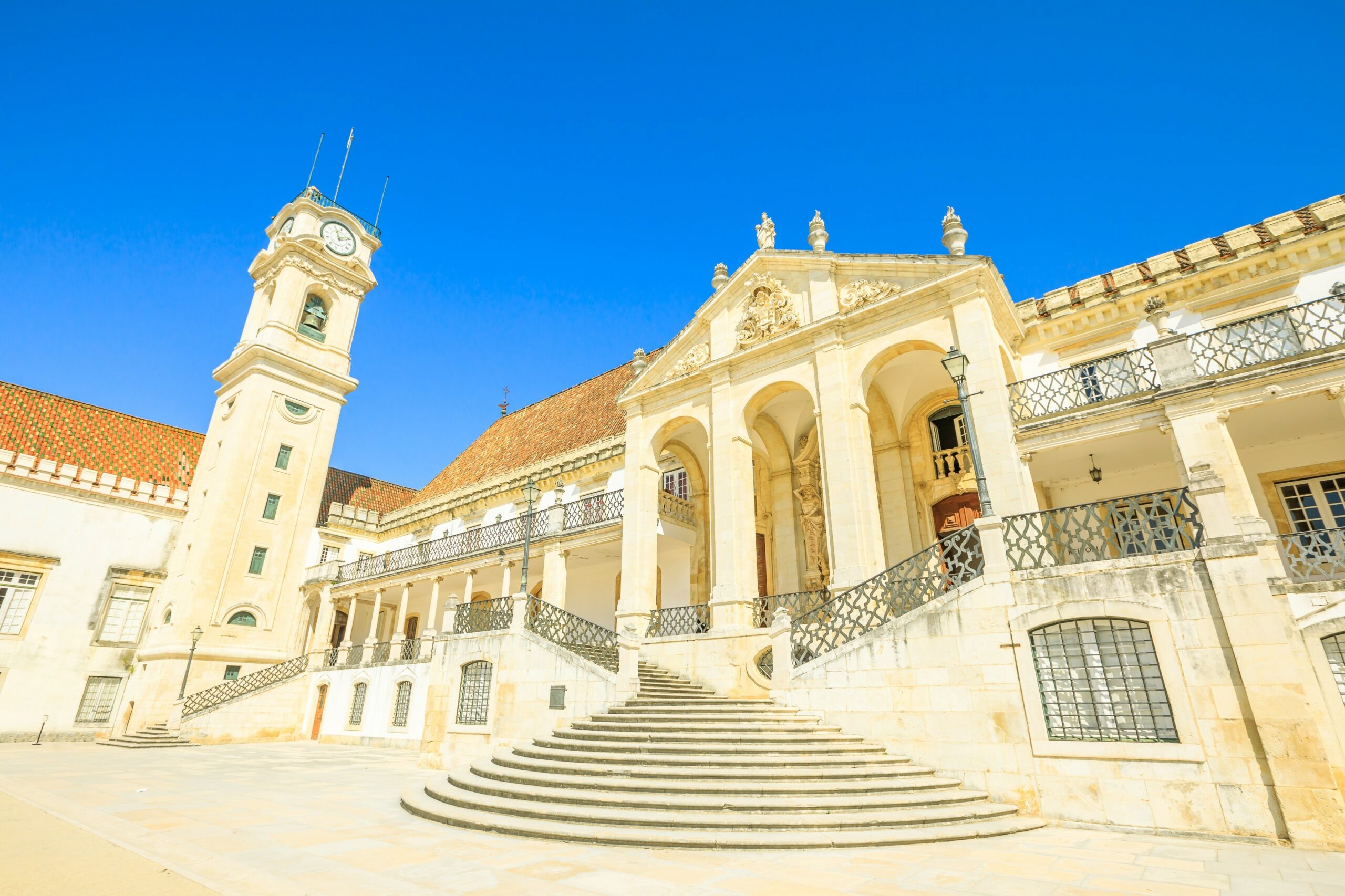
01University of Coimbra and Biblioteca Joanina
Founded in Lisbon in 1290 and permanently established in Coimbra in 1537, the university occupies the former royal palace above the city; its historic ensemble forms part of a UNESCO World Heritage Site. The 18th-century Biblioteca Joanina is a highlight for its gilded woodwork and extraordinary historic interiors. Choose your admission option carefully, secure the library’s timed entry ahead of your visit and allow around two hours rather than squeezing the university between other stops.
02Machado de Castro National Museum
Set in the former episcopal palace, this major museum combines Portuguese sculpture, painting and decorative arts with the Roman cryptoporticus beneath it. The ancient vaulted structure supported the forum of Roman Aeminium, giving unusually tangible context to Coimbra’s history before the university. Leave at least 90 minutes if you want to appreciate both the archaeology and the collections, rather than treating it as a quick viewpoint stop.
03Sé Velha
Coimbra’s fortress-like Old Cathedral dates from the 12th century, when the city played a central role in the early Portuguese kingdom. Its austere Romanesque exterior contrasts with the richly carved main altarpiece and the adjoining cloister. Approach on foot from the university area if you prefer a generally downhill route, but wear shoes with reliable grip on the sloping stone lanes.
04Sé Nova
Originally the church of the Jesuit college, the New Cathedral became Coimbra’s cathedral in 1772, when the episcopal seat moved from Sé Velha. Its broad façade and spacious interior offer a useful architectural contrast to the compact medieval cathedral below. Combine it with the nearby Machado de Castro Museum, checking worship times before planning an interior visit.
05Monastery of Santa Cruz
Founded in 1131, Santa Cruz contains the tombs of Portugal’s first two kings, Afonso Henriques and Sancho I, making it one of the most historically significant Coimbra landmarks. Its Manueline details reward a slower look after the steep streets of the upper town. Visit while exploring the lower city around Praça 8 de Maio and Rua Ferreira Borges, and check which areas are accessible beyond the main church.
06University of Coimbra Botanical Garden
Established in 1772 during the university reforms associated with the Marquis of Pombal, the garden extends across terraces below the upper city. Formal planting, mature trees and shaded paths make it a welcome change of pace after indoor sightseeing. Plan your entrance and exit before descending: the garden is not entirely level, and returning to your starting point can mean another climb.
07Almedina Arch and Tower
The Almedina gateway preserves part of the entrance to Coimbra’s medieval walled city, linking the lower shopping streets with the historic hillside. Passing through it makes the city’s defensive geography easier to understand than a distant photograph can. Explore the arch while moving between Rua Ferreira Borges and the upper town, but expect steps and steep lanes around the Quebra Costas route.
08Monastery of Santa Clara-a-Velha
This Gothic monastery on the western side of the Mondego is closely associated with Queen Isabel of Portugal and the repeated flooding that eventually forced its community to relocate. Its excavated remains reveal a very different Coimbra from the university courtyards across the river. Check current access before crossing specifically to visit, as the low-lying archaeological site can be affected by weather and operational restrictions.
09Monastery of Santa Clara-a-Nova
Built on higher ground in the 17th century to replace the flood-prone older monastery, Santa Clara-a-Nova houses the tomb of Queen Saint Isabel. Its elevated position also helps explain why the religious community moved uphill. Ask your driver to incorporate the ascent rather than walking up from the river if conserving energy is a priority, and confirm which parts of the complex are open.
10Parque Verde do Mondego and Pedro e Inês Footbridge
Coimbra’s riverside park provides open space beneath the historic skyline, while the pedestrian bridge connects the two banks with a distinctive angular design. This is a good place to appreciate the relationship between the hilltop university and the river without entering another monument. Save it for a gentle late-afternoon stroll, choosing a short out-and-back walk if you do not want to cross the entire bridge.
Trusted across Portugal and Spain
Journeys backed by 1,300+ verified reviews
Consistently five-star rated since 2012, Portugal Magik is a TripAdvisor Hall of Fame recipient. Our Portugal Ambassadors bring local knowledge, thoughtful service and dependable private travel to every journey.

Travel with Portugal Magik
Explore Portugal in a Mercedes-Benz V-Class
For smaller groups, a private V-Class offers a comfortable way to travel between places, with an English-speaking driver, door-to-door pickup and a flexible itinerary planned with our team. Vehicle choice depends on your group and availability.
Plan a personalized journey →Combining Coimbra into a relaxed private route
For a comfortable Coimbra private tour, build the day around four or five substantial stops rather than trying to enter all ten places. The university hill, lower town and Santa Clara district sit at different elevations; thoughtful drop-offs can reduce unnecessary climbing, although pedestrian lanes and monument interiors still require walking.
A balanced day from Lisbon starts with door-to-door pickup and the drive north, approximately 200 kilometres and usually around 2 hours 15 minutes to 2 hours 45 minutes each way, depending on traffic and your starting address. Anchor the morning around a confirmed university and Biblioteca Joanina entry time, then walk down towards Sé Velha. Pause for lunch in the lower town, visit Santa Cruz and finish with a short Mondego riverside walk. Add the Machado de Castro Museum only if you are comfortable giving up another stop or extending the sightseeing day.
From Porto, Coimbra is approximately 125 kilometres south, with the drive commonly taking around 1 hour 20 minutes to 1 hour 45 minutes. That shorter approach leaves more breathing room for the museum or botanical garden. Ask Portugal Magik for a personalized route based on whether your priorities are art, royal history, architecture or simply a manageable amount of walking.
For an overnight stay, divide the city geographically. Spend the first day on the university hill, including Sé Nova, the museum and Sé Velha; use the second for Santa Cruz, the lower streets and the monasteries across the river. The botanical garden or Parque Verde can fill a quiet interval rather than becoming another appointment. Coimbra also works naturally as an overnight stop on a mainland journey from Lisbon to Porto.
Portugal Magik offers private Mercedes-Benz transfers and private day or multi-day tours with an English-speaking driver, door-to-door pickup and flexible itineraries. Your Portugal Ambassador is a knowledgeable local English-speaking driver-guide from Portugal who can help put the city into context and coordinate practical stopping points. For smaller groups, request a private Mercedes-Benz V-Class as a comfortable option for these journeys, subject to availability.
Established in 2012, Portugal Magik has 1,300+ verified reviews. Share your accommodation, travel dates and preferred pace to request a personalized Coimbra tour or intercity transfer quote; monument access and timed admissions should be checked separately when shaping the itinerary.
Best time to visit Coimbra and practical insider tips
April to June and September to October generally offer a pleasant balance of sightseeing weather and daylight, though rain remains possible. July and August can be hot, particularly on exposed climbs around the university; visit the upper town earlier and leave shaded gardens or indoor collections for the warmer hours. Winter can be quieter, but shorter days and wet paving favour a shorter outdoor route.
University celebrations can change the atmosphere considerably. Queima das Fitas usually takes place in May, bringing student festivities and a busier city; check the year’s programme if you prefer quiet evenings or want to avoid disrupted access. The university is a working institution, not simply a visitor attraction, so academic events can also affect individual spaces.
Treat Biblioteca Joanina as the fixed point in your schedule. Check the current official ticket options, entry instructions and photography rules before visiting. Opening hours, religious services and temporary closures vary across the city, so avoid planning a sequence that only works if every door is open at precisely the right moment.
Wear supportive shoes rather than smooth soles. Coimbra’s elevation changes are substantial, and walking downhill can still be demanding on knees. Tell Portugal Magik about mobility needs before requesting your personalized itinerary so the route can prioritize suitable stopping points and fewer steep sections; vehicle access does not extend to every historic lane.
For a local sweet, look for pastéis de Santa Clara, pastries associated with Coimbra’s convent tradition and made with an egg-yolk and almond filling. Allow a proper lunch break rather than eating between admissions: a relaxed meal is often what makes an ambitious-looking day feel comfortable.
Keep the riverfront flexible. After heavy rain, check local conditions before planning low-lying riverside walks or a visit to Santa Clara-a-Velha. On a clear afternoon, the western bank gives a particularly useful view back towards the university hill.
Your route
Direct or with stops
Tell us where you would like to pause along the way and we shape the day around it.
Request a proposal →Your pace
One day or several
Spread the journey over a few days with overnight suggestions from our team.
Request a proposal →Your Ambassador
A local by your side
An English-speaking driver-guide from Portugal in a private Mercedes-Benz.
Request a proposal →★★★★★ 1,300+ verified reviews · TripAdvisor Hall of Fame · Since 2012
Keep exploring
Related journeys and routes
The best things to do in Óbidos: a relaxed travel guide
The best things to do in Óbidos combine medieval landmarks, remarkable religious art and time to wander its whitewashed lanes. This guide explains what deserves your attention, where to tread carefully and how to build a comfortable visit from Lisbon.
Read more →Your guide to the top places to visit in Comporta
The top places to visit in Comporta connect Atlantic beaches, working rice fields and fishing traditions on the southern edge of the Sado estuary. This guide separates the essential local stops from worthwhile nearby excursions, so you can explore without turning a quiet coastal escape into a checklist.
Read more →The best things to do in Serra da Estrela
The best things to do in Serra da Estrela range from exploring glacier-carved valleys and granite villages to tasting mountain cheese and discovering Portugal’s wool-working heritage. Give mainland Portugal’s highest mountain range time to unfold, with short walks, unhurried lunches and a personalized route rather than a race between viewpoints.
Read more →Frequently Asked Questions
Personalized and without obligation
Speak with a travel designer
1,300+ five-star reviews · TripAdvisor Hall of Fame · Trusted since 2012 · Mercedes-Benz fleet