How a Portugal Ambassador supports a multi-day tour
Understanding how a Portugal Ambassador supports a multi-day tour starts with the practical details: manageable driving days, well-chosen overnight bases and time to enjoy each stop. This 12-day mainland Portugal route combines Lisbon, Évora, Coimbra, Porto and the Douro Valley with private Mercedes-Benz transportation and a knowledgeable local English-speaking driver-guide from Portugal.
A practical 12-day Portugal route, with room to linger
This south-to-north journey works particularly well with arrival in Lisbon and departure from Porto. It includes 11 nights: three in Lisbon, two in Évora, one in Coimbra, three in Porto and two in the Douro Valley. Driving estimates are approximate, exclude sightseeing stops and depend on traffic, the hotel address and road conditions.
01Days 1–3: Lisbon, with a day in Sintra
Settle into one Lisbon hotel for three nights rather than changing accommodation immediately after your flight. Keep arrival day light, then dedicate a full day to Lisbon’s neighborhoods and monuments: Belém for the Jerónimos Monastery, begun in 1501, and the historic center for streets shaped by reconstruction after the 1755 earthquake. On day three, travel approximately 30 km to Sintra; allow 40–60 minutes each way, sometimes longer in traffic. Choose one major palace visit rather than trying to cover every estate. Pena Palace requires careful attention to its timed-entry arrangements and the additional time needed to reach the palace entrance. Insider tip: Lisbon’s hills and cobbles make shoe choice more important than the apparent distance between sights; use vehicle access points strategically and keep walking loops modest.
02Days 4–5: Évora and the Alentejo
Travel roughly 135 km from Lisbon to Évora, usually 1 hour 30 minutes to 1 hour 45 minutes without stops. Two nights allow an unhurried introduction to the UNESCO-listed historic center, including the Roman Temple, cathedral and Praça do Giraldo. Leave the second day open for more of Évora or an excursion to Monsaraz, approximately 55 km away and around an hour’s drive each way. The fortified village overlooks the Alqueva reservoir, providing a very different landscape from Lisbon. At lunch, look for açorda alentejana or migas on a regional restaurant menu. Insider tip: explore Monsaraz’s exposed lanes early in warm weather, then return to Évora for a quieter afternoon rather than adding another distant town.
03Day 6: Tomar en route to Coimbra
This is the itinerary’s substantial sightseeing-and-transfer day: approximately 300 km overall, with around 3–3½ hours of driving before breaks. Leave Évora after breakfast and make Tomar the main stop. The Convent of Christ developed from the Knights Templar stronghold founded in 1160 and later became associated with the Order of Christ. Allow roughly two hours for a meaningful visit, plus lunch, before continuing to Coimbra for one night. Do not also squeeze in Fátima or Batalha; each deserves more than a hurried detour. Insider tip: keep Coimbra’s principal sightseeing for the following morning so a late lunch in Tomar does not turn into a race against monument closing times.
04Day 7: Coimbra, Aveiro and arrival in Porto
Spend the morning around the University of Coimbra, founded in Lisbon in 1290 and permanently established in Coimbra in 1537. Access to the Joanina Library follows specific visitor arrangements, so plan around confirmed admission times rather than assuming immediate entry. Continue north with a short stop in Aveiro for its canals and ovos moles, the local egg-and-sugar sweet. Coimbra–Aveiro–Porto totals approximately 140 km and around two hours of driving. Arrive in Porto for three nights. Insider tip: Coimbra’s university occupies the upper town; agree on suitable vehicle drop-off and collection points before walking downhill through the historic center.
05Days 8–9: Porto at a comfortable pace
Give Porto two full days rather than treating it simply as the gateway to the Douro. Combine São Bento station’s tiled entrance hall, the cathedral area and Ribeira in manageable walking sections. Cross to Vila Nova de Gaia for views back toward Porto and, if desired, a visit to an independently operated port wine lodge. A second day can remain local or include Guimarães, approximately 55 km and 45–60 minutes away each way, for its medieval center and association with the early Portuguese kingdom. Insider tip: Porto’s riverside looks close to the upper city on a map, but the climb is substantial; plan the day downhill where practical and arrange collection at an accessible meeting point.
06Days 10–11: Two nights in the Douro Valley
Travel from Porto toward Peso da Régua and onward to Pinhão, approximately 150 km in total. Allow about 2–2½ hours of driving before viewpoint, lunch or estate stops. The N222 between Régua and Pinhão follows the river through the Alto Douro Wine Region, inscribed on UNESCO’s World Heritage List in 2001. Choose accommodation near Pinhão or Régua to avoid long daily transfers between widely separated estates. One independently operated winery visit and a leisurely lunch can be enough for a rewarding day; tasting schedules and availability belong to the individual producer. Insider tip: an estate described as being near Pinhão may still require a slow climb on winding roads, so assess its actual access route before choosing it as your base.
07Day 12: Door-to-door departure toward Porto
From Pinhão, allow approximately 2–2½ hours to Porto Airport, depending on the property location and traffic, plus the airport’s recommended check-in time. Keep this as a transfer day rather than inserting a final winery visit before a flight. For an early departure, spend night 11 in Porto instead of the valley; losing one rural evening is preferable to an unnecessarily early start on winding roads. Insider tip: choose the final overnight location after considering your flight time, not simply because two consecutive valley nights look tidy on paper.
Request a personalized proposal with your arrival and departure details, preferred walking pace and hotel style. Those three pieces of information help turn this outline into a route that fits your actual travel days.

Trusted across Portugal and Spain
Journeys backed by 1,300+ verified reviews
Consistently five-star rated since 2012, Portugal Magik is a TripAdvisor Hall of Fame recipient. Our Portugal Ambassadors bring local knowledge, thoughtful service and dependable private travel to every journey.
Travel with Portugal Magik
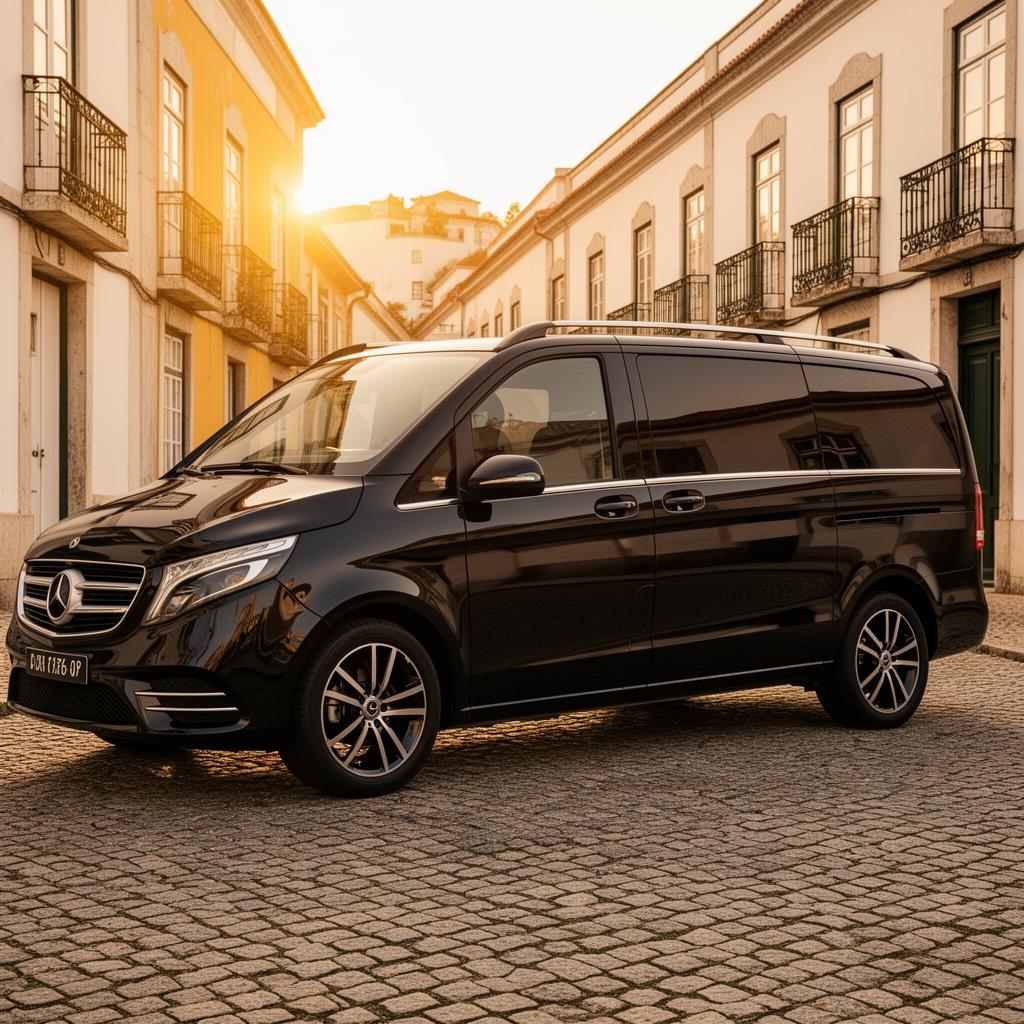
Explore Portugal in a Mercedes-Benz V-Class
For smaller groups, a private V-Class offers a comfortable way to travel between places, with an English-speaking driver, door-to-door pickup and a flexible itinerary planned with our team. Vehicle choice depends on your group and availability.
Plan a personalized journey →
How a Portugal Ambassador supports a multi-day tour
A Portugal Ambassador is a knowledgeable local English-speaking driver-guide from Portugal. The role combines local insight with the practical continuity of a private journey: understanding your interests, explaining the places along the route and managing the driving between hotels, sightseeing stops and departure points.
Private Mercedes-Benz transportation provides the backbone of the journey. For smaller groups, a private Mercedes-Benz V-Class can be a comfortable option, subject to availability and the number of passengers and suitcases. Vehicle selection should account for luggage as well as seats, particularly on a 12-day itinerary when everyone travels with their belongings between bases.
Door-to-door travel makes the biggest difference on days such as Évora–Tomar–Coimbra. Instead of organizing separate movements, you leave one hotel with your luggage, visit Tomar and continue to your next accommodation. In pedestrianized streets or restricted historic centers, the driver uses the nearest permitted, practical access point; door-to-door service does not mean vehicles can enter every medieval lane.
Local knowledge also improves the order of a day. Your Ambassador can suggest an earlier start for hot-weather sightseeing in Évora, a shorter walking circuit in Porto or a viewpoint stop before reaching Pinhão. Flexible stops work within the agreed route, opening hours and driving schedule. A timed palace admission or a scheduled winery visit still needs to anchor the surrounding plans.
A local driver-guide Portugal visitors can communicate with easily adds context beyond navigation. Conversations might explain why Tomar matters to the history of the Order of Christ, how port wine connects the Douro with Gaia, or what distinguishes Alentejo cooking from northern Portuguese menus. The driver-guide role should not be confused with a specialist interior guide at every monument; some sites have their own guiding and access requirements.
Curated suggestions can include restaurants, independently operated wine estates and suitable cultural visits. A Lisbon Fado evening can be suggested at an established Lisbon venue, with its timing fitted around the next morning’s departure. Portugal Magik provides private transfers and private day or multi-day tours with an English-speaking driver; it does not operate these independent experiences or guarantee their availability.
Hotel recommendations are similarly practical rather than proprietary. Portugal Magik does not own the suggested hotels. Recommendations can weigh neighborhood character, step-free access, room preferences, vehicle access and the time needed to reach the next day’s visits. In the Douro, for example, the difference between a river-level property and a remote hillside estate affects more than the view.
This is what high level private service should mean on a multi-day journey: thoughtful pacing, clear communication and fewer avoidable complications. Established in 2012, Portugal Magik has 1,300+ verified reviews, is consistently five-star rated and holds TripAdvisor Hall of Fame recognition.
Ask for a personalized proposal if you would like these details mapped around your own hotel preferences, interests and travel dates, rather than fitted to a fixed departure itinerary.
Who this journey suits, when to travel and how to tailor it
This route suits couples, families and small groups who want history, regional food and changing landscapes without moving hotels every night. It is especially useful for first-time visitors who want more than Lisbon and Porto, but do not want each day filled with long-distance driving. Travelers with limited mobility can also use the framework, provided walking distances, steps and hotel access are discussed in advance; Portugal’s historic centers are not uniformly accessible.
May, June, September and October often offer a good balance of daylight and sightseeing conditions, although heat and rain remain possible. July and August can be very hot in Évora and the Douro, making early visits and substantial midday breaks worthwhile. Douro harvest activity often falls in September, sometimes beginning earlier or extending later according to the year and producer; estate access should never be assumed during working harvest periods. In winter, allow for shorter days, wetter conditions in the north and reduced seasonal opening hours at some properties.
For eight days, simplify to three nights in Lisbon, one in Coimbra and three in Porto, departing on day eight. Omit Évora and the Douro overnight stay rather than preserving every stop through constant hotel changes. A Douro day trip from Porto is possible, but it adds a substantial driving day and should replace another excursion, not be piled on top of it.
For 15 days, add one night in Lisbon, one in Coimbra and one in Porto to the 12-day plan. The extra Lisbon time allows Sintra and the Atlantic coast at Cascais to be visited on separate days. A second Coimbra night creates space for the Roman archaeological site of Conímbriga, approximately 20 km away. Another Porto night allows Guimarães to have its own day while preserving time in Porto itself.
For a Portugal-and-Spain journey, redesign the route around the border crossing rather than treating Spain as an extra stop. One sensible 15-day southern alternative is four nights in Lisbon, two in Évora, three in Seville, two in Córdoba and three in Madrid, departing on day 15. Évora–Seville takes roughly 3½–4 hours of driving, Seville–Córdoba about 1¾ hours and Córdoba–Madrid around 4–4½ hours, before breaks. Mainland Spain is one hour ahead of Portugal, which matters for arrival times. Discuss cross-border private transportation and the final departure city as part of the proposal.
Share the experiences you care about most—Roman history, wine, gardens, food or simply slower mornings—and request a personalized itinerary. The strongest tailored journey usually comes from choosing what to leave out as carefully as what to include.
Your route
Direct or with stops
Tell us where you would like to pause along the way and we shape the day around it.
Request a proposal →Your pace
One day or several
Spread the journey over a few days with overnight suggestions from our team.
Request a proposal →Your Ambassador
A local by your side
An English-speaking driver-guide from Portugal in a private Mercedes-Benz.
Request a proposal →★★★★★ 1,300+ verified reviews · TripAdvisor Hall of Fame · Since 2012
Keep exploring
Related journeys and routes
First private tour in Portugal what to expect
If you are searching for “first private tour in Portugal what to expect”, start with one practical principle: fewer hotel changes usually make a better journey. This mainland itinerary connects Lisbon, Sintra, Tomar, Coimbra, the Douro Valley and Porto over 12 days, with realistic ways to shorten it to eight or extend it to fifteen.
Read more →Your door-to-door private travel across Portugal
Discover door-to-door private travel across Portugal through a thoughtfully paced journey linking Lisbon, the Alentejo, Coimbra, Porto and the Douro Valley. This 12-day starting point balances memorable visits with unhurried meals, comfortable overnight bases and room for your own interests.
Read more →Evora Monsaraz Marvao private journey: 8–15 Days
An Evora Monsaraz Marvao private journey connects Roman heritage, whitewashed hill towns and the quieter landscapes of Portugal’s Alentejo. This ten-day starting itinerary gives each place room to unfold, with private Mercedes-Benz travel and options to shorten or extend your stay.
Read more →Frequently Asked Questions
Personalized and without obligation
Speak with a travel designer
1,300+ five-star reviews · TripAdvisor Hall of Fame · Trusted since 2012 · Mercedes-Benz fleet