The best things to do in Coimbra: a thoughtful travel guide
The best things to do in Coimbra connect its university hill, medieval lanes, royal tombs and peaceful Mondego riverfront. Give this former Portuguese capital time: its steep streets and remarkable interiors reward a selective itinerary rather than a hurried checklist.
10 best things to do in Coimbra, with practical visiting tips
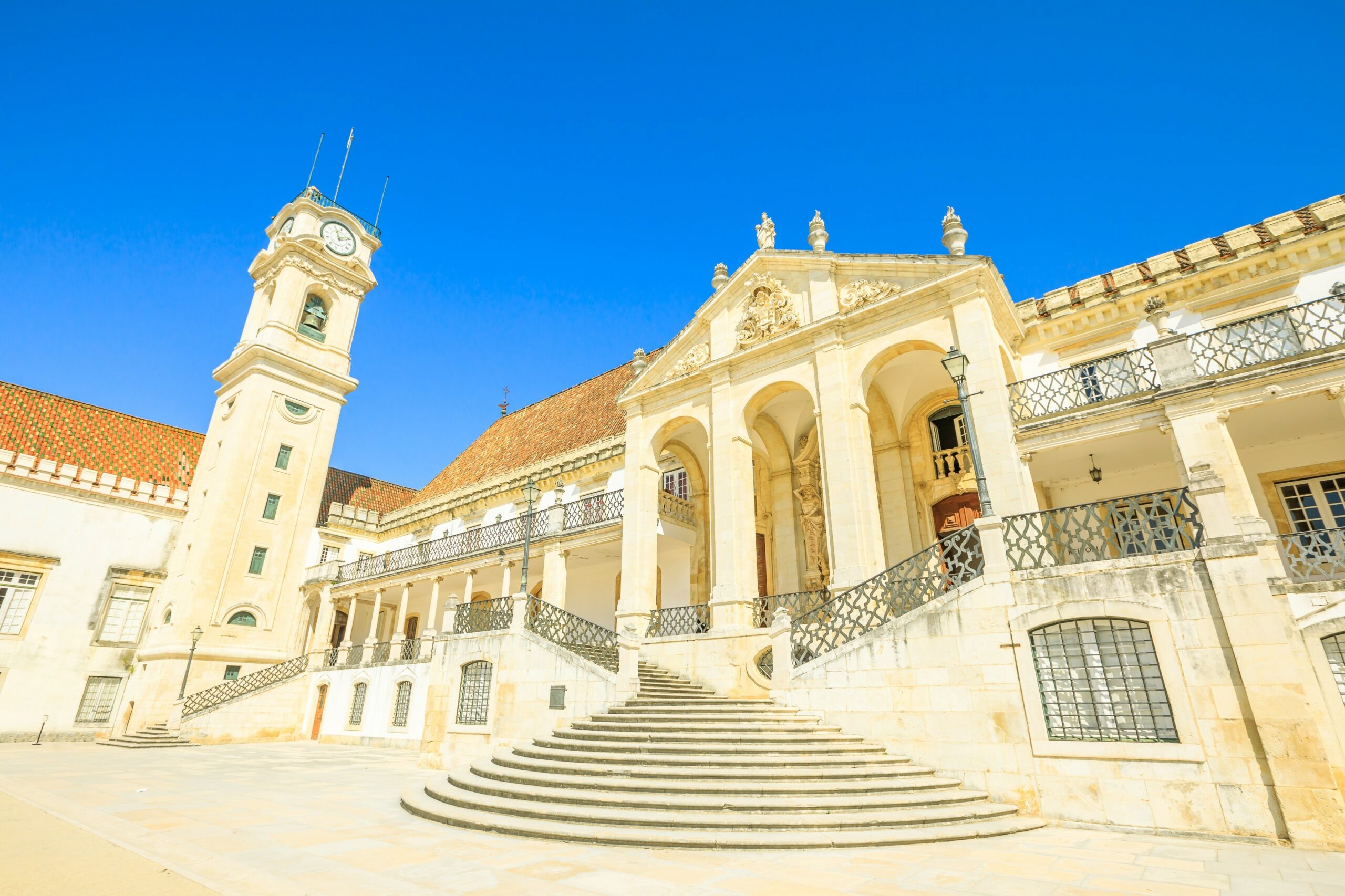
01University of Coimbra and Paço das Escolas
Founded in Lisbon in 1290 and permanently established in Coimbra in 1537, the university occupies a former royal palace above the city; its historic buildings form part of the UNESCO-listed University of Coimbra–Alta and Sofia. Begin at the Paço das Escolas courtyard for views across the Mondego, then visit the palace interiors included in your chosen ticket. Arrange your hilltop arrival before walking downhill through the old town, rather than starting with the steep climb from the river.
02Biblioteca Joanina
Built in the 18th century under King João V, the university’s Baroque library pairs gilded woodwork with shelves of historic books. Its resident bats are known for helping control insects that could damage the collection. Reserve the appropriate timed-entry university ticket ahead, arrive before your allocated slot and remember that photography is not permitted inside the library.
03Sé Velha
Coimbra’s fortress-like Old Cathedral dates from the 12th century and is one of Portugal’s most important Romanesque churches. Its crenellated exterior contrasts with an elaborate gilded main altarpiece inside. Wear shoes with a firm grip for the sloping cobbled approaches, and check access around religious services before planning an interior visit.
04Sé Nova
Originally built as the church of Coimbra’s Jesuit college, the New Cathedral became the episcopal seat in 1772. Its monumental façade and spacious interior offer a useful contrast to the smaller, older Sé Velha. Visit while you are already on the university hill: it stands close to the Machado de Castro museum, saving you a second uphill walk.
05Museu Nacional de Machado de Castro
Occupying the former episcopal palace, this museum combines Portuguese sculpture and religious art with the Roman cryptoporticus beneath it, a substantial vaulted structure that supported the forum of ancient Aeminium. Allow around 90 minutes if you want to appreciate both the archaeological remains and the collections. Check the current accessible route if stairs or uneven surfaces are a concern, particularly for the underground spaces.
06Monastery of Santa Cruz
Founded in 1131, Santa Cruz contains the tombs of Portugal’s first two kings, Afonso Henriques and Sancho I. Its church anchors Praça 8 de Maio in the lower town, making it an essential stop for understanding Coimbra’s royal importance beyond the university. Visit the church before taking a café break in the surrounding pedestrian streets, and confirm which additional monastery spaces are open that day.
07University of Coimbra Botanical Garden
Established in 1772 during the Marquis of Pombal’s university reforms, the botanical garden unfolds through terraces, mature trees and shaded paths near the São Sebastião Aqueduct. It provides a welcome change of pace after the stone courtyards and museum rooms of the upper town. Enter from the aqueduct side when combining it with the university, and check which garden areas are accessible before committing to a longer walk.
08Monastery of Santa Clara-a-Velha
This Gothic convent on the Mondego’s west bank is closely associated with Queen Isabel of Portugal, who supported its construction in the 14th century. Repeated flooding eventually forced the community to abandon it, and the surviving church and archaeological site make the river’s influence on Coimbra tangible. Check current opening and site access before crossing over specifically to visit, as the ruins are not simply an unrestricted outdoor monument.
09Portugal dos Pequenitos
Opened in 1940, this miniature architectural park presents scaled-down Portuguese houses and monuments, with additional displays reflecting the outlook of its founding period. It is particularly appealing to younger children and offers a playful counterpoint to churches and university interiors. Pair it with nearby Santa Clara-a-Velha rather than making a separate cross-river journey, and choose an earlier visit in hot weather because much of the experience is outdoors.
10Parque Verde do Mondego and Pedro e Inês Footbridge
Coimbra’s riverside park offers lawns, walking paths and open views towards the university hill, while the Pedro e Inês pedestrian bridge connects the two banks. This is one of the easiest Coimbra attractions to enjoy without another ticket or a lengthy indoor visit. Save it for late afternoon, when the light often suits photographs of the hillside, and remember that Coimbra’s waterfront is a river setting, not a seaside destination.
Trusted across Portugal and Spain
Journeys backed by 1,300+ verified reviews
Consistently five-star rated since 2012, Portugal Magik is a TripAdvisor Hall of Fame recipient. Our Portugal Ambassadors bring local knowledge, thoughtful service and dependable private travel to every journey.

Travel with Portugal Magik
Explore Portugal in a Mercedes-Benz V-Class
For smaller groups, a private V-Class offers a comfortable way to travel between places, with an English-speaking driver, door-to-door pickup and a flexible itinerary planned with our team. Vehicle choice depends on your group and availability.
Plan a personalized journey →Combine Coimbra’s highlights into a relaxed private route
The top places to visit in Coimbra fall into three useful clusters: the university hill, the lower town around Santa Cruz, and the riverfront with the Santa Clara monuments. Grouping visits this way reduces repeated climbs and leaves room for lunch, café stops and unplanned pauses.
For a private day from Lisbon, allow roughly 200 kilometres and around 2½–3 hours of driving each way, depending on your pickup point and traffic. Keep the sightseeing selective: start with a prearranged university and Joanina Library visit, walk downhill towards Sé Velha if comfortable, pause for lunch, then visit Santa Cruz. Add a short riverfront stroll only if time and energy allow; trying to include all ten places would turn a rewarding day into a rush.
With Portugal Magik, your Portugal Ambassador—a knowledgeable local English-speaking driver-guide from Portugal—can provide local context and coordinate practical drop-offs and pickups where vehicle access permits. The service consists of private Mercedes-Benz transfers and private day or multi-day tours, with door-to-door pickup and flexible itineraries. A private Mercedes-Benz V-Class is a comfortable option for smaller groups on the Lisbon–Coimbra journey, subject to availability; the pedestrian lanes and interiors still require time on foot.
An overnight stay is the more relaxed choice if museums and gardens matter to you. On day one, concentrate on the university, Joanina Library, Sé Velha and Santa Cruz; on day two, choose Machado de Castro and the botanical garden, or cross the river for Santa Clara-a-Velha and Portugal dos Pequenitos. An evening in Coimbra also creates time to attend an independently operated Coimbra fado performance, if one fits your schedule.
For a northbound mainland journey, Lisbon–Tomar–Coimbra–Porto works well across three days: visit Tomar’s Convent of Christ on the first day before continuing to Coimbra, dedicate the second day to Coimbra, and travel to Porto on the third. Coimbra to Porto is roughly 120 kilometres, usually around 1½–2 hours by road. Ask Portugal Magik for a personalized route built around your preferred pace rather than adding stops simply because they sit along the way.
Best time to visit Coimbra and useful local tips
May, June, September and early October generally offer a good balance of daylight and comfortable sightseeing conditions, although hot days and rain remain possible. July and August can make the university hill feel demanding in the afternoon; put exposed walks earlier in the day and save museums or a long lunch for the warmer hours. Winter is quieter, but shorter days and wet cobbles call for a more compact itinerary.
Coimbra is a working university city. Queima das Fitas, usually held in May, brings student celebrations and a noticeably livelier atmosphere; consult the current programme if you prefer either to experience the festivities or avoid their busiest periods. Academic ceremonies and religious services can also affect access to particular buildings.
Treat the Joanina Library’s entry time as the anchor for your day. Check official opening schedules for the university, museums and Santa Clara-a-Velha individually, especially around Mondays and public holidays, rather than assuming all Coimbra attractions follow the same timetable.
Comfortable, grippy shoes matter more than the apparent distance on a map. The climb between the Baixa and Alta is substantial, and historic paving can be slippery after rain. If mobility is limited, tell your driver in advance so the itinerary can emphasize suitable drop-off points and individually checked accessible entrances; a private vehicle cannot remove every staircase or pedestrian-only approach.
For a local sweet, look for pastéis de Santa Clara, made with an egg-and-almond filling. At lunch, chanfana—a slow-cooked goat dish associated with the wider Coimbra region—is worth seeking out where available. Coimbra fado is rooted in the city’s academic traditions and is traditionally sung by men; an evening performance offers a different perspective from daytime monument visits.
Established in 2012, Portugal Magik can help shape the driving route around these practical details. Share your interests, walking comfort and overnight plans when requesting a personalized private tour or transfer quote.
Your route
Direct or with stops
Tell us where you would like to pause along the way and we shape the day around it.
Request a proposal →Your pace
One day or several
Spread the journey over a few days with overnight suggestions from our team.
Request a proposal →Your Ambassador
A local by your side
An English-speaking driver-guide from Portugal in a private Mercedes-Benz.
Request a proposal →★★★★★ 1,300+ verified reviews · TripAdvisor Hall of Fame · Since 2012
Keep exploring
Related journeys and routes
10 things you can't miss in Arrábida
These 10 things you can't miss in Arrábida bring together limestone cliffs, sheltered beaches, wine cellars and historic landmarks around the natural park. This Arrábida travel guide helps you choose a manageable route from Lisbon, with time to enjoy the places rather than simply tick them off.
Read more →The best things to do in Northern Portugal
The best things to do in Northern Portugal combine Porto’s riverside streets, the Douro’s vineyard terraces, medieval towns and the mountain landscapes of Peneda-Gerês. This guide explains what deserves your time, which stops work together and how to explore without spending every day rushing between them.
Read more →The best things to do in Silves: Castle, Old Town and River
The best things to do in Silves reveal a different Algarve: red sandstone walls, traces of a powerful Islamic city and quiet streets above the Arade River. Give this former regional capital time, and its castle, archaeological museum and riverside squares make a rewarding alternative to a beach-focused day.
Read more →Frequently Asked Questions
Personalized and without obligation
Speak with a travel designer
1,300+ five-star reviews · TripAdvisor Hall of Fame · Trusted since 2012 · Mercedes-Benz fleet